The wine business worries about its market like any other business. Fifteen years ago, it was concerned about who would replace the Baby Boomers, that enormous generation that guzzled wine with unparalleled attention and enthusiasm. Later to its relief, wine marketers noticed that the children of the Boomers, another enormous generation, were just as enthusiastic about wine as their parents, probably because they had grown up with wine on their tables.
But a funny thing is happening on the way to the wine shop. Younger people are not buying Bordeaux like their parents did. Bordeaux is their parents’ wine, and they have other interests. For Baby Boomers, France was the land of wonder and romance, and its wines were part of the lore. Young Americans of that generation headed to France in droves with “Europe on $5 a Day” in hand, and many drank wine there for the first time. Arguably, France produced the finest wines in the world then, and Bordeaux was the best of the best.
But times have changed as they always do. First, the wines of Bordeaux are some of the most expensive in the world and might start at $85 in a restaurant and levitate upwards. Young people are not likely to have that amount of money to spend on wine. Secondly, technology is a great equalizer. Winemakers everywhere have access to the science of viticulture and winemaking and the high tech equipment to implement it, so great wines are coming from countries throughout the world.
But even more fundamental than the high prices of Bordeaux wines and the competition for quality that Bordeaux is getting from the rest of the world, younger wine-drinkers are part of an infinitely more diverse generation than their parents, not only racially diverse, but their tastes in everything from movies, to music, cars, travel, and certainly food and wine are literally all over the map. The world market and the internet have given them choices that their parents didn’t even dream of and may not be drawn to even now to the extent that they are.
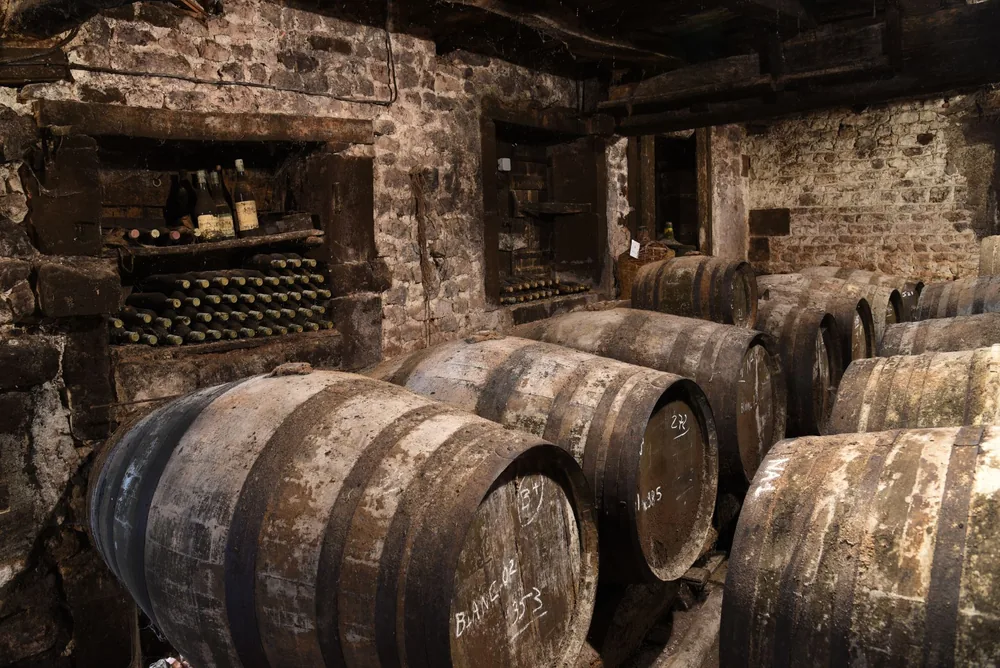
Writing for the New York Times, Eric Asimov reports, “In 2009, 1.29 million cases of Bordeaux wine were imported, accounting for 0.46 percent of all still wines, domestic and foreign, distributed in the country…a far cry from its highs in the mid-1980s.” In 1985, he writes that “Bordeaux shipments accounted for 1.69 percent of all still wines distributed in the United States.” I’d guess that these days, Bordeaux winemakers are worried not just about the weather.
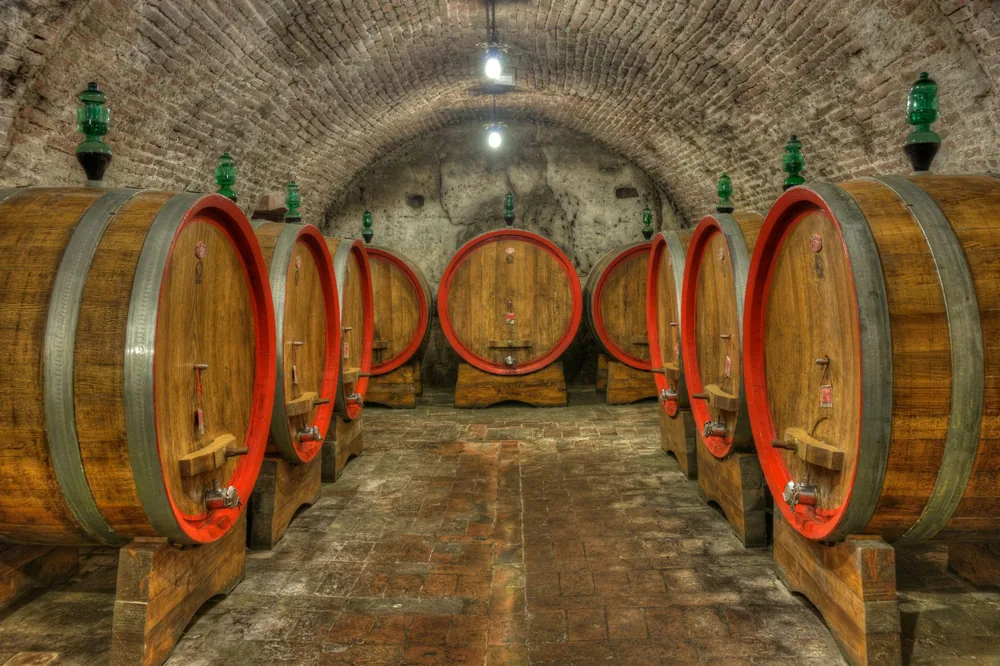
Wine doesn’t exist in a taste vacuum. It’s an expression of the land and the culture from which the grapes grow. For younger people, France is not an automatic travel choice like it was for their parent’s generation. They will just as easily choose to visit Italy, Spain, Czech Republic, Turkey, India, or China. And they will drink the wines of the country that they’re visiting and search for them at home when they return.
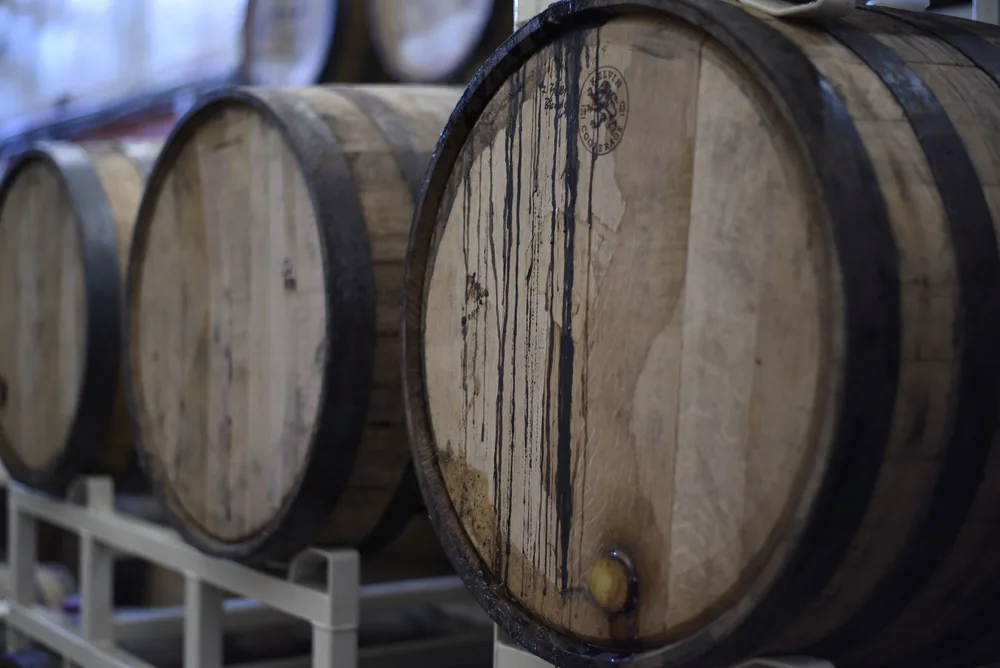
For different reasons, certainly not my age, I’m aligned with the taste for variety that is common to the young. Knowing that I have access to a tremendous variety of wines, people will often ask me what my favorite is. I have no answer for that question. My favorite wines are the ones that are in the warehouse in any given month. I am certain about very little, except for one thing. There’s more to life than Cabernet Sauvignon and its Bordeaux cousins. This month, it’s Centomoggia that has been rediscovered in Campania and that Pliny the Elder wrote about 2000 years ago.
How Bordeaux is actually organized
Bordeaux is a region of blends rather than single varieties, and the blend changes depending on which side of the Gironde estuary the vines stand on. The gravel soils west of the river drain fast and hold daytime heat, which suits late-ripening Cabernet Sauvignon. The clay and limestone to the east suit Merlot and Cabernet Franc, which ripen earlier and give softer wines.
Layered on top of that geography is a hierarchy of place names, from a broad regional designation covering the whole area down to small communes of a few hundred acres. A famous commune name on the label narrows the source considerably, while the regional name covers thousands of growers. Add the classifications drawn up in the nineteenth century for certain estates and the label becomes a document that assumes prior knowledge.
| Trait | Left bank | Right bank |
|---|---|---|
| Dominant grape | Cabernet Sauvignon | Merlot |
| Typical soils | Deep gravel over sand and clay | Clay and limestone |
| Ripening | Later | Earlier |
| Structure when young | Firmer tannin, more austere | Rounder, more immediately approachable |
| Estate size | Often large | Often small |
Why an imported bottle costs what it does
Very little of the price gap between an American wine and a French one at the same quality level comes from the wine itself. An imported bottle passes through an importer, a state-licensed wholesaler and a retailer or restaurant, and each stage adds its margin to the landed cost. Ocean freight, customs duty, federal excise tax and currency movement sit underneath all of that.
Those flows are measured in public data, and the Census Bureau publishes official statistics on American imports and exports by commodity and country. Volumes rise and fall with exchange rates and with the size of each harvest abroad. A weak dollar shows up on a wine list within a year.
Restaurant pricing amplifies every one of those steps. A wine list typically multiplies the wholesale cost by two or three times to cover storage, glassware, staff training and the risk of holding inventory that may not move. The same bottle at a merchant carries a much thinner markup, which is why the gap between a shelf price and a list price widens as the wine gets rarer.
What replaced Bordeaux on younger tables
The grapes did not lose their appeal, but the sources multiplied. Cabernet Sauvignon and Merlot are now planted across California, Washington, Chile, Argentina, Australia, South Africa and much of southern Europe, and many of those wines cost a fraction of a classified French estate. Anyone who likes the flavor profile has a dozen affordable routes to it.
The wider shift is toward variety for its own sake. Italy alone keeps hundreds of native grapes in commercial production, and Spain, Portugal, Greece and Austria have revived local varieties that had nearly disappeared. Our surveys of Italian grapes and the styles they produce and California grapes and styles are useful starting points for anyone working outward from a familiar taste.
Bordeaux and its alternatives: FAQ
Is a Bordeaux blend the same thing as a Bordeaux?
No. The phrase describes a mix of the same grape varieties, usually Cabernet Sauvignon, Merlot and Cabernet Franc, grown anywhere in the world. Only wine from the delimited region in France may carry the place name, and American producers of such blends often coin a proprietary name instead.
Why do so many Bordeaux labels say chateau?
The word denotes an estate rather than a building, and thousands of properties use it regardless of size. It carries no quality meaning on its own, though the classifications applied to certain estates in the nineteenth century still shape what those particular names command today.
Does every Bordeaux need long aging?
Not at all. The great majority is made to be enjoyed within a few years, and only a small share of production is built for decades in a cellar. Our notes on wine skills and knowledge cover how to judge which category a bottle belongs to.