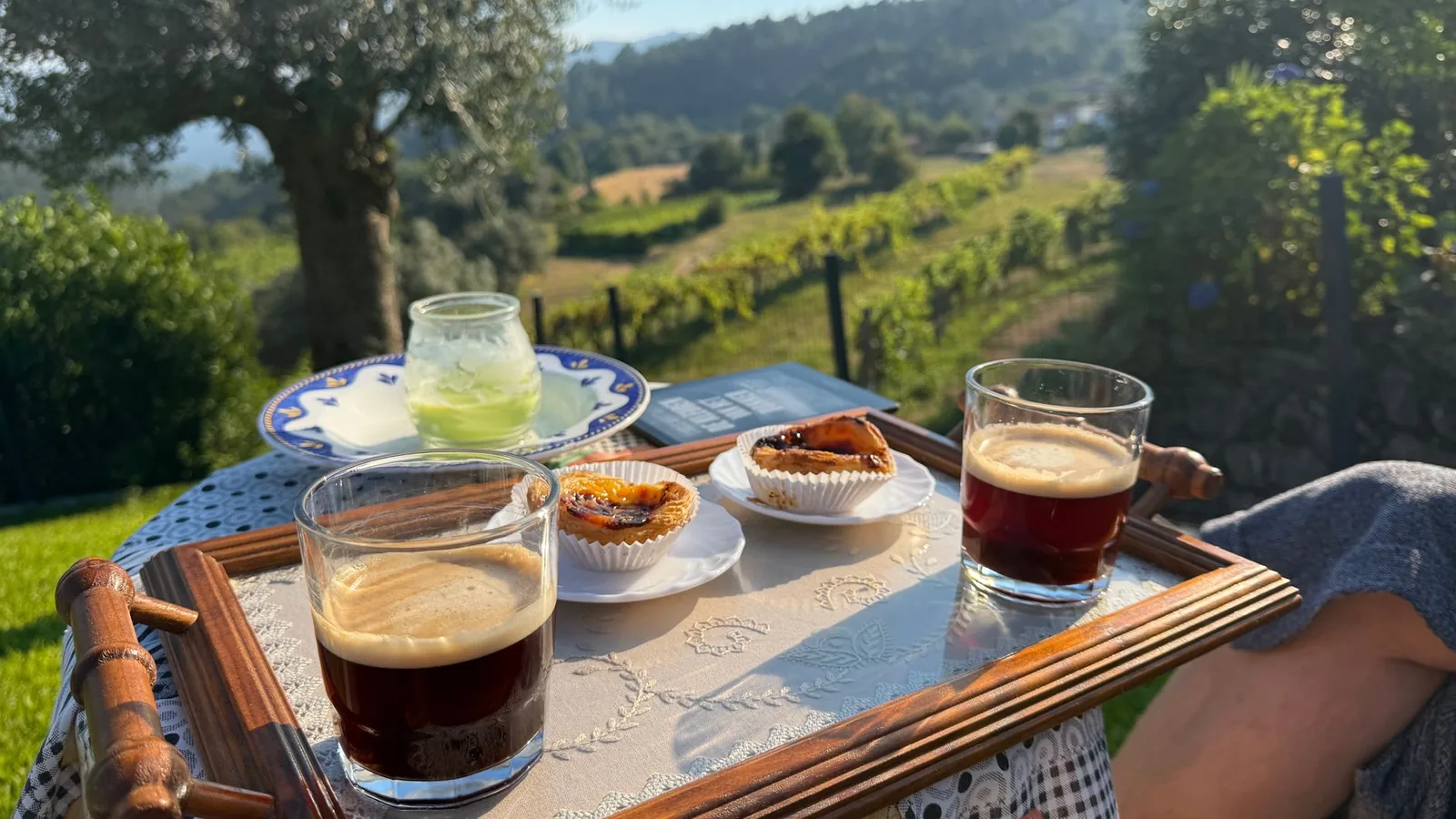
It’s a Saturday in mid July around 12 noon. I’m sitting outside at a café. I’ve chosen an open-face sandwich on thick rye, piled with a layer of hummus and topped with a little salad of sliced cherry tomatoes, kalamata olives, green onions, and baby arugula, my glass of California Rose sweating in the sun. The young Latino server tells me that the owner just returned from Holland and that this is what the Dutch are eating.
Okay, so I’m not traveling to some iconic spot this summer, not Rome, the Costa Smeralda, or Lake Cuomo. But I’m here at this café, a mile’s walk along the water from my house, and doing in part what I would be doing on vacation, walking for hours, sitting outside in cafes, watching local people, exchanging random conversation.
Not to be confused with coffee shops, which are small restaurants, cafes in the past could be found only in Italian neighborhoods, especially in New York and San Francisco. They were indoor spaces and truly coffee-centric with a few pastries. Now, thankfully, they are everywhere. I have three within a mile of where I live in the San Francisco Bay Area, all with outdoor seating but each one with its own personality, with different menus and different visitors. Wine and sandwiches are part of the mix now as we learn to pause and smell some of the roses on our own turf.
Three women and a man sit at a nearby table, all attractive 20-something Asians. One of the young women has long black hair, full make-up, her tall delicate frame teetering on three-inch heels. The man holds an imposing camera and is taking occasional shots of the street while they wait for food, half of his I Phone protruding from his back pocket. He trusts life.
An extremely tall thin man, close to seven feet, exits the café and lurches down the street in slow motion, his shoulders hunched with age. He’s wearing trousers the color of the sun, a collared shirt in a lighter shade of the same tint, and a soft-brimmed tan hat. I wonder about his life and how it dressed him this way at this moment.
Another man, older and overweight, reads to a five year-old nestled against his side. She interrupts him with her own version of the pictures he points to. A woman joins them, and I know by the way she sits next to him that he is her husband instead of her father.
I overhear two middle aged women with a seemingly intimate friendship, discussing a couple they both know. They have slight undefined accents, but they’re speaking fluent English. “He said…. She said…, and then he did….”
We get up from our chairs and spend the next two hours walking in and out of shops, including a small bookstore, because books are better than Kindles.
I’m not saying that travel isn’t great, only that some of the reasons we travel, to enjoy exotic locations and unfamiliar people, have become part of our own domestic reality, especially if we live in urban centers. And the casual café is a great place anywhere to observe a particular community.
Where the café came from
The café arrived in Europe as a coffeehouse rather than as a restaurant, and its social function was established long before its menu was. Coffeehouses spread through Ottoman cities and then into Venice and the rest of Europe in the seventeenth century, and from the beginning they were places where strangers sat within earshot of each other. That arrangement, not the coffee, is what made them politically interesting to the authorities of the day.
The equipment that defined the modern Italian café came much later. Smithsonian magazine’s account of the long history of the espresso machine traces how pressure brewing turned coffee service into something fast enough for a standing customer. Speed at the counter is what allowed the café to become a daily habit rather than an occasion.
Wine service followed the same social logic. In much of Italy a single counter serves coffee in the morning and a glass of wine in the evening to the same neighborhood, with no change of premises and very little change of ritual. The American separation of coffee places from wine places is the unusual arrangement, not the Italian combination.
Three kinds of room, three different habits
The words are used loosely in English, which hides real differences in how each place works.
| Trait | Italian bar or café | American coffee house | Wine bar or enoteca |
|---|---|---|---|
| Typical stay | Minutes at the counter, or an hour outside | An hour or more, often working | An evening, seated |
| Time of day | All day, from morning coffee to evening aperitif | Concentrated in the morning | Late afternoon onward |
| Wine service | By the glass, alongside coffee | Rare | Central, often with a rotating list |
| Food | Small plates, sandwiches, pastries | Pastries and packaged items | Boards designed to accompany wine |
The aperitivo hour and what it is for
The Italian aperitivo is a defined stretch of the early evening rather than a drink, and its purpose is to open the appetite before dinner rather than to replace it. The drinks are light, low in alcohol and usually served with something salty, which is why sparkling wine and bitter-edged mixtures dominate the hour. The custom fits the café perfectly because it requires no reservation and no commitment.
Its timing does real work as well. An hour that ends when dinner begins keeps the drinking modest and gives guests a natural moment to move on, which is exactly what a long open-ended evening fails to do. The custom is as much a piece of social engineering as a culinary one.
Reproducing it at home takes almost nothing: a chilled bottle, olives or crisps, and a fixed hour that people can arrive within. Our notes on wine for celebrations and on Italy’s wine regions cover which regional styles were traditionally poured at that hour.
How a café keeps wine by the glass in good condition
A place that pours single glasses faces a problem a restaurant with a full dinner service does not: bottles stay open. Volume is the simplest answer, since a bottle that empties within a day never has time to deteriorate. Beyond that, the working methods are unglamorous and effective.
- Storing open bottles under refrigeration overnight, whites and reds alike, since cold slows oxidation.
- Keeping the by-the-glass list short enough that every bottle turns over quickly.
- Using inert gas or vacuum stoppers on slower-moving bottles.
- Keeping open bottles out of direct sunlight and away from heat sources on the back counter.
The same measures work at home for anyone who opens a bottle without finishing it, and our guidance on food and wine pairing covers what to serve alongside it.
FAQ: café habits and wine
Why is wine cheaper by the glass in an Italian café than in a restaurant?
Because the service model is different. A counter pour involves no table service, no lengthy occupancy and often a house wine bought in volume, so the margin structure differs from a seated dinner.
How long does an open bottle stay good?
Most wines are still pleasant a day or two after opening if they are recorked and refrigerated, with lighter and more delicate wines fading fastest. Sparkling wine loses its bubble quickly unless a proper stopper is used.
Is it acceptable to sit at an outdoor table for hours with one glass?
In most café cultures, yes, particularly outside the busiest service periods. The table charge that some places apply in tourist areas exists precisely to make that arrangement work for both sides.