In all things, perfect practice makes perfect, imperfect practice does not. Are there areas in which you would love to improve? Your pallet for wines or maybe that perfect pairing you’ve always wanted to accomplish with your favorite wine? There is one thing out there that will propel you forward. Every culinary student and chef is exceptionally familiar with it, it’s called critique. Those scowling words out of the instructors mouth, the guest who you can never seem to satisfy… But, like a bandage on a sore wound they must be dealt with. When someone doesn’t like your food it can become very personal. But it also means growth, building character along the way.
Don’t be afraid to hold yourself to a higher standard, take hold of criticism and when it’s constructive, learn to cherish it. Dedicate yourself to it! What do those around you need? What can you provide for them? Think outside of the box again this month!
I fell in love with food at a very early age, I remember making up my own recipes at the young age of eight. Save yourselves the pain and agony, don’t ever mix scrambled eggs with Worcestershire & sour cream! It’s just, so not worth it! The things eight year olds can dream up. The point is, write YOUR story, you don’t always need to listen to what Food TV says, Betty Crocker, or whomever… Be creative this month. Take one of your go to recipes and give it a big twist. This I know, people LOVE food. Well, I know this too, when you’re a chef nobody ever wants to feed you. It’s a double edge sword. Is there someone who you need to reach out to, mend a dispute with? I’m telling you (and you know that it’s true) food is a perfect gateway. Well… Wine is typically a whole lot better. But, what is even better than that? Food and wine together!
Anyway, I know that I’ve covered a few different areas this month but, in honor of our New Year (and absence of resolutions for some of us) I just want to continue encouraging all of you to strive to be better and better. If we all as a society had this goal (and I know that we all don’t) think of what an amazing world this would be!
So, this month’s recipe is going to be a plain and simple classic… I want you to prepare it but put your own amazing spin on it. Don’t be shy, don’t be afraid. Go in to your kitchens and play, play, play! As I always love to say, don’t be so serious, it’s only food!
Share some of your stories with me, I’d love to know what some of you made!
What Makes Criticism Useful
Most feedback fails because it reports a feeling rather than a cause. “I didn’t like it” tells a cook nothing that can be acted on, while “it was too salty and the sauce broke” identifies two specific things to change next time. The difference is not politeness but precision.
Asking better questions produces better answers. Handing someone a plate and asking whether it needs more acid, or whether the texture is right, gives them a frame to answer inside, and most people will respond usefully once they know what is being asked.
The same applies to receiving it. A cook who separates the observation from the judgment can keep the useful half and discard the rest, which is the skill that makes years of critique survivable rather than corrosive.
| Vague comment | What to ask instead | What it lets you fix |
|---|---|---|
| “It was fine” | What would you change about it? | Surfaces the one thing that bothered them |
| “Too rich” | Did it need acid, or was the portion too large? | Separates balance from quantity |
| “Bland” | Under-salted, or missing an aromatic element? | Points to salt, acid, or herbs specifically |
| “The wine didn’t work” | Did it taste thin, or harsh, or sweet? | Identifies acid, tannin, or sugar as the culprit |
Practicing With Wine the Same Way
Palate development runs on comparison rather than volume. Tasting one wine attentively teaches surprisingly little, because there is nothing to measure it against; tasting two side by side makes their differences obvious even to a beginner.
The most efficient exercise is to keep everything constant except one variable. Two bottles of the same grape from different regions isolate place. Two vintages of the same wine isolate the year. The same wine tasted cold and then cool isolates temperature, and that one alone changes more than most people expect.
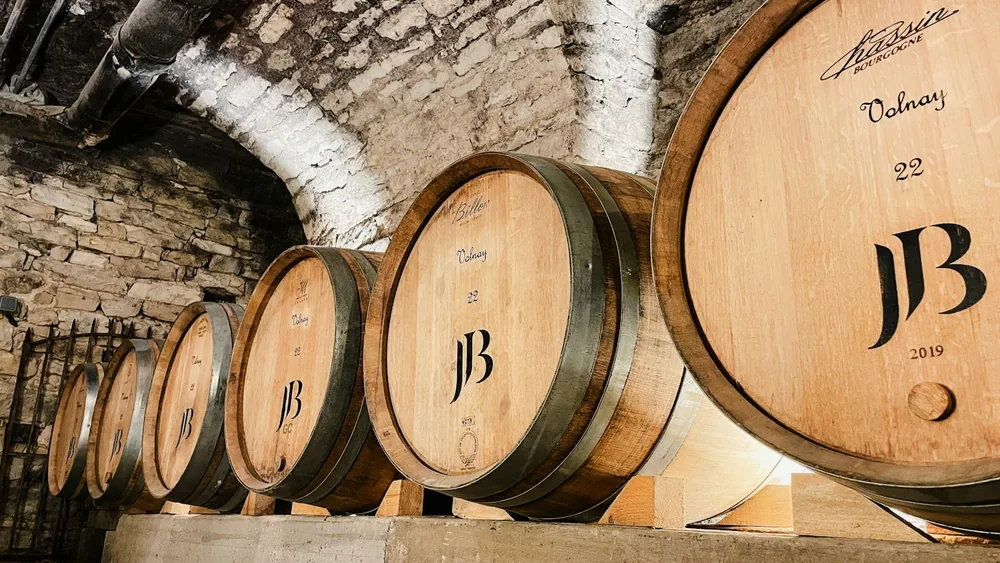
Formal sensory training works on exactly this principle, and university programs teach it as a discipline with its own protocols. The National Institute on Deafness and Other Communication Disorders explains how much of what we call taste is actually smell, which is why a blocked nose flattens a wine.
A Practice Structure That Fits a Home Kitchen
Deliberate practice needs three things: a narrow target, immediate feedback, and repetition. A restaurant supplies all three by accident. At home they have to be arranged on purpose, which is easier than it sounds.
- Choose one dish and cook it four times over a month rather than four different dishes once each.
- Change exactly one variable per attempt and write down what changed.
- Taste as you go, not only at the end, so you catch the moment a decision goes wrong.
- Serve the same style of wine each time so it becomes a fixed measuring stick rather than another variable.
- Ask one person for one specific comment, and take it without defending the dish.
The narrowness is what makes it work. Four attempts at the same braise will teach you more about heat, salt, and timing than a month of new recipes, because each attempt is interpretable against the last.
Why Twisting a Familiar Recipe Teaches More Than Following a New One
Following an unfamiliar recipe exactly is a test of instructions, not of judgment. Altering a dish you already know tests your understanding of what holds it together, and it fails informatively when you get it wrong.
Start with substitutions inside the same category, since those fail gently: a different vinegar, a different allium, a different herb in the same family. Then move to structural changes, such as changing the cooking method or removing an ingredient you assumed was essential.
Pairing is a natural place to run the same experiment, since the wine can be treated as one more ingredient in the dish. Our guides to food and wine pairing and practical wine skills both work from that assumption.
Improving Your Cooking and Palate FAQ
How long does it take to develop a palate?
Faster than most people fear, provided the tasting is comparative. Recognizing acidity, sweetness, and tannin as separate sensations usually takes a few focused sessions rather than years.
Do I need to write things down?
Yes, and briefly is enough. Memory for flavor is poor and heavily influenced by what you expected to taste, so a single line recorded at the time is worth more than a detailed recollection a week later.
What if my family gives no useful feedback?
Ask a narrower question. “Would you have this again, and what would you change?” produces answers where “how was it?” does not, and comparing two versions of the same dish gives even a reluctant taster something concrete to say. Regional differences work the same way, which is why tasting across California’s growing regions is such an effective exercise.