
A long time ago, I decided not to serve wine in a glass that would make me feel badly when it broke. And they all do, sometimes in the most freakish and unexpected ways. I’m not good with special handling either. I like to stash glasses in the dishwasher, and be done with them.
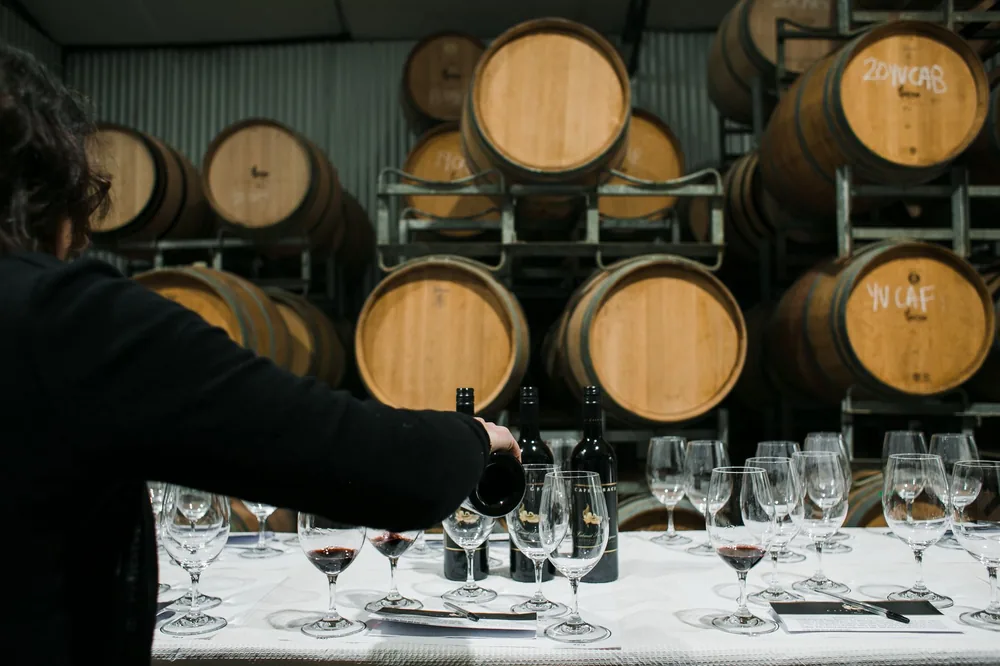
For home use, I own a quantity of easily replaceable generic wine glasses, costing no more than $10 each and shaped approximately like a Burgundy glass, not unlike the ones professional tastings provide. In addition to those, I have champagne flutes because I think they’re beautiful and festive. Now sommeliers are advising that flutes are unnecessary and even detrimental because they obscure aromas that a wider glass would enhance.
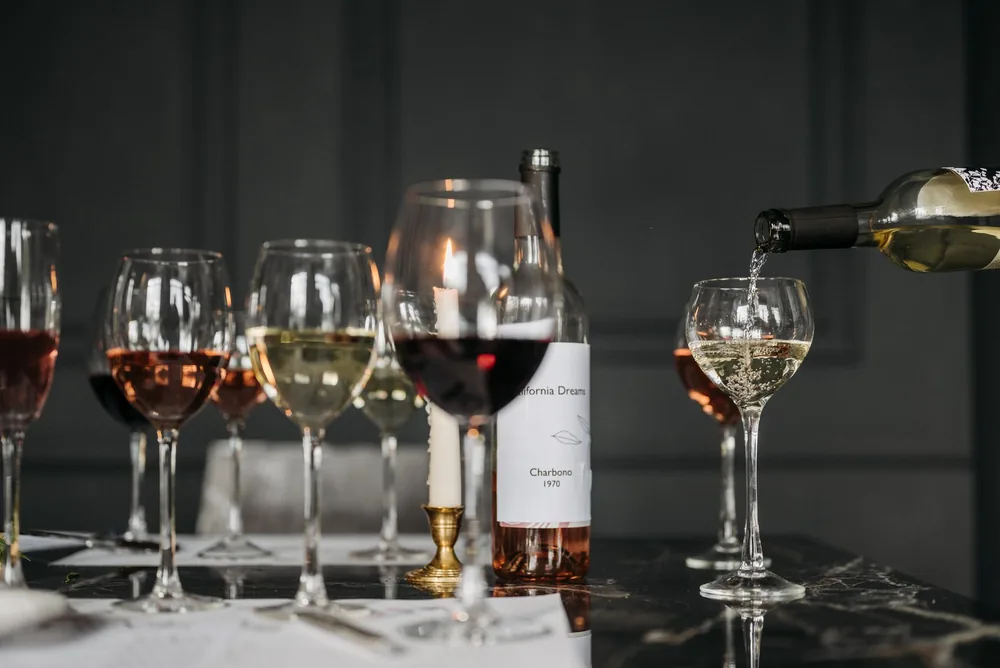
But recently I’ve had reason to rethink my choice. A group of Japanese medical professionals at Tokyo Medical and Dental University devised an experiment that documents the importance of glass shape on the taste of wine. The study was interesting and original enough to be reported in Scientific American.

Through an ingenious method, Kohji Mitsubayashi and colleagues filmed ethanol molecules at different temperatures leaving differently shaped wine glasses, a martini glass, and a straight glass. “At 13% C, the alcohol concentration in the centre of the wine glass was lower than around the rim. Wine served at a higher temperature, or from the martini or straight glass, did not exhibit a ring shaped vapor pattern,” reported writer Jennifer Newton. In other words, if ethanol mostly collects around the rim of the glass, we can then perceive the other aromas in the center that make a particular wine distinctive. Otherwise gaseous ethanol can blanket those other aromas in wine.
The article quotes wine scientist Regis Gougeon from the University of Burgundy France. “Bearing in mind the flavour enhancer properties of ethanol, this work provides an unprecedented image of the claimed impact of glass geometry on the overall complex wine flavour perception, thus validating the search for optimum adequation [compatibility]between a glass and a wine.
According to this study, Reidel and other glass makers, who claim that their glass shapes enhance wine flavor, are correct. But I’ll probably remain in my $10 comfort zone.At least breaking a glass will continue to be anon-event without a moment of self-recrimination or a single nasty thought about a friend. And I’ll never have to hand-wash a glass because it’s too valuable for the dishwasher.
What a Glass Actually Does
Almost everything a wine glass contributes happens before the liquid reaches your mouth. The bowl sets how much surface area the wine presents to the air, and the taper above it decides whether the released aromas concentrate or disperse. A wide bowl that narrows toward the rim gathers volatile compounds into a column and delivers them to the nose in a single stream.
Ethanol is the complication. It evaporates readily at room temperature and, in quantity, masks subtler aromas, which is why glass geometry and serving temperature act on the same problem. Reference data on ethanol’s volatility and physical properties is published in the National Institute of Standards and Technology’s chemistry entry for ethanol.
Pour Size and Swirling
An overfilled glass defeats the design. A standard five-ounce pour in a large bowl leaves headspace where aromas can collect, while a glass filled to the rim has nowhere to hold them and cannot be swirled. Swirling itself works by spreading a thin film of wine up the sides of the bowl, increasing evaporation for a few seconds.
Holding the glass by the stem is a practical matter rather than an affectation. A hand around the bowl warms the wine measurably within minutes and leaves prints on the surface you are looking through. Stemless glasses are convenient but give up both.
| Trait | Tulip, all-purpose | Wide bowl | Flute |
|---|---|---|---|
| Bowl | Medium, tapered rim | Large and rounded | Narrow and tall |
| Suits | Nearly any wine | Aromatic, lighter reds | Sparkling wine |
| Emphasizes | Balance of aroma and fruit | Aroma and lift | Bubble display |
| Trade-off | Master of none | Warms quickly, hard to store | Restricts aroma |
| Practical note | One set covers a household | Needs a full cupboard shelf | Increasingly replaced by tulips |
The Case Against Flutes, and the Case For Them
Sommeliers moved toward tulip-shaped glasses for sparkling wine because the narrow flute concentrates carbon dioxide at the rim and gives aroma little room to develop. A small wine glass shows more of what a serious sparkling wine has to offer. The flute survives because a rising column of bubbles is a genuine part of the occasion, and nothing else displays it as well.
That tension between function and ceremony runs through most glassware decisions. For a milestone toast, the visual matters; for a considered tasting, aroma matters more. Both positions are defensible, and the wine for celebrations guide treats the occasion as part of the decision.
Decanters Do a Different Job
A decanter changes the same variables a glass does, but on a larger scale and for longer. Pouring a bottle into a wide vessel exposes the whole volume to air at once, which softens firm young tannin and blows off any reductive, struck-match aromas that a wine can carry when first opened. Thirty minutes usually accomplishes more than an hour of standing in the glass.
The second use is mechanical. Older red wine throws sediment, and decanting slowly off a standing bottle leaves that sediment behind in the shoulder. Old wine gains little from air and often loses aroma quickly, so the pour should be gentle and the wine served soon after.
Aerating gadgets that pour wine through a funnel achieve a fast version of the first job and nothing at all of the second. They suit a young, tannic red poured a glass at a time. For anything delicate, the glass itself is enough.
Washing, Drying, and Storing
Detergent residue is the most common invisible fault in home glassware, and it flattens the head on sparkling wine and dulls aroma. A rinse with very hot water and minimal detergent, followed by a lint-free cloth, is enough for most glasses. Dishwashers are fine for sturdy stems, provided the rinse aid is not overdone.
Storing glasses upside down on a wooden shelf traps stale air and can transfer odor to the bowl. Rim-up on a clean shelf, or hanging from a rack, avoids that. A glass that has been sitting for weeks is worth rinsing before use, since dust and cupboard smells settle inside it.
Buying Sensibly
A single set of well-made all-purpose glasses does more for everyday drinking than a cupboard of specialized shapes. Thin rims and a decent bowl size matter more than the brand or the price, and machine-made glasses now achieve both. Buying the same design twice over the years also means replacing a broken glass costs one glass rather than a set.
Anyone building a first setup will get further by spending on quantity and simplicity than on variety. The wider practical ground, from serving temperature to tasting order, is covered in the wine skills and knowledge guide.
Wine Glass FAQ
Do expensive glasses really change the taste?
Shape changes what reaches your nose, and expensive glasses tend to have thinner rims and better proportions. The effect is real but smaller than the price difference suggests. Serving temperature usually makes a bigger difference than glassware.
Should red and white wine have different glasses?
It helps at the margins, since whites are served cooler and in smaller pours. One medium tulip handles both perfectly well for everyday drinking. Two sizes of the same design is the sensible compromise.
Why do some glasses show more bubbles than others?
Bubbles form on imperfections in the glass surface, and some manufacturers etch the base deliberately to encourage a steady stream. A perfectly smooth, freshly polished glass can look surprisingly flat. Residual detergent suppresses bubbles as well.