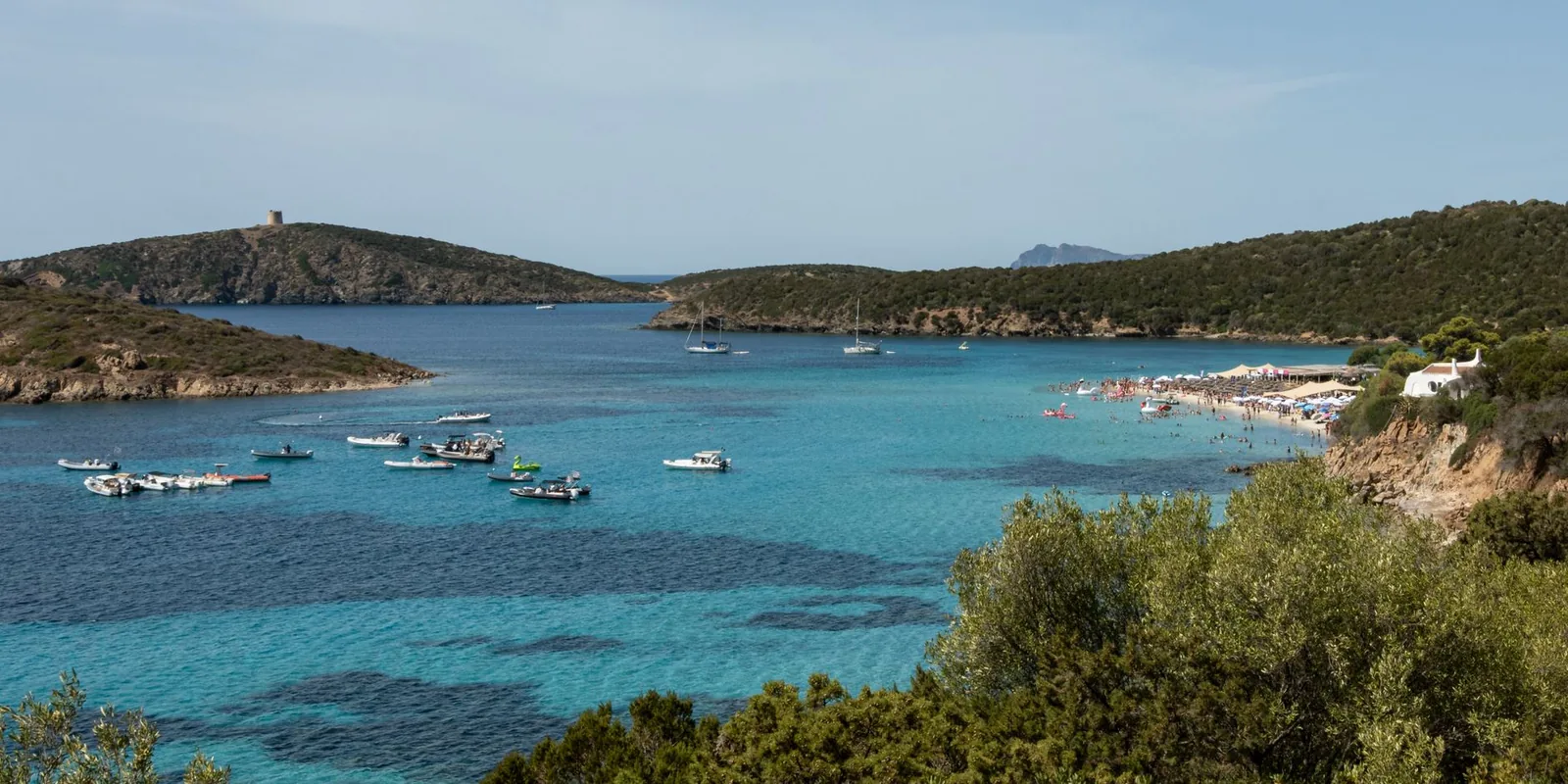
Dear Wine Witch: I enjoyed a wonderful Cannonau di Sardegna at a friend’s house and did a little research to learn something about the wine. I was surprised to find out that Cannonau was the same grape as Grenache from France. How did Grenache ever get to the island of Sardegna? —Tony Navone
Dear Tony: Grenache is actually everywhere. It was the most widely planted red grape in the world until recently when the Chinese started to cultivate Cabernet and Merlot, which also covers the map. So at this point, there may be more Cabernet and Merlot in the world than Grenache. We are less aware of Grenache, probably because it hides behind many names and is most often blended with other grapes so that its identity is obscured.
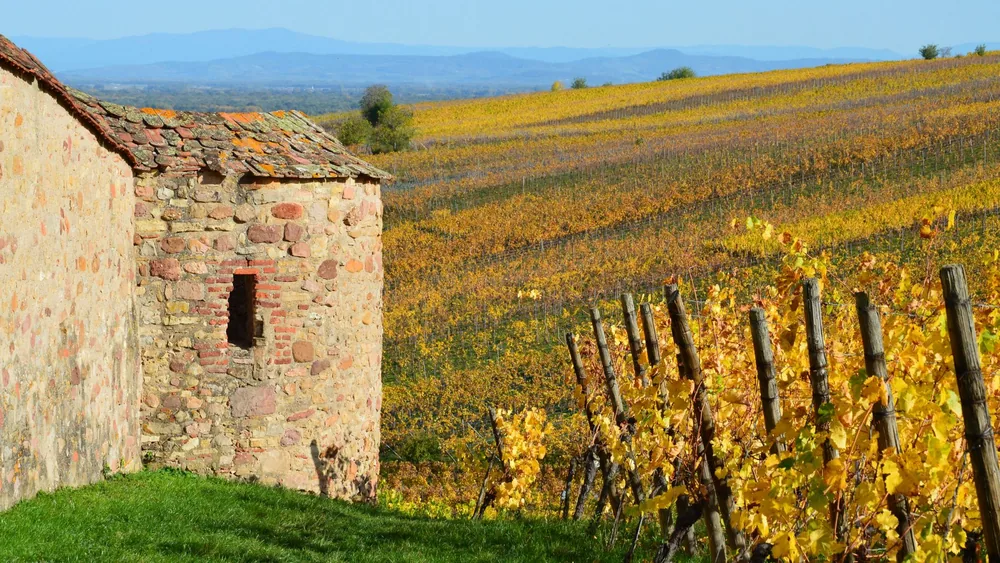
In Spain, the grape is known as Garnacha, and because the variety is light in color and reaches high sugar levels with very soft tannins, it is typically blended with austere grapes like Tempranillo, which has deep color and pronounced tannins. But the Spaniards also make Garnacha as a delicious single varietal wine.
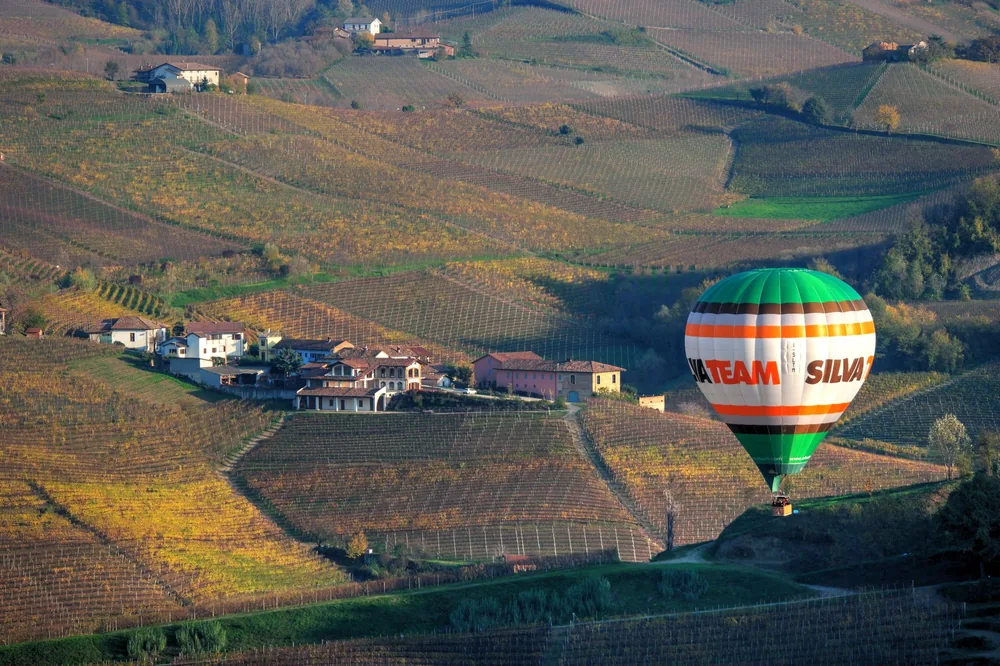
In France, Grenache grows mostly in the Rhone region and is part of the Rhone blend together with Syrah and Mourvedre, also more austere grapes. In addition to blended reds, the French make beautiful Rose` wines from Grenache.
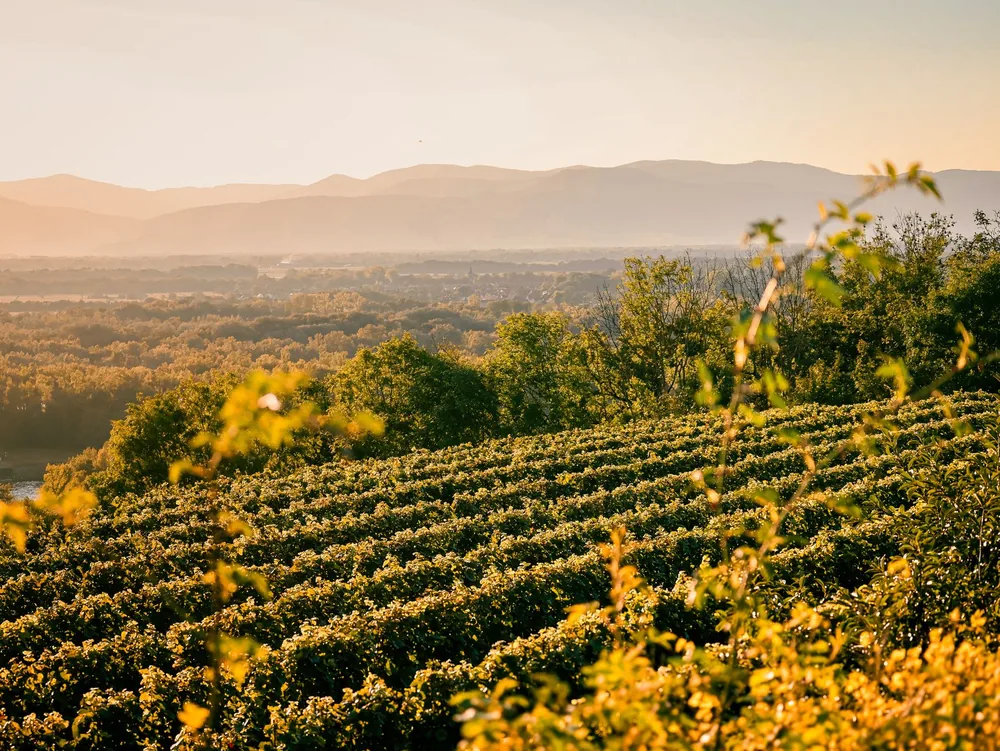
In California, the grape takes the French name, Grenache, and is the third most widely planted red, especially in the Central Valley, where it has been used in inexpensive blends and sweet wines. But California winemakers have lately directed more attention to Grenache because, when properly cultivated, it can make very tasty lighter reds that consumers are appreciating now. Some winemakers consider it the new Pinot Noir.
During the 1990s, Grenache was the most widely planted grape in Australia until Cabernet Sauvignon took over. Because Grenache can tolerate drought and heat, it is also planted in Algeria and Morocco and in Israel.
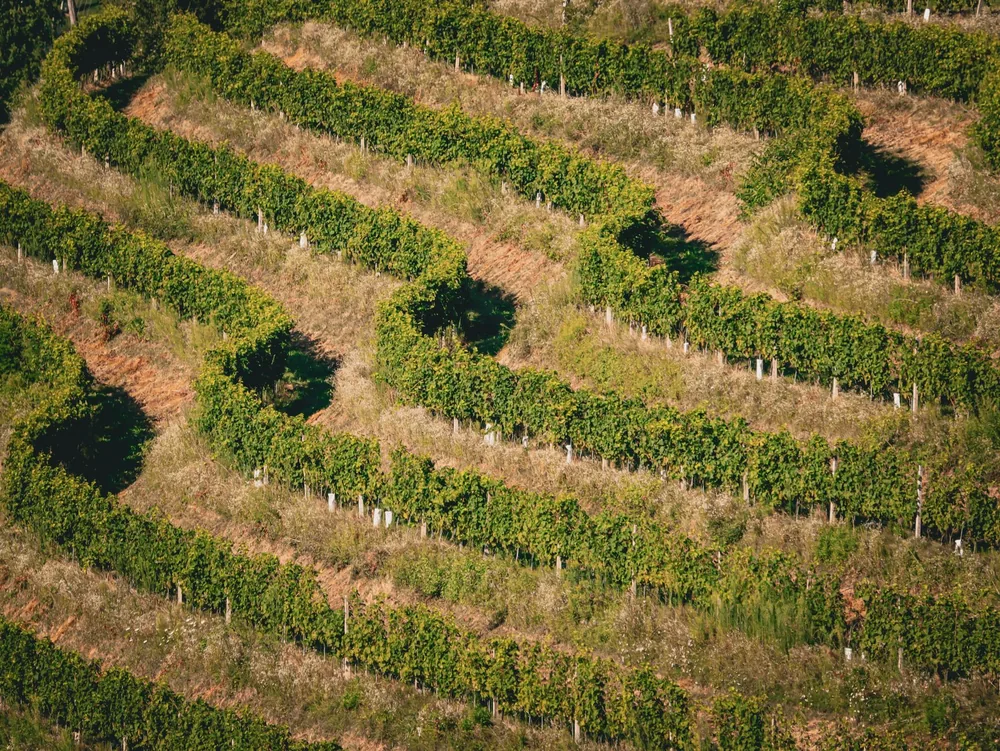
Oddly enough, Grenache may have originated on the island of Sardegna, at least the Sardinians think so. The alternate and more common theory is that Grenache is indigenous to Spain and was dispersed around the western Mediterranean by the Aragon kingdom, which ruled Sardegna between 1297 and 1713. Cannonau, as the Italians call it, is also planted in Sicily and Calabria. Carignano is another Spanish grape that produces beautiful wines in Sardegna. But on the island of Sardegna, both Carignano and Cannonau reach exalted heights that no other area surpasses. You got lucky when you tasted Cannonau di Sardegna. When Grenache is treated well in the best vineyards, it renders a softly delicious, spicy wine like the one you tasted.
Ask your local wine merchant to locate some Cannonau di Sardegna for you, but don’t be surprised if he or she has never heard of it. He’s much more likely to carry Garnacha from Spain.
How One Grape Acquires So Many Names
Before anyone could compare varieties across borders, growers named vines locally and had no way of knowing that the same plant was growing four hundred miles away under a different name. Synonyms multiplied for centuries, and only DNA profiling settled which of them describe the same variety.
That work has rearranged a good deal of received wisdom. Grapes long assumed to be distinct have turned out to be identical, others assumed identical have proved to be unrelated, and a number of famous varieties have been shown to be the offspring of crosses nobody suspected.
For this grape the genetic evidence has generally supported a Spanish origin, with the Sardinian claim resting largely on the age of the island’s vine population. The two positions are not entirely irreconcilable, since an early introduction followed by centuries of isolation would produce exactly the diversity found there.
| Region | Local name | Usual role |
|---|---|---|
| Spain | Garnacha | Blended with firmer grapes, and bottled alone |
| Southern France | Grenache | The base of southern Rhone blends and dry rose |
| Sardinia | Cannonau | Bottled as a single variety under its own designation |
| California | Grenache | Historically a blending grape; increasingly bottled alone |
Why This Grape Suits Hot, Dry Places
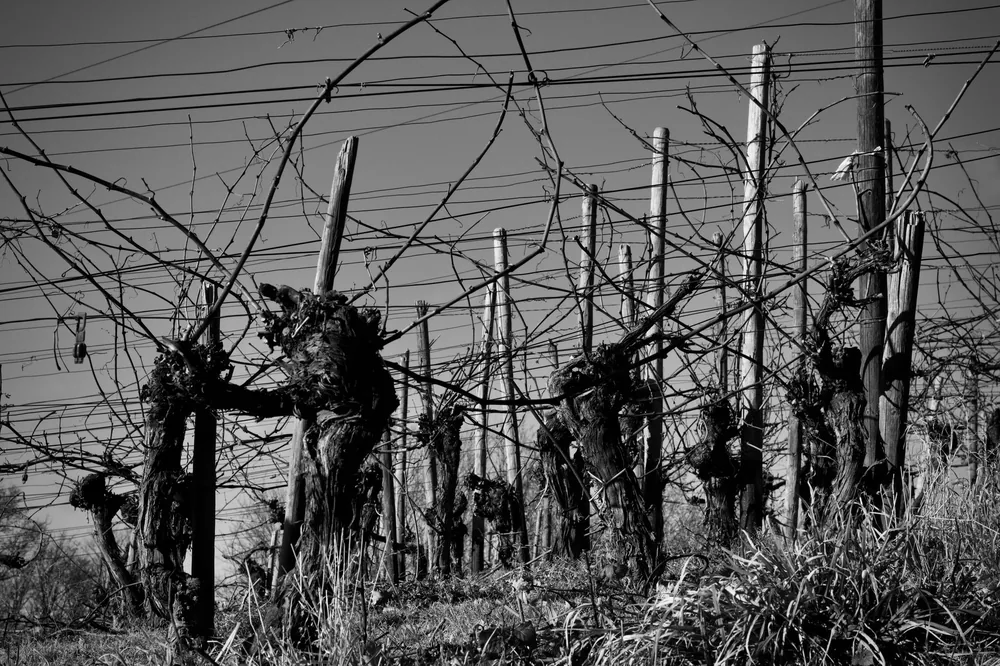
The variety’s spread across the western Mediterranean, North Africa, and Australia is not a matter of fashion. It is upright and sturdy enough to be grown as a free-standing bush vine without a trellis, it tolerates wind, and it copes with drought better than most.
Those traits made it the practical choice wherever water was scarce and infrastructure minimal. Bush-trained vines shade their own fruit and need no wire, which mattered enormously before modern vineyard investment.
The trade-off is ripeness. The grape accumulates sugar readily and holds color and tannin poorly, so it can produce wines that are high in alcohol and short on structure if it is grown for volume on fertile ground.
What Changes When It Is Grown for Quality
Old vines, poor soils, and restrained yields transform the same variety. Age reduces vigor naturally, which concentrates what the vine does produce, and thin soils limit the water supply that otherwise dilutes flavor.
This is why the best examples come from places nobody would choose for easy farming: stony ground, exposed hillsides, and old plantings that survived because replanting them was not worth the expense. Sardinia’s reputation for this grape rests on exactly that combination, as does the reputation of the southern Rhone.
The California story followed the same path in reverse. Decades of plantings in the warm interior served inexpensive blends, and renewed attention has come from cooler sites and older vineyards, a shift traced in our guide to California grapes and styles. The Department of Agriculture’s California grape acreage reports record how the plantings have shifted by variety and district.
Oxidation is the other handling question. The grape’s thin skins and relatively low phenolic content leave the resulting wine more exposed to air than a darker, more tannic red, which shapes decisions about vessel, aging, and how long a bottle stays interesting once opened.
Winemakers have answered that in opposite directions. Some protect the wine closely to preserve its perfume, while others allow measured exposure in older wood or clay to build texture, and the two approaches produce wines that scarcely seem related.
Sardinia’s Other Spanish Inheritance
The island’s second notable red is likewise a variety shared with Spain, and the two arrived through the same long period of Aragonese rule. Four centuries of political connection moved plants, people, and vocabulary in both directions across the western Mediterranean.
Sardinia kept what worked and adapted it. Isolation preserved old plantings, and local practice diverged far enough that the wines no longer resemble their Spanish counterparts closely, which is the usual outcome when a variety settles somewhere for several hundred years.
Both grapes are now protected under Italian designations of origin with their own rules on growing area and production, part of the framework described in our overview of Italy’s wine regions.
Grenache and Cannonau FAQ
Are Grenache, Garnacha, and Cannonau really the same variety?
Yes, for the principal red form. There are also pale-skinned and hairy-leafed mutations grown separately under their own names, which is common in varieties that have been propagated by cuttings for centuries.
Why is it so often blended rather than bottled alone?
It brings alcohol, red fruit, and softness while contributing little color or tannin, so it pairs naturally with varieties that supply exactly those missing elements. Blending was a practical correction long before it was a stylistic choice.
What does the comparison to Pinot Noir mean?
It refers to weight and texture rather than flavor: a paler, lower-tannin red that rewards cool service and suits a wide range of food. The varieties are unrelated, and the styles they produce are covered separately in our guide to Italian grapes and styles.