The latest issue to roil the wine industry and consumers alike was recently aired on CBS News and involves the arsenic content in cheap wines. Briefly, the story goes like this: Denver-based lab Beverage Grades tested 1,308 wines and found arsenic levels in 83 of them, made by 11 California wineries. Those wines were found to contain three to five times more arsenic than is permitted by the EPA in drinking water, which is 10 parts per billion. Two California couples subsequently filed a class action lawsuit against the 11 wineries.

Immediately after the filing, all eyes in the business turned to Wine Institute, the trade group that represents 1000 California wineries and lobbies for their interests. Apparently, 23of the 83 wines in the lawsuit are certified by Wine Institute’s Sustainable Wine growing Alliance,a self-monitoring program, whose large manual instructs users in sustainable practices for making wines and farming vineyards. While 57% of California wine companies have the wine-making certification, only 25% of vineyards have it, an important distinction that would certainly confuse consumers. In any case, the program does not seem to prohibit practices that might lead to residues of arsenic in wines, such as the use of inorganic fertilizers or pesticides, on which industrial wineries heavily depend.
So the Wine Institute defense goes like this:1) Applying drinking water standards for arsenic to wine is inappropriate because people drink much more water than wine. 2) Arsenic is everywhere in soil, water, and air and in food,juices, vegetables, and grains, so of course it’si n wine. 3) The FDA has no standards for arsenici n wine but trading partners who do, allow much higher levels than were found in tested wines, Canada at 100 parts per billion and the EU at 200 parts per billion.
My viewpoint is this: 1) All arsenic is not equal. The EPA standard of 10 ppb includes both organic and inorganic arsenic. The arsenic that Beverage Grades found in the 83 wines is predominantly inorganic so more toxic. 2) But is 10 ppb a safe guideline? Maybe not.
Various studies have recently weighed in with results that were similar to the one conducted in 2014 at the Environmental Chemistry Laboratory at the University of Montreal,where scientists concluded that drinking water arsenic limits were not strict enough “The target should be zero…. Tighter drinking waterquality criteria should be implemented to properly protect people from excessive cancer risks. Food safety regulations must be put in place to prevent higher concentrations of arsenic in various drinks than those allowed in drinking water.”
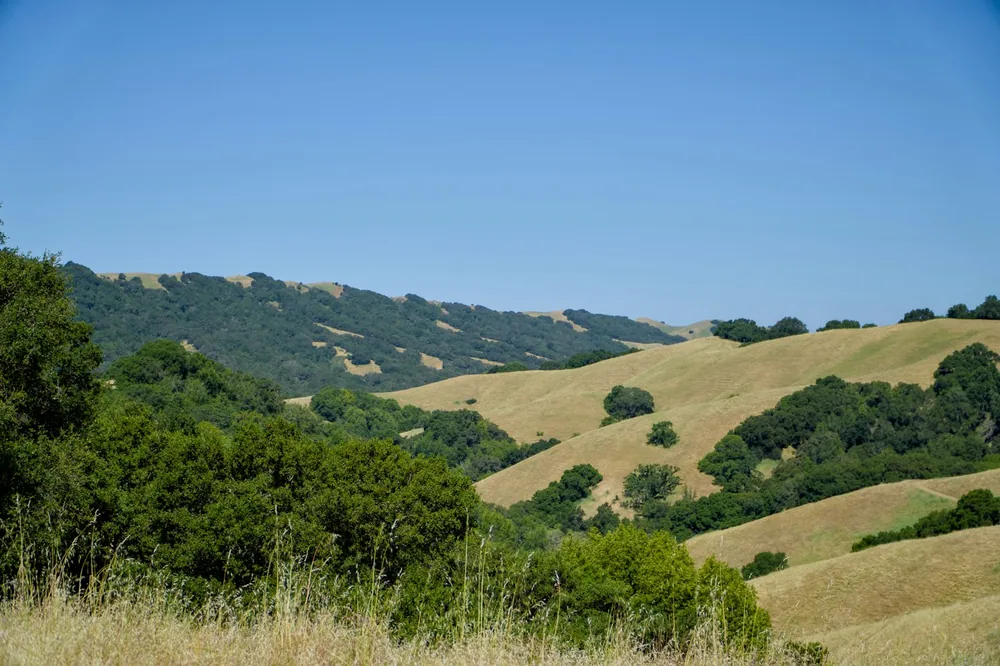
3) Probably by design, a lot of things are conflated in this issue, not just organic and in organic arsenic but also cheap industrial wine with wines from well-farmed sustainable vineyards, not to mention wines from organic and bio-dynamic vineyards.All wine is not equal. I see the case as awake-up call. Pay as much attention to the wine you drink as the food you eat. Arsenic is just one contaminant that might be in cheap wine. A host of others are possible in wines from poorly farmed vineyards. The studies are just beginning.
How a drinking water standard is set, and what it covers
Federal drinking water limits are legal thresholds for public water systems, not general statements about safe exposure in every product. The Environmental Protection Agency sets a maximum contaminant level for arsenic and requires community water systems to monitor and report against it, with treatment obligations when the level is exceeded. Its overview of chemical contaminant rules for drinking water explains how those limits are established and enforced.
The standard is built around lifetime exposure through tap water, which people consume in far larger volumes than any other single source. That assumption is what makes it a poor fit for other beverages without adjustment, which is the core of the industry argument summarized above. It is also why comparing a wine figure directly against the water number provokes an argument every time.
Different agencies hold the authority for different products, and that fragmentation is genuine rather than evasive. Drinking water sits with the Environmental Protection Agency, most foods with the Food and Drug Administration, and wine labeling and production with the Alcohol and Tobacco Tax and Trade Bureau. A gap in one agency’s rules is not automatically covered by another’s.
Two kinds of arsenic, and why the distinction matters
Arsenic occurs naturally in rock and soil, which means it appears in groundwater, in crops and in the beverages made from them. Its toxicity depends heavily on chemical form, and the two categories behave very differently in the body.
| Trait | Inorganic arsenic | Organic arsenic |
|---|---|---|
| Where it occurs | Rock, soil, groundwater, some industrial residues | Common in seafood and some plant tissue |
| Relative toxicity | The form of primary regulatory concern | Generally regarded as much less toxic |
| Regulatory attention | Central to drinking water limits | Usually distinguished in testing |
| Why testing matters | Total figures can obscure which form is present | A high total may be mostly this form |
What a part per billion means in practice
A part per billion is a concentration, not a dose. Ten parts per billion is roughly ten drops in a large swimming pool, and the health question always depends on how much of the substance a person takes in over how long. That is why regulators pair a concentration limit with an assumption about consumption volume.
The practical consequence for any beverage is that both numbers must be stated together. A concentration in a drink consumed by the glass and a concentration in water consumed by the liter cannot be compared without doing that arithmetic, and reporting frequently omits it.
Testing method matters as much as the number reported. Laboratories can measure total arsenic or speciate the result into its separate forms, and the two answers are not interchangeable for interpreting risk. A study that reports total figures without speciation leaves the most important question open.
Sample size and selection are the other place where a number can mislead. A survey that tests a large number of wines and finds elevated results in a small subset says something about those specific products, not about a category. Extending the finding to all inexpensive wine, or to wine generally, is an inference the data does not support.
Reading vineyard and cellar practice instead
The broader argument above is about attention to how wine is farmed rather than about a single element. Vineyard inputs, soil history and processing decisions all leave traces, and the documentation available to a drinker varies enormously by producer.
- Certification schemes state what a grower may and may not apply, which is more informative than a general claim on a back label.
- Estate-farmed wines make it easier to trace which land the fruit came from.
- Older vineyard sites can carry residues from decades-old practices unrelated to the current owner.
- Testing programs report on samples rather than on every bottle, so results describe a batch and not a brand.
Our notes on practical wine knowledge and our survey of California’s wine regions cover how differently farming operates from one part of the state to another.
FAQ: arsenic and wine
Does any federal agency limit arsenic in wine?
Drinking water limits apply to public water systems rather than to wine, and responsibility for wine sits with different agencies. Trading partners set their own limits for imported wine, which is why figures from other countries appear in these debates.
Is arsenic in wine always a sign of poor farming?
Not necessarily. Arsenic occurs naturally in soils and groundwater across large parts of the world, so its presence at low concentrations reflects geology as much as agriculture.
Does organic certification guarantee lower levels?
No. Certification governs what may be applied to a vineyard, not what is naturally present in the ground beneath it. It narrows one pathway without eliminating the geological one.