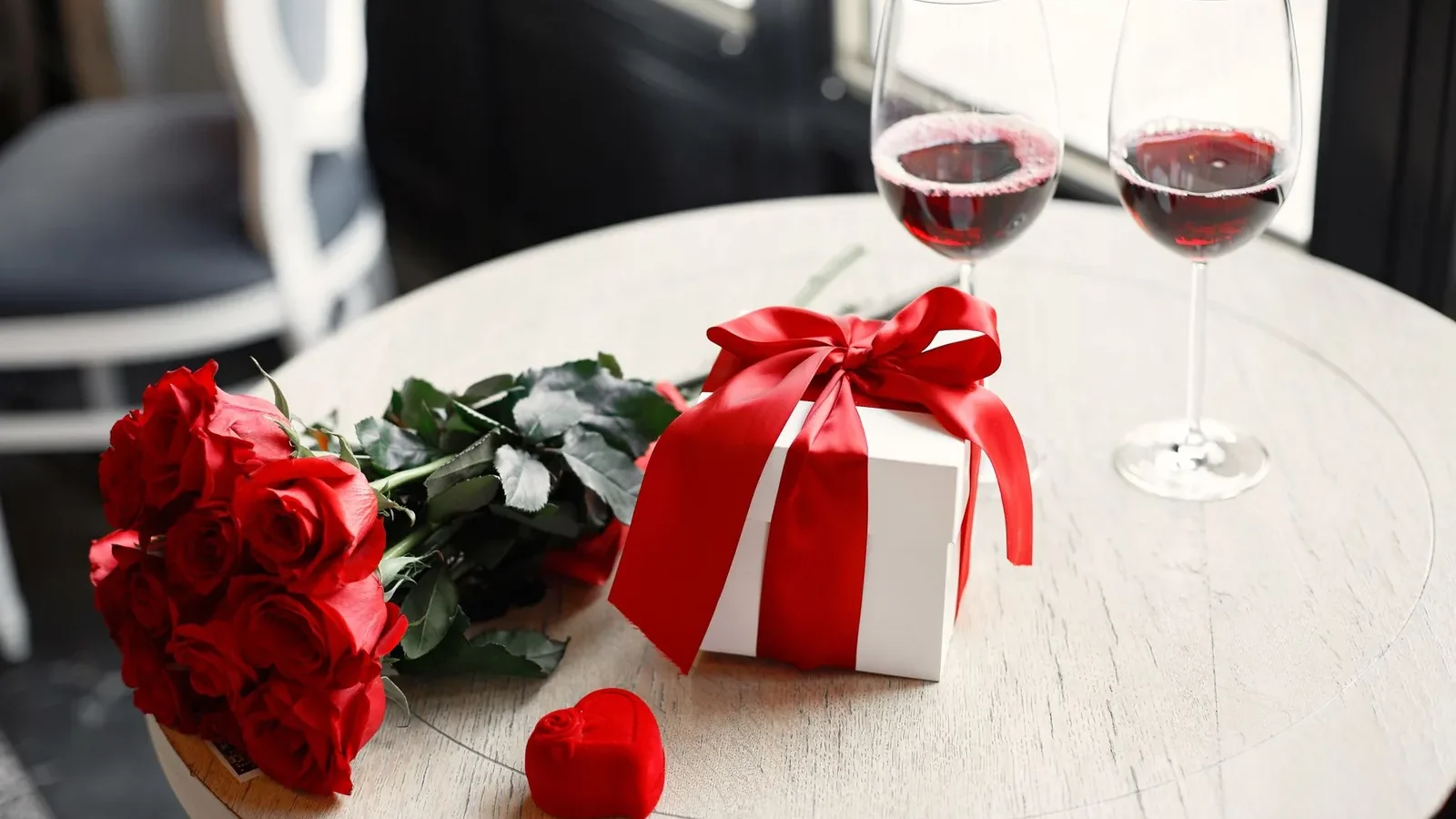
According to one source, half the people who become engaged in a given year, do so on Valentine’s Day. And the substantial gift-giving that occurs on the holiday indicates that many others take the holiday seriously as a celebration of romantic love, the magic that is part of any completely viable partnership, even though it can sink below zero during trying times. The fragility of romantic love in day to day life is all the more reason to approach Valentine’s Day with enthusiasm and nurture its purpose.

We associate three gifts with Valentine’s Day, flowers, chocolate, and champagne. Of the three, flowers reflect the pagan roots of Valentine’s Day, when the holiday was a celebration of spring and the rebirth of nature along with human fertility. Chocolate is thought to be a particular favorite of women, associated with “cravings,” and champagne is a celebration symbol, all those bubbles joyously colliding. But if you think about it carefully, red wine is the single most appropriate gift of all.

Assuming that you plan to celebrate the occasion, why is red wine the best gift for Valentine’s Day and the best expression of romantic love? First, like love it warms us, and after all, February 14th is still winter. Second, wine is red, the color of love, of the heart. And third, like love it can make us giddy. Flowers, chocolate, and champagne just don’t measure up to all three tests. To finalize my argument and inspire you at the same time in case you need a nudge, I summon much wiser heads than mine, who have pondered the connection between wine and love.

In water one sees one’s own face. But in wine, one beholds the heart of another.
An Old Frech proverb
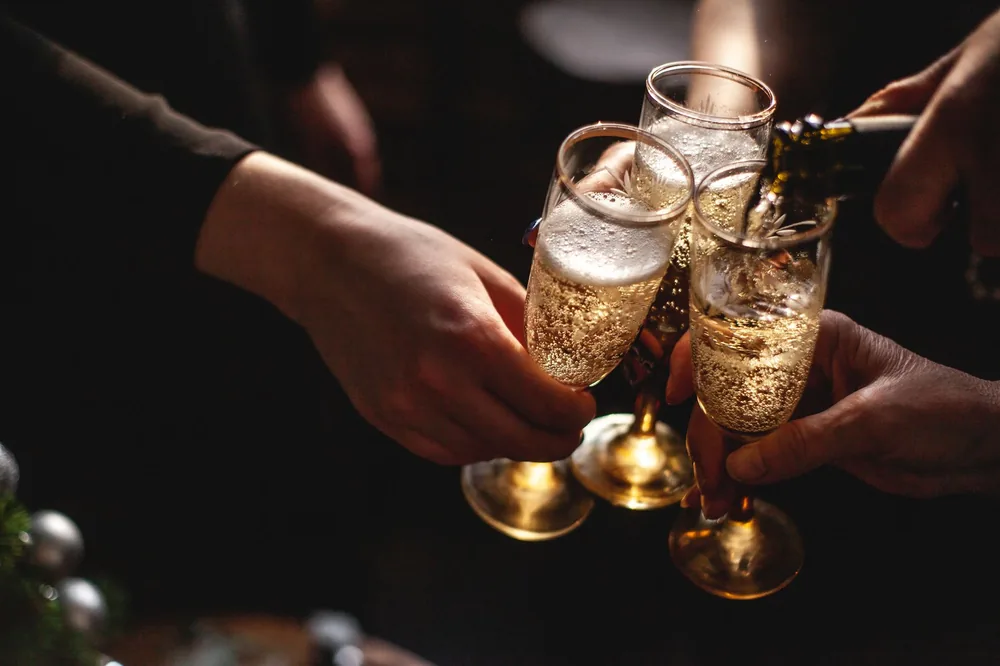
May our love be like good wine, grow stronger as it grows older.
Old English Toast

The Spirit of Wine
Sang in my glass, and I listened
With love to his odorous music,
His flushed and magnificent song.
William Ernest Henly
They are not long, the days of wine and roses:
Out of a misty dream
Our path emerges for a while, then closes
Within a dream.
Ernest Dowson
Getting the temperature right in February
The old advice to serve red wine at room temperature comes from an era of stone houses and unheated dining rooms, where a room sat closer to sixty degrees than seventy. A modern heated room in February pushes a red wine well past its best, and the first thing that shows is alcohol, which turns warm and slightly harsh on the finish. Twenty minutes in the refrigerator before pouring fixes it.
Lighter reds take the cooling especially well, and a distinct chill suits them the way it suits a rosé. Fuller reds want less, but they still show better a few degrees below a heated room. The pattern is easy to remember: cool a red slightly, and let a white sit out of the refrigerator for a few minutes before serving.
Winter also affects storage, since rooms swing between warm evenings and cold nights when the heating goes off. That cycling does more harm to a bottle than a steady cool temperature ever would, which is why an interior closet beats a kitchen counter. Seasonal temperature patterns are tracked in detail through NOAA’s weather and atmosphere resources for anyone curious about how much a local climate actually varies.
Choosing a red around the meal
A romantic dinner is usually a specific menu rather than an abstract occasion, and the food should decide the wine. Rich, slow-cooked dishes and grilled meat give tannin something to work against, while lighter fare is overwhelmed by a heavy, high-alcohol red. Matching weight to weight is the single most reliable rule there is.
| Menu | Red wine weight | Why it works |
|---|---|---|
| Roast chicken or salmon | Light, low tannin | Acidity lifts the dish without covering it |
| Pasta with tomato | Medium, high acidity | Wine acidity matches the sauce |
| Steak or lamb | Full, firm tannin | Protein and fat soften the tannin |
| Mushroom or truffle dishes | Medium, earthy character | Savory flavors reinforce each other |
| Cheese course | Depends on the cheese | Salt and fat need acidity or sweetness |
Serving two smaller pours of different wines across a meal often works better than one bottle throughout. It gives the table something to talk about and lets each course have a partner that suits it.
The chocolate problem
Chocolate and dry red wine are a famously awkward pair, and the reason is structural rather than a matter of taste. Chocolate is sweet, fatty and often bitter, and a dry red served next to it can taste thin, sour and unusually tannic by comparison. The sweetness in the food outruns the wine.
Two fixes work. Choose a chocolate with high cocoa content and less sugar, so the contrast narrows, or choose a wine with some sweetness of its own, which is why fortified and late-harvest wines are the classic partners for dessert. Our guide to food and wine pairing works through the same principle across other difficult foods.
Setting a table that helps the wine
Small details make a bigger difference than most people expect at a dinner for two. Open the bottle early, since almost every red improves with fifteen or twenty minutes of air, and pour a small taste before the food arrives to see where the wine is. Use larger glasses than feel necessary, because an underfilled glass concentrates aroma.
Keep the table free of strong competing smells, especially scented candles and heavily perfumed flowers, which sit directly in the path between the glass and the nose. Unscented candles do the same job for the mood without erasing the aroma of dinner. Our notes on wine for celebrations cover the same practicalities for larger gatherings.
If sparkling still feels right
Nothing about choosing red rules out bubbles earlier in the evening. A dry sparkling wine works better than almost anything else with the salty, fried and briny things that tend to start a celebratory meal, and its acidity resets the palate before the main course arrives. A small pour to begin and a red with dinner is a sequence that flatters both.
Sparkling rosé sits neatly between the two, with the acidity and carbonation of a white and a little of the red-fruit character of a light red. It handles charcuterie, smoked salmon and hard cheese without any strain. Serving it well chilled in a glass with a proper bowl rather than a narrow flute gives the aromas somewhere to collect.
Gifts that are not a bottle
For someone who already has more wine than shelf space, the useful gift is usually equipment rather than another bottle. A pair of well-shaped glasses, a decent corkscrew, a vacuum stopper or a simple decanter all get used constantly and cost less than a serious bottle. Each of them improves every wine that follows rather than being finished in an evening.
Valentine wine FAQ
Should the wine or the food be sweeter?
The wine, or at least an equal match. A dessert sweeter than the wine strips the fruit out of it and leaves the acidity exposed, which is why dry wines struggle at the end of a meal.
Is decanting worth the trouble for one evening?
For a young, firm red, yes, and it takes a minute. Pouring the wine into any clean pitcher and back into the bottle achieves most of the benefit if there is no decanter in the house.
What if we prefer different styles?
Open two half-sized options or pour one red and one white and share both across the courses. Nothing about a shared meal requires a shared bottle, and comparing two wines is more interesting than agreeing on one.