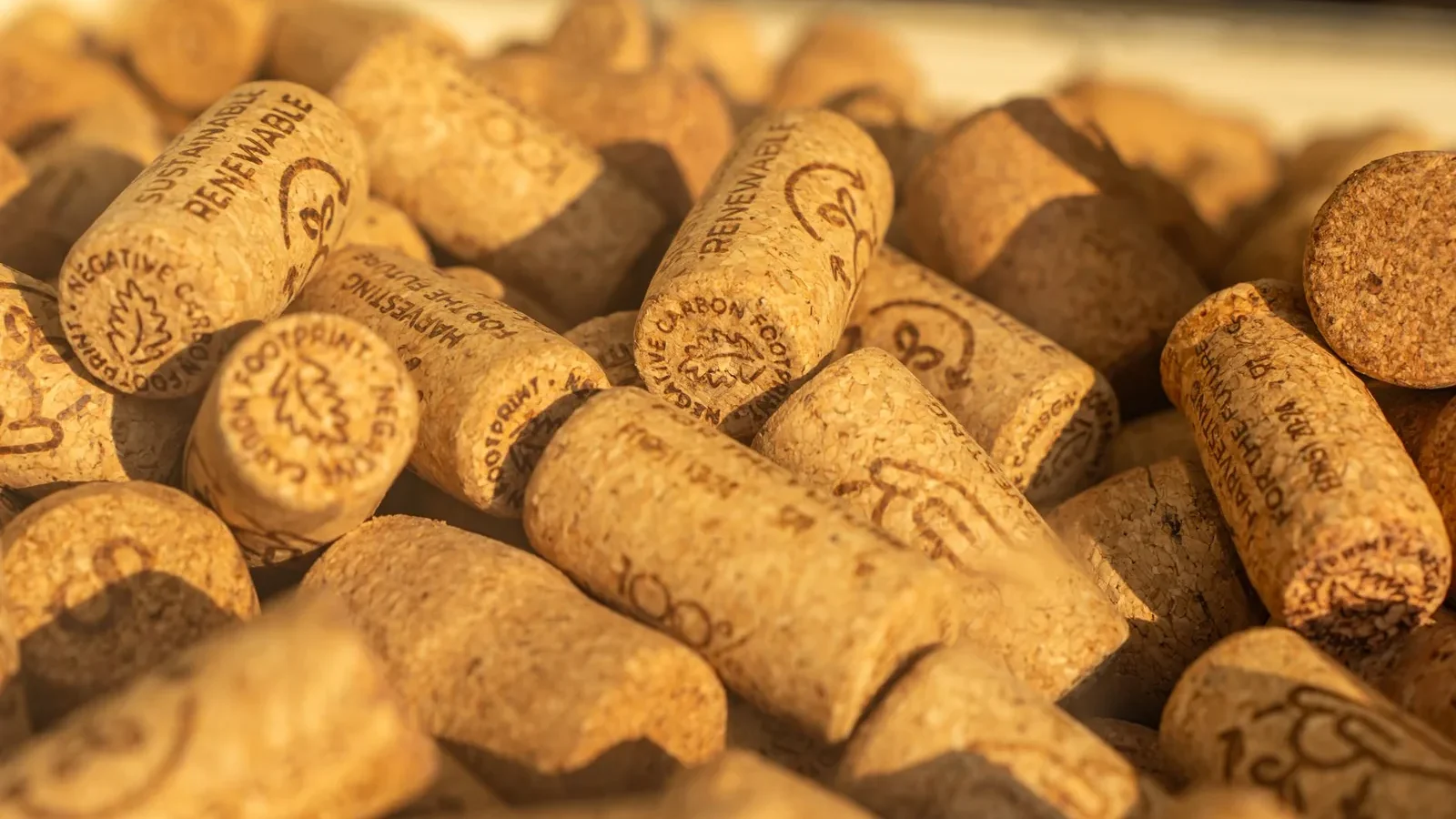
In the 1990s, 95 percent of wine bottles were sealed with natural cork. Today, that number is down by a third. Screw caps and plastic corks gained market share as cork taint increased because of that nasty chemical known as TCA. Although the cork industry was severely impacted by diminished sales, it was publicly silent although not passive.
Cork taint occurs when naturally occurring fungi and bacteria on cork come in contact with chlorine, which is easy enough, especially through water. Around 2005, as much as seven to ten percent of corks were contaminated with TCA, which at first robs wine of flavor and in later stages produces moldy sensations, driving angry winemakers to non-cork bottle closures.

Over the years, the cork industry has been researching and implementing new production strategies and technologies to diminish TCA. Currently, just one to two percent of corks are contaminated, according to what should be an unbiased source from the University of California, Davis. Major cork companies have also opened facilities in Northern California, where they can directly service the wine industry, instead of dealing with intermediaries.
Now that cork taint is thoroughly under control and will probably diminish even further, the Cork Quality Council and 100% Cork, another organization supported by the cork industry, are making a loud and convincing argument in favor of their product.

In terms of wine, cork is the only stopper that is capable of preserving wine for 20 to 30. Plastics and screw caps create various problems in the long term and have been used mostly for fresh wines, especially whites that are expected to be consumed soon after bottling.

But the newer argument in favor of cork considers its sustainability. Cork is harvested from oak trees mainly in Portugal and Spain. The bark, from which corks are made, is trimmed every nine years, without harming the trees. Along with protecting plants and endangered animals, these old-growth, bio-diverse forests absorb millions of tons of CO2, combating global warming. Whereas cork is entirely biodegradable, aluminum screw caps and plastic stoppers, made from petro chemicals, are derived from precious resources and end up in land fill.
Cork sales to wineries are now increasing, and American consumers prefer them. 100% Cork’s Facebook page asked the question, “Why do people prefer wines with natural cork?” One wine consumer responded,” You need to ask? Because that’s a real bottle of wine.”
How a Cork Is Actually Made
Cork comes from the bark of the cork oak, a tree that regenerates its bark rather than being felled for it. The first harvest happens only when a tree is around twenty-five years old, and the bark taken then is too irregular for bottle stoppers. Only the third stripping and later, from a tree well past forty, yields bark good enough for a natural cork.
After stripping, the planks season outdoors for months, then are boiled to clean and soften them and to expand the cellular structure. Individual corks are punched from the plank, graded, washed, and finished. A single natural cork is one continuous piece of bark, which is why plank quality sets a hard limit on how many can be made.
Not Every Cork Is the Same Thing
Technical closures work around that limit. Agglomerated corks are made from granulated cork bound together, and one-plus-one closures glue a natural cork disc on each end of an agglomerated body so that only solid cork touches the wine. Colmated corks are natural corks whose surface pores have been filled with cork dust and adhesive.
Each of these behaves differently over time, particularly in how much oxygen it lets through. That figure, the oxygen transmission rate, is the single most important property of any closure, because slow, steady oxygen ingress is what allows a wine to develop rather than simply oxidize.
Cork Taint and How It Is Screened
The compound behind most cork taint is 2,4,6-trichloroanisole, produced when microorganisms methylate chlorinated phenols. Human sensitivity to it is extraordinary, with detection thresholds measured in parts per trillion, and it suppresses aroma before it ever smells overtly of damp cardboard. That is why a mildly tainted bottle reads as dull or closed rather than as faulty.
Producers attacked the problem at both ends. Chlorine was removed from cleaning and bleaching processes, and steam or supercritical carbon dioxide extraction is now used to strip volatile compounds from finished corks. Some suppliers screen closures individually by gas chromatography and guarantee the batch.
The material itself is bark stripped from the cork oak, the tree the closures are cut from, and the closure industry has rebuilt its processing around removing the taint compound. The practical result for a drinker is that a corked bottle has become the exception rather than an accepted cost of doing business.
| Trait | Natural cork | Technical cork | Screw cap |
|---|---|---|---|
| Material | One piece of cork oak bark | Cork granules, often with natural discs | Aluminum shell with a liner |
| Oxygen transfer | Low, varies bottle to bottle | Low and consistent | Very low to moderate, set by the liner |
| Usual application | Wines meant for long aging | Wines drunk within a few years | Fresh whites, roses, everyday reds |
| Storage position | On its side | On its side | Upright is fine |
| End of life | Biodegradable, recyclable | Biodegradable, recyclable | Recyclable as metal |
The Forest Argument
Cork oak landscapes are working forests rather than plantations, grazed and farmed alongside the bark harvest, and the trees are not cut down to produce corks. Because the bark regrows on a cycle of roughly nine years, a single tree can be harvested a dozen times or more across its life. The economic value of that bark is what keeps the landscape intact.
That is the core of the sustainability case: demand for corks funds the maintenance of a habitat that would otherwise face pressure to convert to other uses. Whether any individual bottle is better served by cork or by a screw cap still depends on how long the wine is meant to last.
What This Means for a Bottle in Your House
A natural cork needs contact with the wine to stay swollen, which is the entire reason for storing bottles on their sides. Humidity around 60 to 70 percent keeps the exposed end of the cork from drying, and a steady temperature matters more than a low one. Screw-capped bottles are indifferent to position.
Old corks become fragile, which changes how a bottle should be opened. Details on that, and on the rest of the practical side of handling wine, sit in the wine skills and knowledge guide, while the producers who make the aging decisions in the first place are profiled across the California wineries archive.
Cork and Closures FAQ
Does a screw cap mean a cheaper wine?
No. Screw caps are a technical choice about oxygen and consistency, and serious producers use them for wines meant to be drunk young and fresh. Some age-worthy wines are sealed that way too, with liners chosen for slower oxygen transfer.
Is a corked wine unsafe to drink?
It is unpleasant, not harmful. Cork taint suppresses fruit aroma and, at higher levels, smells of wet cardboard or damp basement, but the wine is not spoiled in a way that affects health. The customary remedy is replacement of the bottle.
What does crumbling cork indicate?
Usually age, dryness, or both, rather than a fault in the wine. Pieces floating in the glass are harmless and can be strained out. More of these questions turn up throughout the hot topics archive.