
Taking a walk one evening on a country road with a friend, we paused when he said, “Look at this flashlight.”

I laughed because the intensity in his voice didn’t match with what he had just stated. “So what? It’s a flashlight,” I replied.
“You don’t understand. It’s the best of its kind.” And he proceeded to explain the reasons. He had the pleasure of owning the best flashlight in the world. And he loved it, the lightness of the instrument, its piercing yet adjustable beam. I began to think about the concept, what it means to be acquainted with an object that is the best of its kind, whether it be a tool, a piece of equipment, an article of clothing, a bottle of wine, almost anything that can be recognized as having the highest quality.
I recalled being in the clothing business many years earlier, working in the ateliers of Rome. Clothing on that level was unlike anything I’ve worn since. The texture, weight, and colors of fabric compelled sight and touch, and the perfection of pieces stitched together by women, who had made entire careers of doing so, was a marvel of detail and technique. The design and sensation of the clothing on the body was as comfortable and organic as another layer of skin.
Recently, I was ambling down the street of a coastal town on a Sunday afternoon and joined a small group that had surrounded a car parked at the curb. The owner was animated, pointing out the details of his Tesla Roadster, and the group listened with attention. I learned the meaning of torque, how the car could go from zero to 60 miles per hour in four seconds, not necessarily relevant to everyday driving but conceptually important to its owner. At least, he could have moved out of harm’s way quickly enough if he needed to. We marveled at the design and detail of the technology as he described it.
Of course, the best of its kind comes with a price tag that can range from enormous to small, depending on the object. At the time, I think my friend’s flashlight was $25. The Tesla was $100K. But having the means to acquire the best isn’t necessarily a motivator. We have to perceive the value. An Italian winemaker and his wife stopped by my office before Christmas and remarked that Americans didn’t appreciate good food. Unlike the Italian, the American would be just as happy opening a can instead of seeking out the freshest green bean. After all, they both staunch hunger equally well. Some one gave me a bar of hand made soap. When I mentioned it to another friend, she asked what difference it made. Ivory cleans just as well. I would have thought so too until I had used the gifted soap.
I once drank a wine that Robert Parker had awarded 98 points. I hope I won’t be disappointing anyone when I say that I don’t have this opportunity every day. To tell the truth, I don’t remember off hand which wine it was. I remember only that it was Italian. Say what you will about Robert Parker and his preferences, a wine that he awards 98 points is a memorable experience. And I remember it clearly, especially its texture, the finest tannins that I could imagine, the way that tannin, acid, and fruit flavor were seamlessly woven together into a whole that coated the mouth with extraordinary sensation. Normal retail for the bottle was $70 at the time. The experience was a benchmark education that allowed me to better evaluate other wines.
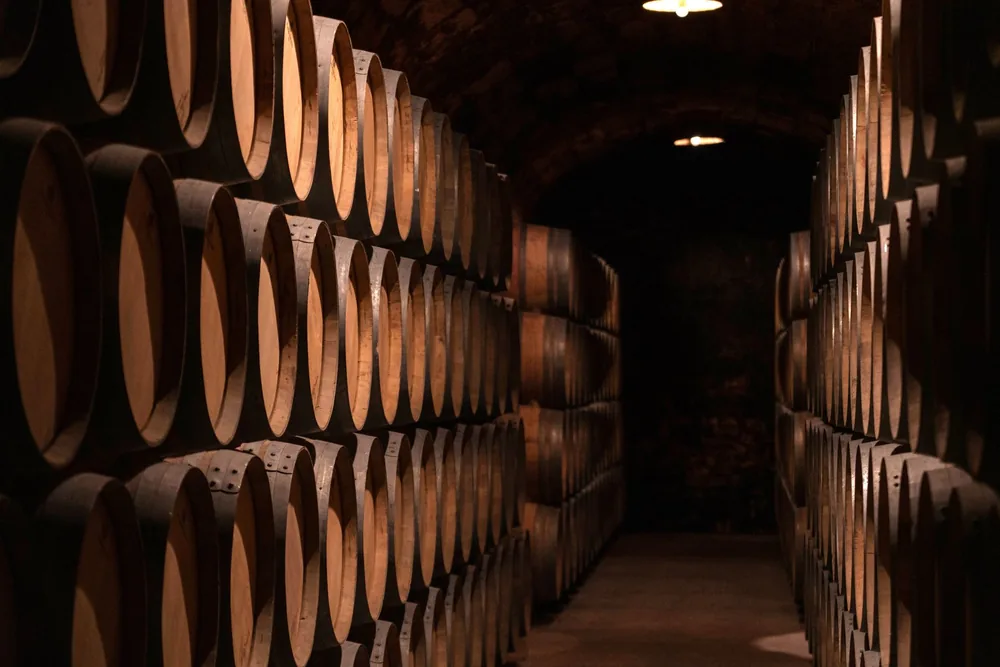
At a time when machines and the world market offer us plenty of inexpensive, mass-produced goods, we can forget, if we ever even knew, what true quality is. Yet it’s not a bad idea to have experienced it if only as a reference point that allows us to make better choices.
What separates the best of its kind from the merely expensive
The objects that earn the description tend to share a short list of traits. They do one job unusually well rather than many jobs adequately, they are made from materials chosen for behavior rather than appearance, and they are built so that the parts most likely to wear can be replaced. Price often follows those decisions, but it does not create them.
Expense on its own signals something different. Scarcity, branding, fashion and the cost of distribution all inflate a price without touching how the thing performs. The two categories overlap often enough to confuse people, which is why the distinction has to be learned by handling rather than by reading.
| Signal | Points to quality | Points only to price |
|---|---|---|
| Materials | Chosen for how they wear and behave | Chosen for how they look when new |
| Repair | Parts available and replaceable | Sealed, discarded when it fails |
| Design | Solves one problem thoroughly | Adds features that go unused |
| Reputation | Built by people who use the thing | Built by advertising |
| Time | Improves or holds up with use | Deteriorates once the novelty fades |
Why a benchmark has to be experienced once
A reference point cannot be described into existence. Nobody learns what fine tannin feels like from a paragraph about it, any more than a paragraph teaches the weight of a well-made fabric. One direct encounter recalibrates every judgment afterward, which is the argument for spending disproportionately on a single example rather than evenly across many.
Museums and cultural writing exist partly to supply those encounters for objects most people never handle, and Smithsonian magazine’s reporting on arts, craft and material culture is one accessible route into the subject. Reading is not a substitute for handling, but it teaches you what to look for when the chance arrives. The eye improves faster with a prompt than without one.
Craft knowledge behaves the same way. The tailors, glassmakers and coopers who make things by hand carry standards that were transmitted by demonstration rather than description, and their work is legible to anyone who has once seen it done well.
Building the same reference points in wine
Comparative tasting is the fastest method available. Two or three wines opened side by side teach more in an hour than a dozen opened alone over a year, because differences are far easier to perceive than absolutes. Keeping one familiar wine in the lineup as an anchor makes the comparison sharper still.
Structure is the part worth training on. Fruit is easy to notice, while acidity, tannin texture, alcohol and length are the elements that separate a good bottle from a great one, and they become obvious only in comparison. Our section on wine skills and knowledge works through how to taste that way deliberately.
The point of the exercise is not connoisseurship for its own sake. It is that a calibrated palate makes better everyday choices, since knowing what excellence tastes like tells you when a modest bottle is punching above its weight. Our essays in the hot topics archive return to that theme repeatedly.
Restraint is part of the discipline. Chasing the best of every category is expensive and mostly unnecessary, while a handful of well-chosen benchmarks in the areas you care about does the educational work. The rest can be ordinary without any loss.
Judging quality FAQ
Does a high score guarantee a wine will impress me?
No. A score reflects one taster’s judgment against their own reference points, which may not match yours. It is a useful signal about consistency and craft rather than a promise about your own pleasure.
Is a memorable bottle wasted on a beginner?
Not at all. The benchmark is most useful early, since every wine afterward gets measured against it.
How many wines should be opened at once for comparison?
Two or three is plenty. Beyond that the palate tires and the distinctions blur rather than sharpen.