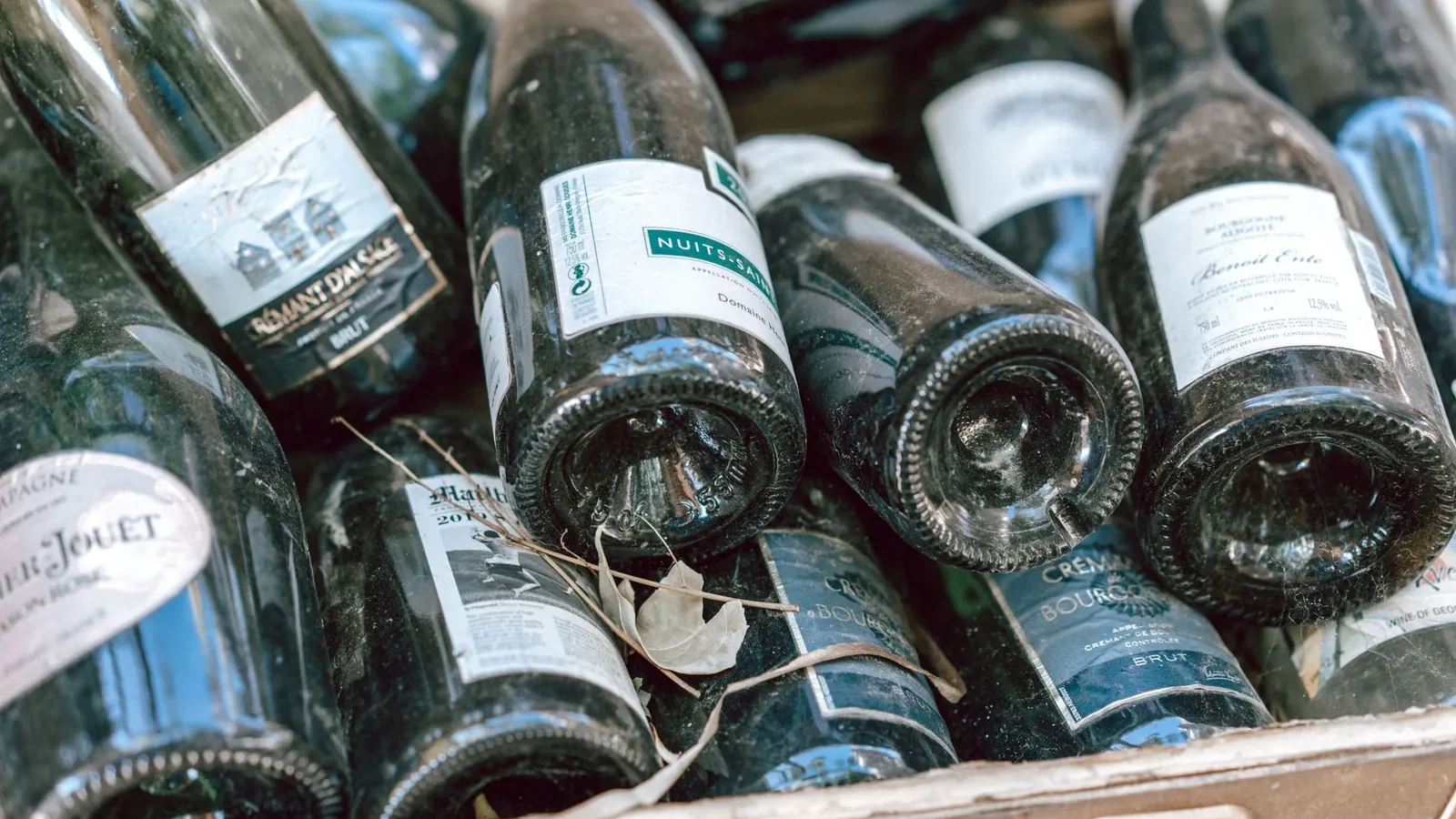
Rudy Kurniawan, remember that name. In the early 2000’s, he committed one of the greatest wine frauds of our lifetime.
No one was sure of his origin, but he seemed to suddenly appear with some of Las Angeles most noted wine collectors, buyers, and sellers. Known for his swept back hair and hearty laugh, Rudy seemed to come from no where, but quickly became a prolific buyer and seller of collector and expensive wines in LA’s wine auction scene.
He seemed to have a deep knowledge and love for expensive wine. He quickly moved from pinot noirs to Burgundy’s. According to The Guardian, he took such a fancy to Domaine de la Romanee-Conti that he acquired the nickname “Dr. Conti”.
“In one auction at Acker Merrall & Condit in 2006, Kurniawan sold $24.7m of wine, beating the previous record by $10m. These were the days of the first dotcom boom, when Silicon Valley had more money than sense, a combination which has always been drawn to fine wines”-The Guardian.
Seems like a real go-getter, huh? One of the lessons he missed is if you are going to do a great con, do your homework ahead of time. Unfortunately, Rudy was a little lazy. This would cause discrepancies to start appearing in the wine market.

For example, Laurent Ponsot, head of Domaine Ponsot, was surprised to find vintages of his Clos St Denis appear on the market with vintages ranging from 1945 to 1971, as this wine didn’t go into production until 1982.
Brad Goldstein, a private detective hired by Bill Koch to investigate several fake bottles of wine that started appearing in his collection, found that Kurniawan had sold a magnum of Petrus from 1921. Unfortunately for Rudy, magnums were not made during that time period.
Ponsot and Koch, would be key players to the downfall of Rudy.
In 2012, the FBI raided Kurniawan’s home. They found a fully equipped counterfeiting workshop. He bought cheaper wine and rebottled and had equipment to make forged labels appear aged. He would be the first in the USA to be convicted of wine forgery.
Who was Rudy? Zhen Wang Haung. He’s believed to be from Indonesia and comes from a long line of con artists, some of whom are still at large after committing major bank fraud. He just took the family’s profession on the road.
Happy Holidays!
How Counterfeit Bottles Reached the Auction Room
Rare wine is unusually easy to fake for one structural reason: the product is consumed, so the evidence disappears. A bottle of mature wine is bought on the strength of its label, its capsule, and its paperwork, and the buyer often has no intention of opening it soon. That gap between purchase and verification is the space a forger works in.
Provenance is the trade’s answer. A clean provenance record traces a bottle from the producer through a named importer or merchant and into a documented cellar, ideally with storage conditions accounted for. Bottles that appear without that chain, especially in unusual formats or improbable quantities, are the ones specialists slow down on.
What Specialists Actually Examine
Physical inspection covers the whole package rather than the label alone. Glass changes over the decades, as do closures, capsules, printing methods, paper stocks, and adhesives, and each of those can be checked against known examples from the same producer and period. Ullage, the airspace below the cork, tells its own story about age and storage.
The strongest checks are documentary. Producers keep records of what they bottled, in what formats, and in which years, so a bottle claiming a vintage or a format that a domaine never made is disqualified without any chemistry at all. That is precisely the kind of anachronism that unraveled the case described above.
| Element | Reassuring | Worth questioning |
|---|---|---|
| Provenance | Named cellar, merchant records, storage history | Anonymous consignor, no chain of custody |
| Label condition | Wear consistent with the bottle’s age and storage | Artificial staining, crisp paper on an old bottle |
| Vintage and format | Matches the producer’s own bottling records | Years or sizes the estate never produced |
| Volume offered | Small lots consistent with original production | More bottles on the market than were ever made |
| Fill level | Appropriate for the age of the wine | Suspiciously high for a bottle of that age |
What Changed Afterward
Producers of collectible wine responded by making bottles harder to copy and easier to check. Etched glass, serialized capsules, tamper-evident seals, bubble codes, and tracking numbers registered with the estate all became common on high-value releases. None of these are foolproof, but each one raises the cost and the technical skill required to produce a convincing fake.
Auction houses and importers tightened their side too, with condition reports, direct-from-the-estate consignments, and guarantees of authenticity. The federal prosecution that closed the case is documented in the Department of Justice announcement of the sentencing. The lasting effect on the market was less about one conviction than about the habits it forced on everybody handling old bottles.
Why the Rare Wine Market Is Vulnerable
Three features of the trade combine badly. Supply of any famous old wine is fixed and shrinking as bottles are drunk, prices climb accordingly, and the buyers who can afford those prices are rarely the people best placed to authenticate a bottle. Add an auction format that rewards speed, and the checks fall to a handful of specialists.
Storage adds another layer of ambiguity. Genuine old bottles vary enormously in fill level, label condition, and capsule wear depending on the cellar they came from, so unusual appearance is not automatically suspicious. That legitimate variation is what a forger hides behind.
The trade’s countermeasure has been to treat documentation as part of the wine. A bottle with a thin paper trail is now discounted rather than merely questioned, and estates increasingly authenticate their own back catalogue on request. That shift did more to protect buyers than any single technical fix.
Why This Matters to Ordinary Drinkers
Counterfeiting concentrates where the money is, so wine at everyday prices is a poor target: the margin does not justify the effort. The practical lesson for most drinkers is about buying wine with a traceable history rather than about detecting forgery. Knowing who imported a bottle and where it has been stored answers most quality questions before the cork comes out.
It also argues for judging wine by tasting rather than by reputation. Building that skill is the subject of the wine skills and knowledge guide, and the same instinct applies to the producers profiled in the Italian wineries archive, where the story of a bottle and the family behind it are usually the same story.
Wine Fraud FAQ
Can a laboratory prove a bottle is fake without opening it?
Sometimes. Techniques that measure radioactive isotopes absorbed by grapes after mid-century atmospheric testing can indicate whether a wine is older or younger than claimed, and some of that work can be done through the glass. It is expensive, so it is reserved for high-value disputes.
Is an old-looking label evidence of authenticity?
No, and it can be the opposite. Aging a label artificially is one of the easier parts of a forgery, while matching a producer’s exact printing, paper, and glue from a given decade is much harder. Specialists compare details of production rather than general appearance.
What is the simplest protection for a collector?
Buying from the producer or from merchants who can document the chain of custody, and keeping the receipts. Bargains on famous names from unknown sellers are the classic entry point for counterfeit bottles. More of this territory is covered across the hot topics archive.