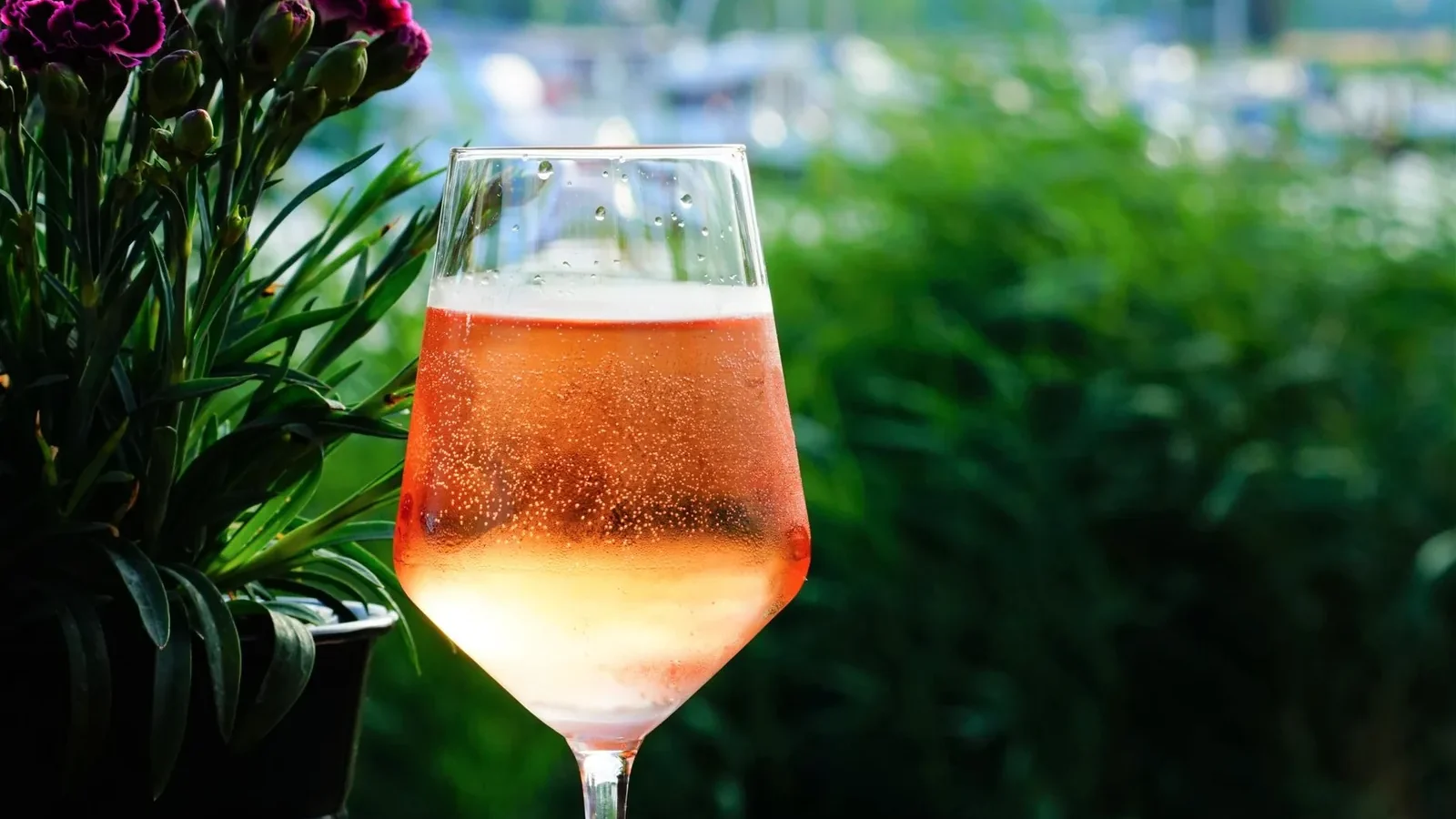
Have you ever thought about how many bubbles might be bouncing upwards in a glass of sparkling wine? Personally, I hope not. If you’re having that thought instead of launching into the taste and checking out the smiling faces around you, you could have a problem that goes beyond the moment.
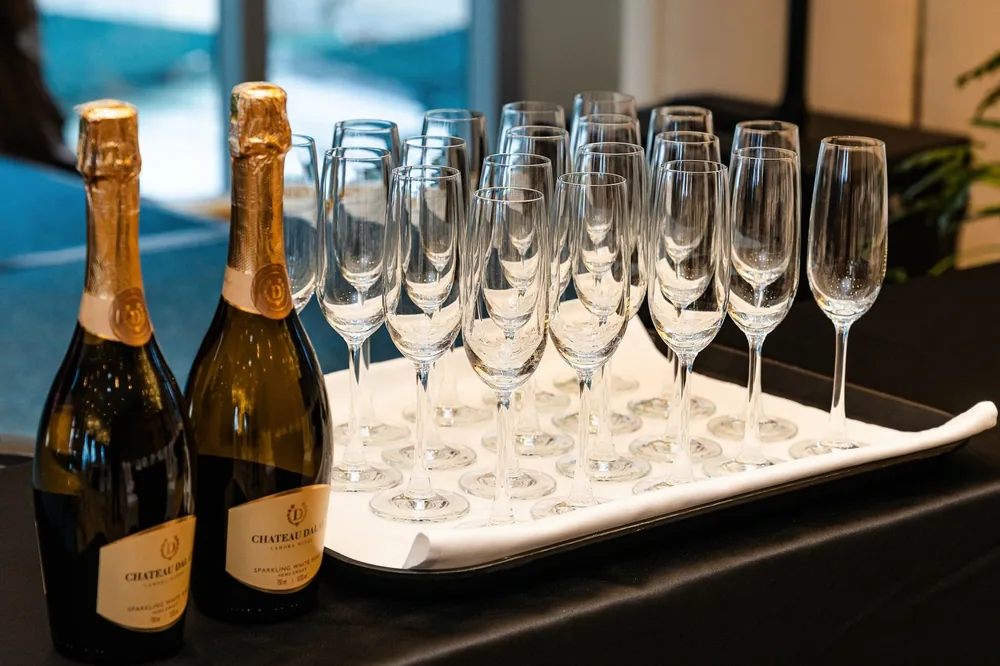
But apparently normal people have asked the question, although they mostly live in the Champagne-Ardenne region of France, where Dom Pierre Perignon is said to have invented Champagne in 1693. The story is mostly myth since sparkling wines were known in the Champagne region before medieval times. But it’s not a stretch to think that continuous exposure to sparkling wine for that long would stimulate questions that would never occur to people outside of the area.
So the prevailing wisdom in Champagne is that a typical glass of Champagne contains 15 million bubbles. What methods anyone might have employed to arrive at that number is beyond imagination. But whatever the method, it must have been convincing if the number caught on region-wide.
Gerard Lager-Belair, professor of physicist at the French Universite di Reims Champagne-Ardenne decided to affirm the number with actual scientific observation. First of all, Champagne is made by fermenting the wine in the bottle, the by-product being carbon dioxide. Once the cork is popped and the wine is poured into a glass, the carbon dioxide escapes in the form of bubbles, which will form on several spots on the glass. When they rise to the surface, they burst with a crackling sound and propel tiny droplets upwards, which are vehicles for aroma and flavor.

Using an ultra-high-resolution mass spectrometer, Gerard Lager-Belair observed that the bubble forming spots in the glass will launch about 30 bubbles per second. So by the time the wine goes flat, nearly two million bubbles have escaped. Not 15 million. That’s a fact. Happy Holidays!
Where the gas comes from in the first place
The bubbles in a glass of sparkling wine start as carbon dioxide dissolved under pressure. Yeast converts sugar into alcohol and carbon dioxide during fermentation, and when that second fermentation is trapped in a sealed bottle the gas has nowhere to escape. It dissolves into the wine and stays there until the closure comes off.
A finished bottle of traditional-method sparkling wine typically holds several atmospheres of pressure, which is why the glass is heavy, the cork is oversized and the wire cage exists at all. Carbon dioxide dissolves readily in cold liquid and much less readily in warm liquid, a relationship documented in the reference data of the NIST Chemistry WebBook. Warm the bottle and the wine holds the gas far less willingly.
That single fact explains most sparkling wine handling advice. A cold bottle opens quietly and pours cleanly, while a warm one foams over and loses in seconds what took months in the cellar to build.
Why bubbles rise in streams rather than everywhere
Bubbles do not form spontaneously throughout the liquid. They need a nucleation site, a tiny imperfection or fiber where dissolved gas can gather until it is buoyant enough to release. That is why the streams appear to rise from a few fixed points on the glass rather than from the whole surface.

Those sites are usually microscopic scratches, cellulose fibers left by a towel, or deliberate etching on the base of a glass. A perfectly smooth, spotlessly clean glass can produce a wine that seems oddly flat, while a glass with detergent film can produce a foam that collapses immediately. Rinsing with hot water and drying with a lint-free cloth is the compromise most people settle on.
Counting how many bubbles a glass releases is therefore not one number but a range that depends on temperature, pour, glass surface and how long the wine sits. That is part of why estimates vary so widely and why careful measurement gives a different answer from folklore.
Method changes the bubble
Not all sparkling wine gets its gas the same way, and the method leaves a signature in the glass. Bottle fermentation with extended contact with the spent yeast tends to produce a finer, more persistent bead, while a large sealed tank produces a livelier, more openly fruity wine with a coarser bubble. Neither is a defect; they are different targets.
| Trait | Bottle-fermented | Tank-fermented |
|---|---|---|
| Where the second fermentation happens | In the bottle sold to the drinker | In a large pressurized tank |
| Bubble character | Fine and persistent | Larger and more energetic |
| Yeast influence | Pronounced, from long lees contact | Minimal, bottled soon after |
| Aromatic emphasis | Bread, nut and pastry notes | Fresh fruit and flowers |
| Production time | Months to years | Weeks to months |
Keeping the bubbles you paid attention to
Everything about serving sparkling wine is a fight against warmth and agitation. Chill the bottle in ice and water rather than ice alone, since water conducts cold far faster than air pockets between cubes. Open by holding the cork still and turning the bottle, letting the gas sigh out rather than announcing itself.
Pour at an angle against the side of the glass, as you would with beer, then top up once the foam settles. A tall or tapered glass keeps gas in solution longer than a wide, shallow one, and a glass filled halfway shows aroma better than one filled to the rim. Our notes on wine for celebrations cover the practical side of serving sparkling wine to a room full of people.
Leftover sparkling wine keeps better than most people expect if it goes back into the refrigerator with a proper sparkling stopper. Cold slows the escape of dissolved gas, and a bottle closed within an hour of opening is usually still lively the following evening. The spoon-in-the-neck trick, by contrast, does nothing that the cold does not already do.

Why the bottle is built the way it is
A sparkling wine bottle weighs noticeably more than a still wine bottle because it is a pressure vessel. The glass is thicker, the base is pushed up into a deep punt that distributes stress, and the neck is shaped to hold a mushroom cork against constant outward force. None of that is decoration.
The cork itself is a compressed cylinder driven into the neck, where it expands into the familiar mushroom shape over time. The wire cage holds it while the bottle rests, and the six half turns that loosen the cage have been standard for generations. A cork that has been in the bottle for many years may need gentle persuasion, because the compressed part slowly loses elasticity.
Store sparkling wine on its side or upright but always cool, and away from temperature swings. Heat raises the pressure inside the bottle and ages the wine faster than anything else in a household. A steady cellar temperature does more for a bottle of sparkling wine than any gadget sold to preserve it.
Sparkling wine bubbles FAQ
Does a finer bead really mean a better wine?
It correlates with long aging on the yeast, which is expensive and generally reserved for careful wines. But bead size alone is a weak signal, and plenty of excellent sparkling wines are deliberately made in a fresher, more exuberant style.
Why does my glass sometimes go flat quickly?
Usually temperature or glass surface. A warm pour releases gas fast, and a glass washed in detergent and left to dry can hold a film that kills foam almost instantly.

Is the pressure in the bottle dangerous?
It deserves respect. Keep the bottle pointed away from people and never shake a warm bottle, because a cork leaving under pressure carries real force. Handled cold and opened slowly, it is entirely undramatic, as our wine skills and knowledge notes describe.