Climate change may be a political issue for candidates running for public office, but not for farmers, especially wine-grape growers. They examine both short term and long term weather data, anticipate and witness its effects on the plants, and make adjustments in trellising, irrigation, and picking among hundreds of decisions that ensure the health of the plants and quality of the fruit. In other words, farmers devote themselves to direct observation and practice, not theory.
Since the ancient Romans first planted vines on the Italian Peninsula and then everywhere else they colonized, the European climate has experienced cycles of warming and cooling of various durations, which have dramatically impacted vineyards. Long-term weather patterns of an area have always been crucial quality predictors for vineyards and vineyard planning and whether vineyards are even viable in a certain area at a given time.
Wine-grapes require a relatively narrow band of temperatures that at the cooler end of the spectrum will produce light and delicate wines and at the warmer end full-bodied sweet wines. Different grape varieties will thrive and ripen at various points on the spectrum. Apart from fruit flavor and aroma,temperatures influence the balance of acids,alcohol, and phenolics, including color, tannin,and flavor compounds. Heat totals particularly during the growing season are important, together with temperatures during the final month of ripening. Daily temperature variability and variability between night and daytime influence quality, with equitable temperatures being most desirable. Rainfall,humidity and evaporation, and wind also influence vineyards.
Twenty years ago in California, it was not unusual for late-ripening Cabernet Sauvignon to hang on vines until November. Now Cabernet ripens in mid August. According to the National Oceanic and Atmospheric Administration,last year was the warmest ever recorded up to then in California, Arizona, Southern Nevada, and parts of Southern and Coastal Oregon. This year, the entire West Coast and Nevada had even warmer temperatures January through June.
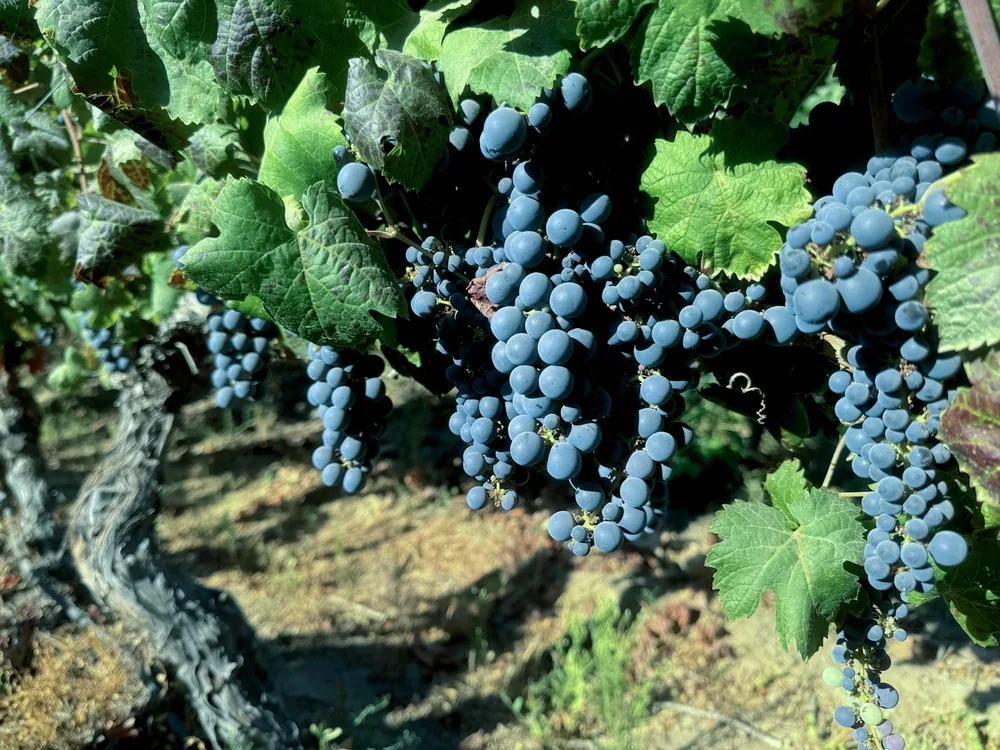
While different grape varieties require different temperatures, no California wine region is dependent upon any single grape.Even Napa, whose entire reputation is built on Cabernet Sauvignon, is home to other grape varietals, like Sangiovese and Syrah, among other varietals. If Cabernet is no longer viable there, other more suitable varietals can replace them, and they will have a history in that area. More and more grape varieties from hot and arid Spain are being planted throughout California. What a good idea.
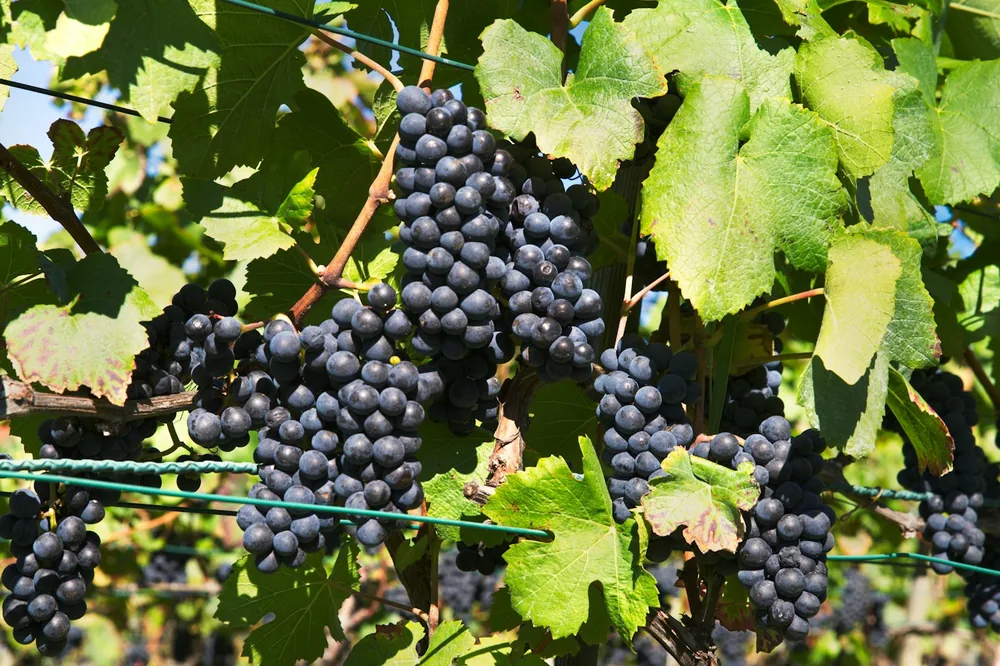
Iconic Bordeaux, which depends on just Cabernet Sauvignon, Merlot, Cabernet Franc, Petite Verdot, Malbec, and Carmenere and the whites Sauvignon Blanc, Semillon, Muscadelle, Ugni Blanc, and Colombard, is in the midst of a research program, fermenting small batches of wines from an experimental vineyard, growing 52 grape varieties unknown in the region. Run by the French National Institute for Agricultural Research and supported by the Bordeaux Wine Council, Bordeaux winemakers are preparing themselves if, in20 years, traditional grape varieties areno longer viable. This research could potentially save a wine region and an industry that produces between 600to 800 million bottles of wine a year, shipped to over a hundred different counties.
The numbers growers actually watch
Farming decisions are made from measurements rather than from forecasts, and the measurement that organizes the season is heat accumulation. Growing degree days add up the amount by which each day’s average temperature exceeds a base of fifty degrees Fahrenheit, summed across the growing season. That single running total predicts roughly when a variety will flower, when it will change color and when it will be ready to pick.
Long records make the tool useful. Anyone can compare a region’s current season against its own history through the National Centers for Environmental Information’s Climate at a Glance temperature records, which publish statewide series reaching back more than a century. A grower reads those the way a doctor reads a chart, looking for the direction of travel rather than any single reading.
Heat totals alone do not settle anything. A season can accumulate the same total through steady warmth or through a run of extreme days, and vines respond very differently to the two. Above roughly ninety-five degrees, photosynthesis slows and ripening effectively pauses, so an intense heat spike can delay a harvest the seasonal total suggests should be early.
The heat summation regions in one view
The classification below was developed for California and remains the standard shorthand for describing how warm a growing area is. It sorts regions by accumulated degree days rather than by latitude, which is why a coastal valley and an inland one at the same latitude can fall several classes apart.
| Class | Degree days | Typical character |
|---|---|---|
| Region I | Under 2,500 | Coolest sites, early ripening varieties, lighter wines |
| Region II | 2,501 to 3,000 | Moderate warmth, wide range of varieties |
| Region III | 3,001 to 3,500 | Warm, fuller bodied reds |
| Region IV | 3,501 to 4,000 | Hot, generous yields, riper fruit character |
| Region V | Above 4,000 | Hottest, historically associated with bulk and dessert wine |
What a grower can change without replanting
Replanting a vineyard to a different variety is a decade-long commitment, so growers reach for smaller adjustments first. Most of them work by controlling how much sun and heat the fruit receives and how much water the vine can move.
- Leaf placement, leaving more canopy on the afternoon side to shade fruit that would otherwise sunburn.
- Row orientation and trellis height on new plantings, which set the angle at which sun strikes the fruit zone.
- Irrigation timing, since a badly stressed vine shuts down and stops ripening rather than hurrying.
- Crop level, because a lighter crop ripens faster and a heavier one slows the vine down.
- Picking decisions, including harvesting blocks at night so cooler fruit reaches the winery.
- Rootstock and clone choices at replanting, which alter vigor and timing without changing the variety.
Why regional diversity is the real insurance
A region that grows one variety has one problem if conditions shift, while a region with a broad planting history has options. California’s growing areas differ enormously in elevation, marine influence and soil, and most of them have grown several varieties within living memory. Our survey of California’s wine regions lays out how differently these areas behave, and the Napa Valley region guide shows how much variation exists inside a single famous name.
Experimental plantings are how that flexibility gets tested before it is needed. Trial blocks of unfamiliar varieties take years to yield anything worth judging, so the research has to begin long before a region’s usual grapes are in trouble. That is the logic behind long-running variety trials in classic regions as well as in newer ones.
Grape diversity offers the same protection from another direction. Varieties from hot, dry parts of the Mediterranean carry centuries of selection for drought and heat, which is why they attract attention when a grower is planning for warmer decades. Our overview of California grapes and styles covers which of those varieties have found a footing in the state.
FAQ: weather, climate and the vineyard
What is a growing degree day?
It is the amount by which a day’s average temperature exceeds fifty degrees Fahrenheit, accumulated across the growing season. Grape varieties have characteristic ranges, which makes the running total a practical predictor of timing.
Does a warm year automatically produce better wine?
No. Warmth advances ripeness, but very hot spells stall the vine and can push sugar ahead of flavor development. Growers generally prefer warm days paired with cool nights to steady, unbroken heat.
Why does night temperature matter so much?
Cool nights slow the vine’s respiration, which helps fruit retain acidity while sugar accumulates. A wide day-to-night swing is one of the most consistent markers of a site capable of balanced wine.