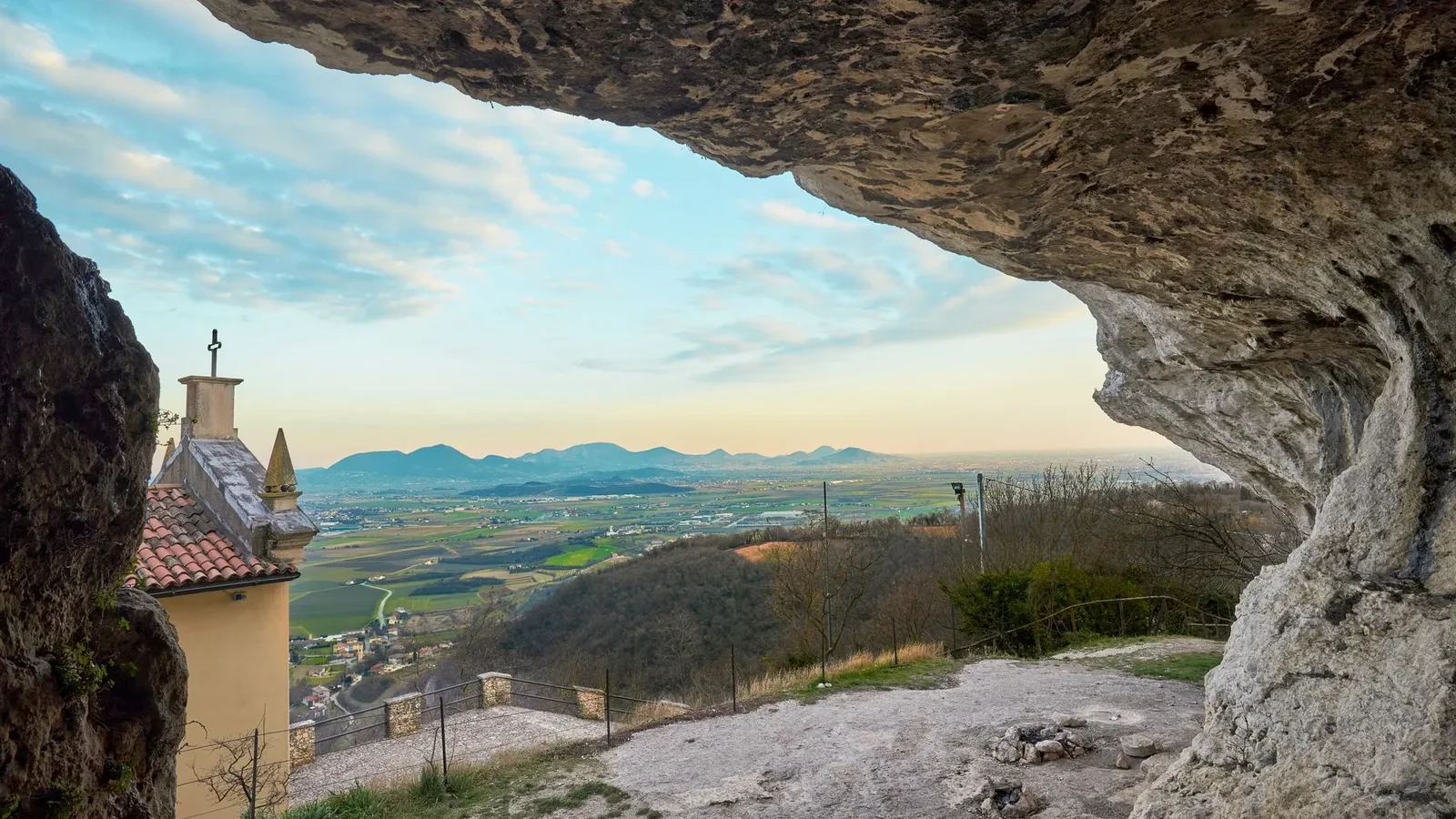
Veneto runs from Lake Garda across to the Adriatic and up into the Dolomites, and it trades places with Puglia and Sicily as Italy’s largest producer by volume, at something near eleven million hectoliters a year. It also makes three wines that have almost nothing to do with one another. A Veneto wine region guide that files Prosecco, Soave and Amarone under one heading misses that they answer three separate questions.
Prosecco is made to be drunk young, cold and without ceremony. Soave is a dry white built on a grape most drinkers outside Italy cannot name. Amarone is a dry red pressed from fruit that has been deliberately shriveled for a winter first.

That last one is the technical heart of the region. Once appassimento makes sense — drying the fruit before fermenting it — the whole Valpolicella family arranges itself into a ladder, and so do its prices.
From the lake to the lagoon
Veneto’s vineyards sit in three climates. Lake Garda is deep enough to hold warmth into autumn, the hills behind Verona are warm and well drained, and the eastern plain toward Venice is flat, damp and highly productive.
Old volcanic activity left basalt through the hills east of Verona, lying alongside limestone from a much older seabed. Growers there weigh the two soils against each other the way Chianti Classico growers weigh galestro against alberese.
The club came back to these hills often while it shipped Italian wine. A December 2013 issue described Valpolicella as four distinctive valleys extending northwest of Verona, with warm breezes off Lago di Garda blowing through them.
Appassimento, the process everything else hangs on
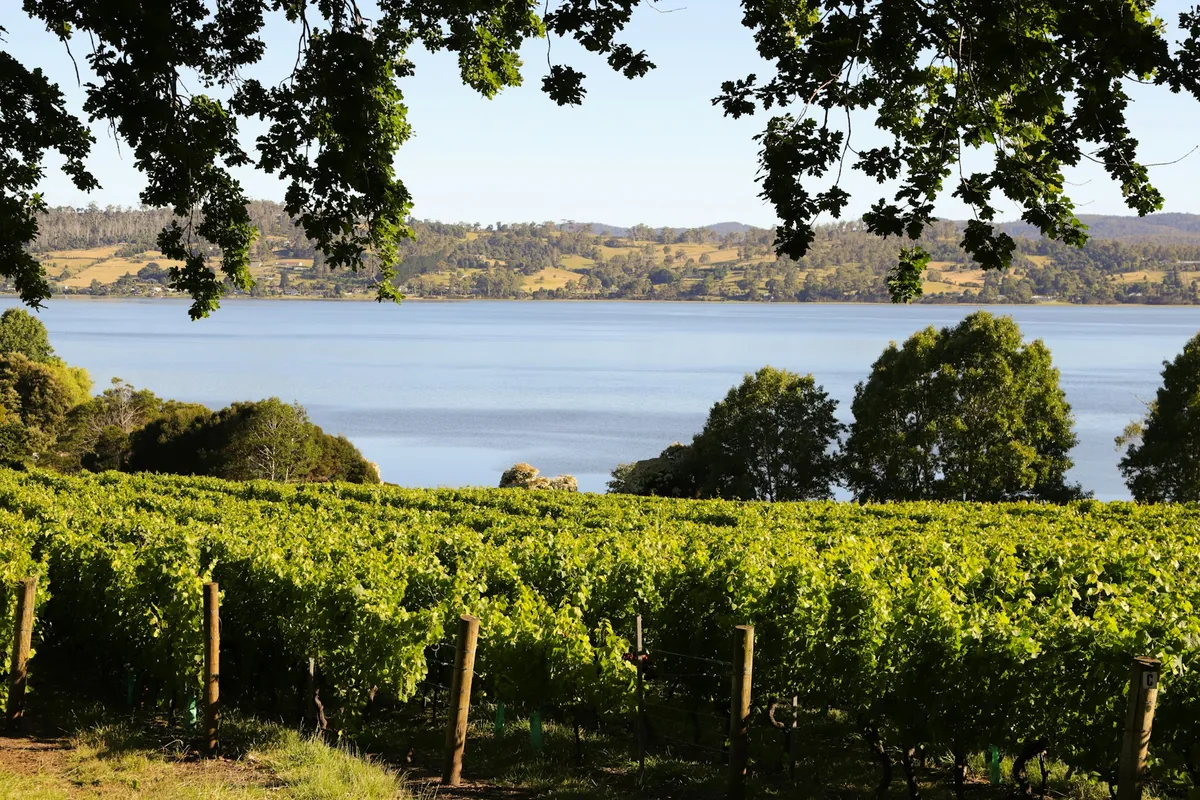
Appassimento means withering. Selected bunches are laid out in single layers on racks or in shallow perforated crates in a ventilated loft, and left there through the winter for roughly three to four months.
The berries lose water, not sugar, so everything still inside them concentrates: sugar, acid, tannin and aroma alike. A weight loss around a third is normal, which is why a bottle of the finished wine consumes so much more fruit than a bottle of ordinary red.
The rules follow the practice rather than the other way around. Fruit set aside for Amarone della Valpolicella cannot be pressed before 1 December of the harvest year unless the regional authority allows an earlier start in an unusual season.
Ripasso, and what happens to the leftovers
Ferment that concentrated juice all the way out and the result is Amarone, which must reach at least 14 percent alcohol and cannot be released for two years, or four as Riserva. Leave sugar behind and it is Recioto della Valpolicella, the sweet wine that came first; Amarone began as a Recioto that fermented dry.
The pressed skins from both are still loaded with sugar, color and live yeast. Valpolicella Ripasso is ordinary Valpolicella pumped back over those skins for a second partial fermentation, which raises alcohol, deepens color and borrows some of the dried-fruit character without drying a second crop.
All four come from the same handful of grapes. Corvina Veronese carries 45 to 95 percent of an Amarone blend, with Corvinone permitted to replace up to half of that share, and Rondinella takes 5 to 30 percent.
A December 2012 issue profiled an estate whose vines sit on terraces above the Marano Valley, planted to the traditional Valpolicella Classico varieties with a deliberate emphasis on Corvina and Corvinone over Rondinella and Molinara. An April 2016 issue recorded another family working Pedemonte hillsides where the terraces are held up by dry stone walls the locals call marogne.
| Trait | Valpolicella | Ripasso | Amarone | Recioto |
|---|---|---|---|---|
| Fruit dried first | No | No | Yes, a winter | Yes, a winter |
| Second fermentation on skins | No | Yes, on Amarone skins | No | No |
| Finished sweetness | Dry | Dry | Dry to just off-dry | Sweet |
| Typical alcohol | 12 to 13% | 13 to 14% | 15 to 16% | 12 to 13% |
| Tier | DOC | DOC | DOCG | DOCG |
Prosecco, the hills and the plain
Prosecco became a DOC in 2009, and the grape was renamed in the same move. What had been called Prosecco is now Glera, which freed the place name to be defended as a place rather than a variety anyone could plant.
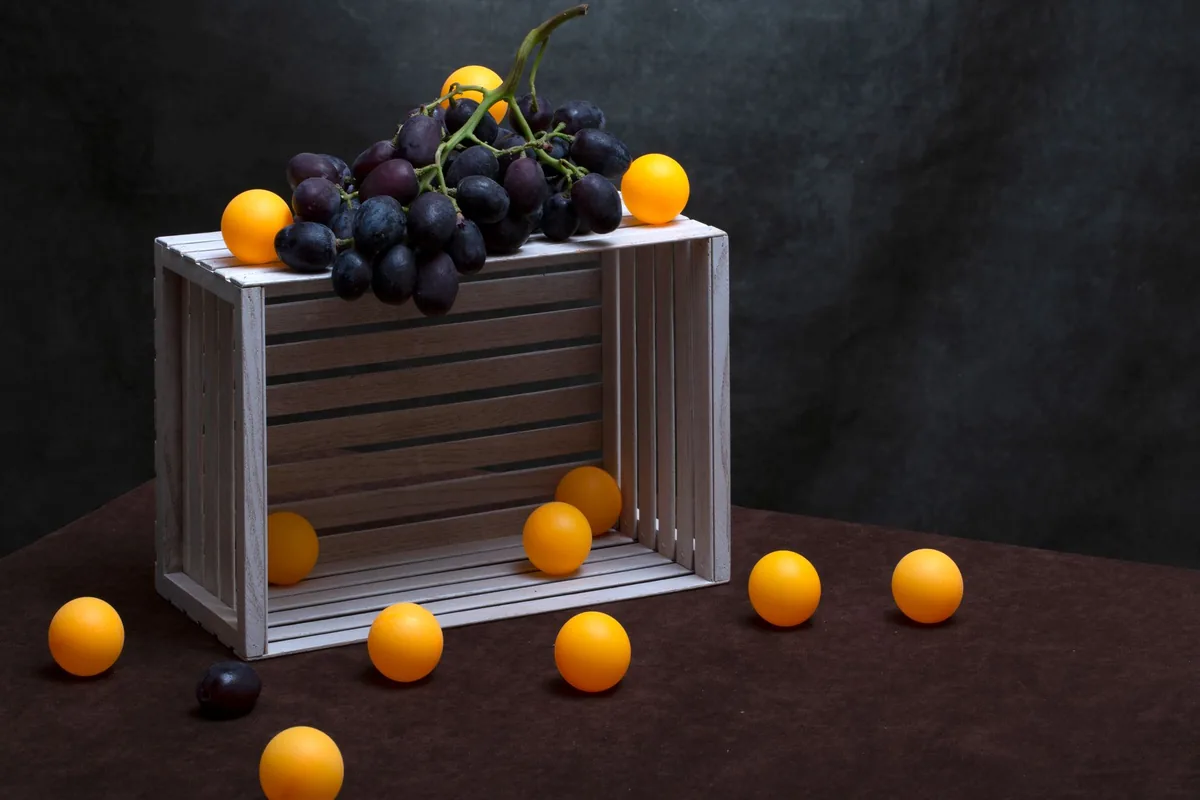
The gap inside Prosecco is wide. The flat, fertile DOC zone spreads across Veneto and into Friuli-Venezia Giulia and supplies most of the volume, while the steep ground between Conegliano and Valdobbiadene is a separate DOCG.
UNESCO inscribed those hills in 2019, describing a landscape of hogback ridges and ciglioni, small plots of vines on narrow grassy terraces, worked that way since the seventeenth century. No machine fits on that gradient, and the hand work is most of the price difference.
Prosecco is made by the tank method: the second fermentation happens in a sealed pressurized tank rather than inside each bottle. That keeps the pear and white-flower aroma a long fermentation in bottle would bury, which is why Piedmont treats Moscato d’Asti the same way.

Soave and the case for Garganega
Soave is Garganega at a minimum of 70 percent, with Trebbiano di Soave or Chardonnay allowed for the remainder. The Classico zone covers the original volcanic core around Soave and Monteforte d’Alpone, east of Verona.
Garganega ripens late and holds acidity, and on basalt it finishes with a bitter-almond note that is the region’s signature rather than a flaw. The variety’s reputation suffered in the 1970s, when the zone was extended onto the plain and yields climbed.
Recioto di Soave, made by drying Garganega exactly as Valpolicella dries Corvina, became Veneto’s first DOCG in 1998. Soave Superiore followed in 2001, and both remain far less known than the dry wine they grew out of.
What this Veneto wine region guide means at the table
The three styles occupy three different moments. Prosecco is an aperitif and handles salt and fried food, which is why it turns up beside a plate of fritto misto rather than beside a main course.
Soave belongs with lake fish, risotto and anything finished in butter rather than oil. The almond bitterness is what stops it vanishing under a rich sauce.
Amarone is not a dinner wine in Veneto so much as an after-dinner one, taken with hard aged cheese, or poured alongside beef braised in the same wine. Ripasso does that job on a weeknight and at a fraction of the cost.
Veneto FAQ
Is Amarone a sweet wine?
No, though it can taste richer than it is. The fruit is dried until the sugars concentrate and then fermented out, so most Amarone finishes dry or barely off-dry at 15 to 16 percent alcohol. The sweet version of the same process is Recioto della Valpolicella.
What separates Prosecco DOC from Prosecco Superiore?
Terrain, mostly. The DOC covers a large and largely flat area across two regions, while Conegliano Valdobbiadene Prosecco Superiore and Asolo Prosecco are hillside DOCGs where picking and pruning are done by hand on slopes too steep for equipment.
Why does Ripasso cost less than Amarone?
Because it reuses something. Ripasso is standard Valpolicella refermented on skins already pressed for Amarone, so no second crop is dried and no extra years are spent in the cellar. It borrows the character instead of paying for it.
Is Soave meant to be neutral?
It is not, and the reputation dates from the expansion onto flat, high-yielding land. Soave Classico off the volcanic hills is a firmer, stonier wine with an almond-edged finish, and it generally improves for a couple of years in bottle.

Read Veneto as three separate trades that happen to share a border and it stops being confusing. One is a tank-fermented aperitif, one a hillside white grown on volcanic rock, and one a red that costs what it costs because its fruit spent a winter on racks losing water. The Italian wine regions hub gathers the rest of the country, and the club’s Italian winery profiles record the Valpolicella estates it shipped each year.