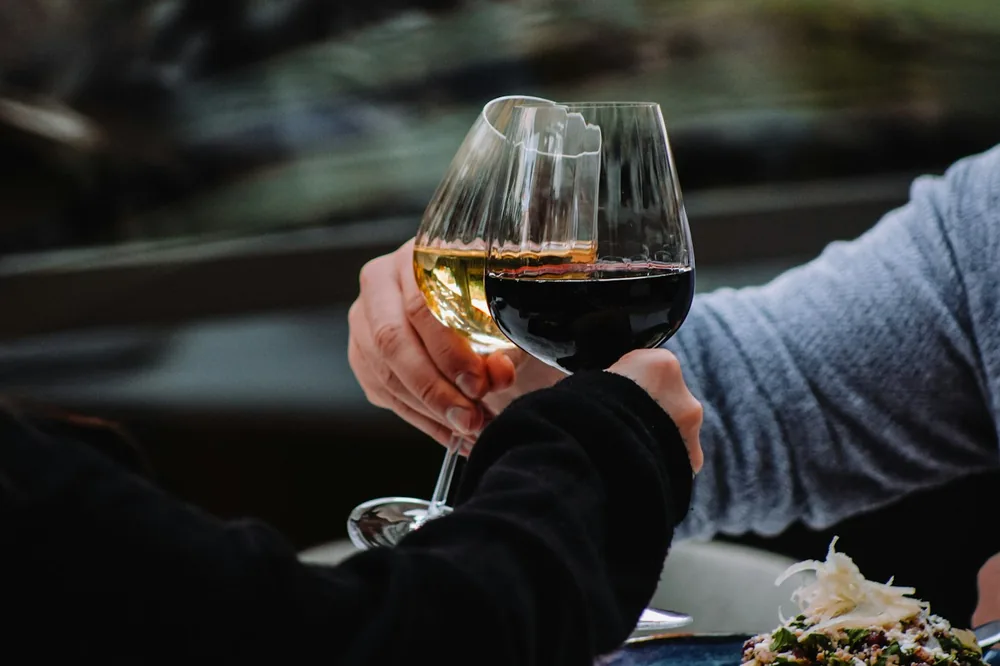
We at Celebrations would like to think that every drop of our delicious wines is drank by you, our wonderful customers. We do understand, however, that sometimes, perhaps after a night of libations and merriment, one of our bottles may be left out overnight uncorked.
Should that happen, I thought I would provide you with an alternative, but delicious sounding use for that left over bottle of wine. I’ve not tried it yet, but plan to, as we sometimes have leftover wine after a tasting.
Chef John Currence has a touching article on HGTV about his late mother and his attempt to make use of her wine collection that had been “damaged” a little during the hurricane in New Orleans. Some of the wine had floated for days in the flooding and lost their labels. All the wine, mostly burgundies, had been left for days in the insufferable heat that followed Hurricane Katrina.
After her death last year, Chef Currence came up with a way to turn her wine into vinegar. Author Allie Holcomb King writes that it is a simple process of letting the alcohol, through natural processes, convert into acetic acid by using naturally occurring bacteria.
Chef John Currence is a chef based in Oxford, Mississippi. He plans to use the vinegar in his four restaurants , which are also located in Oxford.
What a wonderful way to share his mother’s passion for wine and her life with his customers and ultimately with us.
His recipe is as follows:
Ingredients
2-gallon glass, ceramic or stainless steel
container
2 quarts red or white wine
1 cup live, unfiltered vinegar
Strainer
Two small bottles
Here’s the easy, peasy part. Pour your leftover wine into your container, note specific types above, and add the one cup live, unfiltered vinegar. Cover the top of the container with a cloth, and place in a warm, dark place. Allow to stand for two months. Strain and the pour the vinegar into the two small bottles, allow it to then sit for another two months.
Let me know through email or Facebook if you try the above recipe. I’d love to hear how it turned out and how you used it in a recipe. I’ll find a way to incorporate mine into a recipe and include in our newsletter.
Thank you Chef Currence!
The biology behind turning wine into vinegar
Vinegar is not spoiled wine so much as wine that has completed one more transformation. Acetic acid bacteria, which are present almost everywhere, consume alcohol in the presence of oxygen and convert it into acetic acid and water. That is the entire process, and everything in a vinegar recipe exists to make those conditions favorable.
Three requirements matter. The bacteria need oxygen, which is why a vinegar vessel is covered with cloth rather than sealed; they need warmth, which is why a cool cellar slows the process to a crawl; and they need alcohol in a workable range, since very high alcohol inhibits them. A wine well above table strength is usually diluted before it is used.
The gelatinous layer that forms on the surface is a mass of bacteria and cellulose, commonly called a mother. It is not required for the process to work, and its presence simply indicates an active culture.
Conditions that help and hinder vinegar making
Factor
Helps
Hinders
Air
Cloth cover, wide surface
A sealed lid
Temperature
Steady warmth
Cold rooms and wide swings
Alcohol level
Moderate, often diluted
Very high strength
Container
Glass, stainless steel, glazed ceramic
Reactive metals, damaged glazes
Light
A dark cupboard
Direct sun
Doing it safely at home
Home vinegar making is straightforward, but a few points deserve care. Use glass, stainless steel or food-safe glazed containers, never aluminum, copper or anything with a cracked or antique glaze, because acid pulls metals out of reactive surfaces. Keep everything scrupulously clean, and label the vessel with the date it was started.
Preservatives in the starting wine can slow the process, and heavily sulfured wine may take much longer to convert. The finished acidity also varies, which matters if the vinegar is intended for anything preserved rather than for immediate use. Tested procedures from the National Center for Home Food Preservation set out the details, including why homemade vinegar of unknown acidity should not be used for canning or pickling.
Expect the process to take weeks or months rather than days. It is finished when the smell is clean and sharply acidic with no trace of alcohol, and straining and resting the vinegar afterward lets it settle and mellow.
Using wine vinegar in the kitchen
Vinegar does the same job in a dish that acidity does in a wine: it lifts, sharpens and balances fat and salt. A splash at the end of a braise or a soup wakes up a heavy dish more effectively than more salt does, and it is the reason a vinaigrette makes a plain salad taste finished.
Whisk three parts oil to one part vinegar with salt, pepper and mustard for a basic dressing.
Deglaze a roasting pan with a spoonful of vinegar and stock for an immediate sauce.
Add a small amount to slow-cooked beans or greens near the end of cooking.
Use it to quick-pickle sliced onions or cucumbers for the refrigerator.
Balance an overly sweet sauce with a few drops rather than more salt.
Red and white wine vinegars behave differently, with red generally deeper and more tannic and white lighter and sharper. Our guide to food and wine pairing covers the same acid-and-fat relationship from the wine side of the table.
Other ways to use what is left
Vinegar is not the only destination for a partly finished bottle. Freezing leftover wine in an ice cube tray gives you portioned units for pan sauces and braises for months, and a cube or two dropped into a simmering pot does the work that a splash of fresh wine would. Reduced with stock, leftover wine becomes a sauce base that keeps for days.
Wine also poaches fruit well, especially pears and dried fruit with spices, and it makes a useful marinade for tougher cuts of meat. None of these require the wine to still be pleasant to drink, only to still be clean and acidic.
The simplest prevention is worth repeating: re-cork the bottle and refrigerate it as soon as the last glass is poured, and most wine stays enjoyable for another two or three days. Our wine skills and knowledge notes cover storage and closures in more detail.
Storing the finished vinegar
Once strained, wine vinegar keeps for a long time in a capped bottle at room temperature, since its acidity is what makes it stable in the first place. Sediment may settle and the color may deepen over months, neither of which is a problem. Refrigeration is unnecessary but harmless.
Cloudiness or a new mother forming in the bottle is normal and can be strained off. Keeping the bottle out of direct sun and away from the stove preserves the aroma, which is the part that fades first.
Wine vinegar FAQ
Can I use any leftover wine?
Almost any, as long as it is clean smelling rather than moldy or musty. Wines with very high alcohol or heavy preservatives convert more slowly and may need diluting.
Is the layer on top safe?
A pale, gelatinous mother is a normal part of the process. Fuzzy, colored growth is mold, and a batch showing it should be discarded rather than salvaged.
How do I know when it is ready?
By smell and taste, once the alcohol character is gone and the acidity is clean and sharp. Strain it into a clean bottle, cap it, and let it rest before using it in dressings.
Are you 21 or older?
Celebrations Wine Club shares content about wine and alcoholic beverages. Please confirm you are of legal drinking age in your location before continuing.