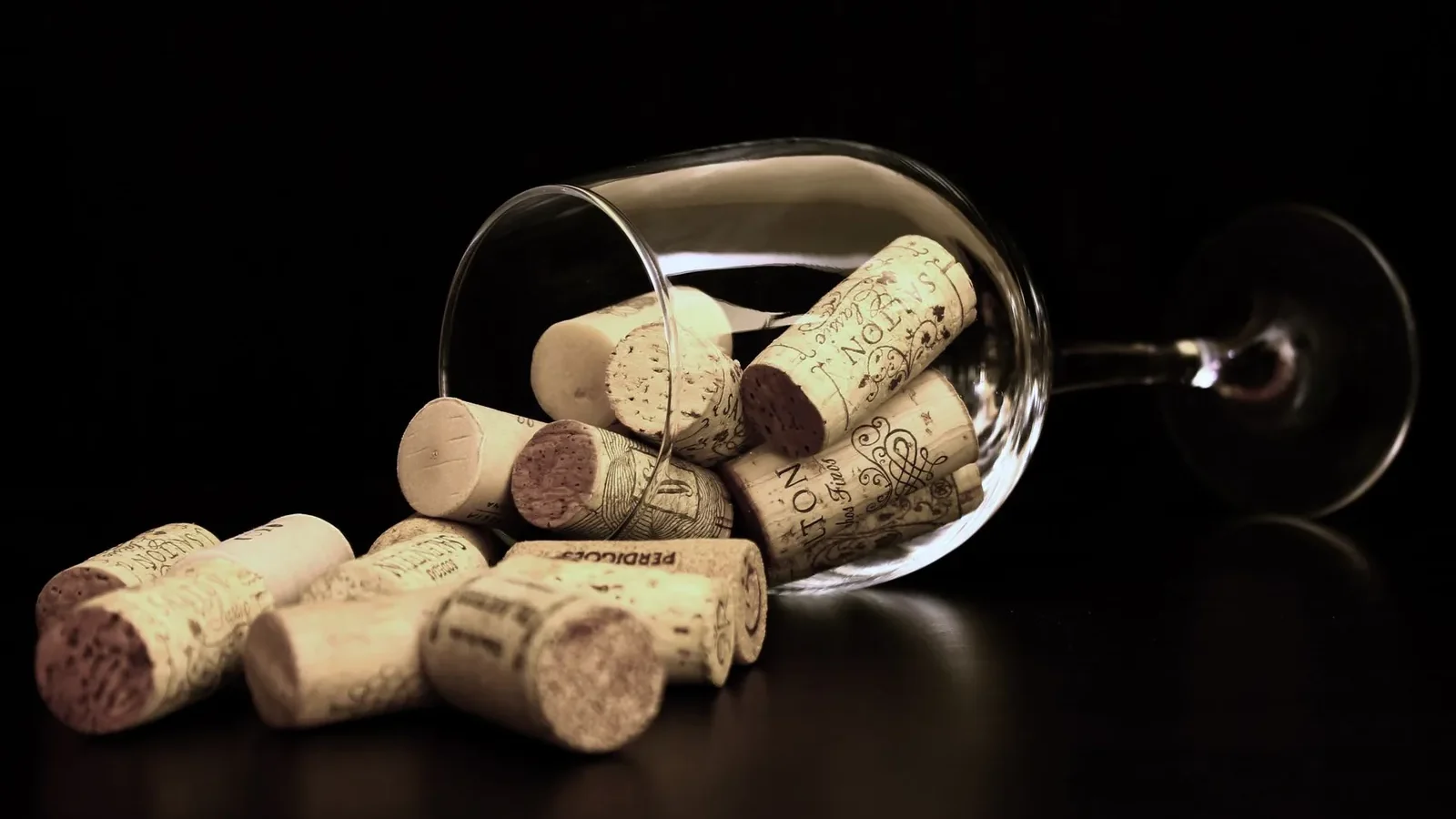
by Robin L. Obert
My next few articles will focus on facts and fiction about corks and wine closures, one of the most significant aspects of our wine pleasure!
Great news first! There is NOT a cork shortage! We have enough cork to seal all of the bottles of wine produced over the next one hundred years or more!
Harvesting the bark for corks only takes place for a very short time frame: May through August. To harvest at any other time could cause permanent and devastating damage to the tree. Oh, the tree! The vast majority of corks are produced from the “Cork Oak” AKA Querces Suber. These beauties grow over 60’ tall and up to 4’ in diameter! The first harvests are conducted when the tree reaches approximately twenty-five years old. The first couple of harvests are of poor quality. These trees are amazing! They have protective qualities that shield them from the devastating effects of forest fires! The damage heals exceptionally fast.
It is estimated that there are over six million acres of cork forests in the world, Portugal being one of the most prominent producers! The Terroir of Portugal makes the ideal conditions for the cork trees to thrive! At one time, Spain was the main producer, and is still thought (by some) to produce the highest quality in the world. Unfortunately not true for attempts to grow these trees in the United States.
Is your desire to go green? Cork is one hundred percent sustainable! When managed responsibly, they are harvested approximately every nine years and can be harvested up to two hundred years in age! These trees are not cut down!
In 3000 BC, cork was used as bobbers for fishing. Rags soaked in oil were used as barriers for the wine. The first container using cork as a sealant was found in Ephesus (a Greek City) dating back to the 1st Century. Amazingly, it still contained its wine! How amazing is that?
Next month we will talk more about other wine closures, the good and bad merits and (again) negate some myths! There have been entire books written on this subject matter. We could write for a year about these, but I promise I won’t!
Until next month, CHEERS! And, please don’t smell your cork! It tells you nothing about the quality of the wine! Oh, by the way, do you know why your server opens the bottle in front of you and presents the cork to you? Back in the day, servers would retreat to the basement and pour very cheap wines into expensive (looking) bottles. So, the guest would pay substantially more for a lesser wine! Wine drinkers BEWARE!
Why Bark Makes a Good Stopper
Cork works because of its cell structure. The bark is composed of tiny closed cells, each filled with gas and walled with suberin, a waxy substance that resists both water and air. Compressed into a bottleneck, those cells act like millions of small springs pushing outward against the glass.
That elasticity is the property no synthetic material has matched easily. A cork can be squeezed to a fraction of its width, driven into a neck, and expand again within seconds to form a seal that holds for decades. It is also light, buoyant, and slow to burn, which explains its use for floats and insulation long before anyone sealed a wine bottle with it.
The tree itself is unusual among oaks in regenerating its bark completely after stripping. The cork oak, Quercus suber, is profiled in the Cal Poly SelecTree database, which records its size, its range, and the growing conditions it tolerates.
The Harvest Cycle
Stripping bark from a living tree without killing it requires a specific window and a great deal of skill. The bark separates cleanly only while the tree is actively growing, which is why the season is confined to late spring and summer, and the cut must reach the outer bark without wounding the layer beneath.
The work is still done by hand with an axe for exactly that reason. No machine has proved reliable enough to judge the depth of a cut on a curved, irregular trunk, and a single careless stroke damages a tree that has been productive for a century.
The long interval between harvests is what makes the crop unusual as agriculture. A grower plants for a grandchild’s benefit, since the first strip yields bark too irregular for bottle corks and the useful quality arrives only on the third pass or later.
What Cork Taint Is, and Why the Cork Tells You Nothing
The reason not to sniff the cork is simple: it smells like cork. What matters is in the glass, and the fault that gets blamed on corks announces itself there instantly.
Cork taint is usually caused by a compound abbreviated TCA, which forms when certain fungi encounter chlorine-based compounds in bark, timber, or cellar materials. Human beings detect it at extraordinarily low concentrations, which is why a trace is enough to spoil a bottle.
A tainted wine smells of wet cardboard, damp basement, or a mildewed towel, and in milder cases it simply seems muted, as though the fruit had been turned down. It is harmless to drink and unpleasant to encounter, and it has nothing to do with how the wine was made.
| Closure | Oxygen transfer | Risk of TCA taint | Usual application |
|---|---|---|---|
| Natural cork | Small and variable | Present, much reduced by modern screening | Wines intended for aging |
| Technical or agglomerated cork | More consistent | Low | Wines for earlier drinking |
| Screwcap | Very low, adjustable by liner | Effectively none | Fresh, aromatic styles |
| Synthetic stopper | Higher, increases with time | None | Wines meant to be opened young |
| Glass stopper | Very low | None | Premium bottlings, limited use |
The industry responded to the problem seriously once screwcaps began taking market share. Steam cleaning, batch testing, individual screening of finished corks, and stricter control of chlorine in cellars have reduced tainted bottles substantially since the years when the complaint was loudest.
Cork Forests as Habitat
The sustainability argument for cork goes further than the fact that the tree survives. Cork oak landscapes in the western Mediterranean are working woodlands that shelter substantial wildlife, including species that have almost nowhere else to go, and they persist only because the bark has commercial value.
When demand falls, the economic case for maintaining those woodlands weakens and land is converted to other uses. That is the quiet argument for natural cork that has nothing to do with what happens in the bottle.
Attempts to establish the species elsewhere have generally produced trees rather than an industry. Growth is possible in similar climates, including parts of California, but the bark quality and the accumulated craft of harvesting have not travelled with it, which our notes on wine skills and knowledge touch on in the context of closures.
Cork FAQ
Does a screwcap mean the wine is inexpensive?
No. The closure reflects the style and the intended drinking window, and serious producers use screwcaps for wines meant to stay fresh. Several countries adopted them widely across all price levels.
Why do some corks come out crumbling?
Age dries the outer end and long storage weakens the structure, particularly in bottles kept upright for years. A two-pronged extractor handles a fragile cork better than a worm, and a decanted wine loses nothing for having arrived through a strainer.
Should a bottle be stored on its side?
With a natural cork, yes, so the cork stays in contact with the wine and does not dry out. Bottles under screwcap or glass closure can stand upright indefinitely, which is worth knowing when setting aside bottles for a celebration months ahead.