Abruzzo grows one red grape at real scale, and gets two different wines out of it. An Abruzzo wine region guide that treats the pink one as a footnote under the dark one has the relationship backwards, because the two are separate denominations and the choice between them is made in the first twelve hours after picking.
Montepulciano is the grape. Left on its skins it gives a dense, low-acid red; pulled off them early it gives Cerasuolo d’Abruzzo, a rose with more color and more grip than most of Europe’s.

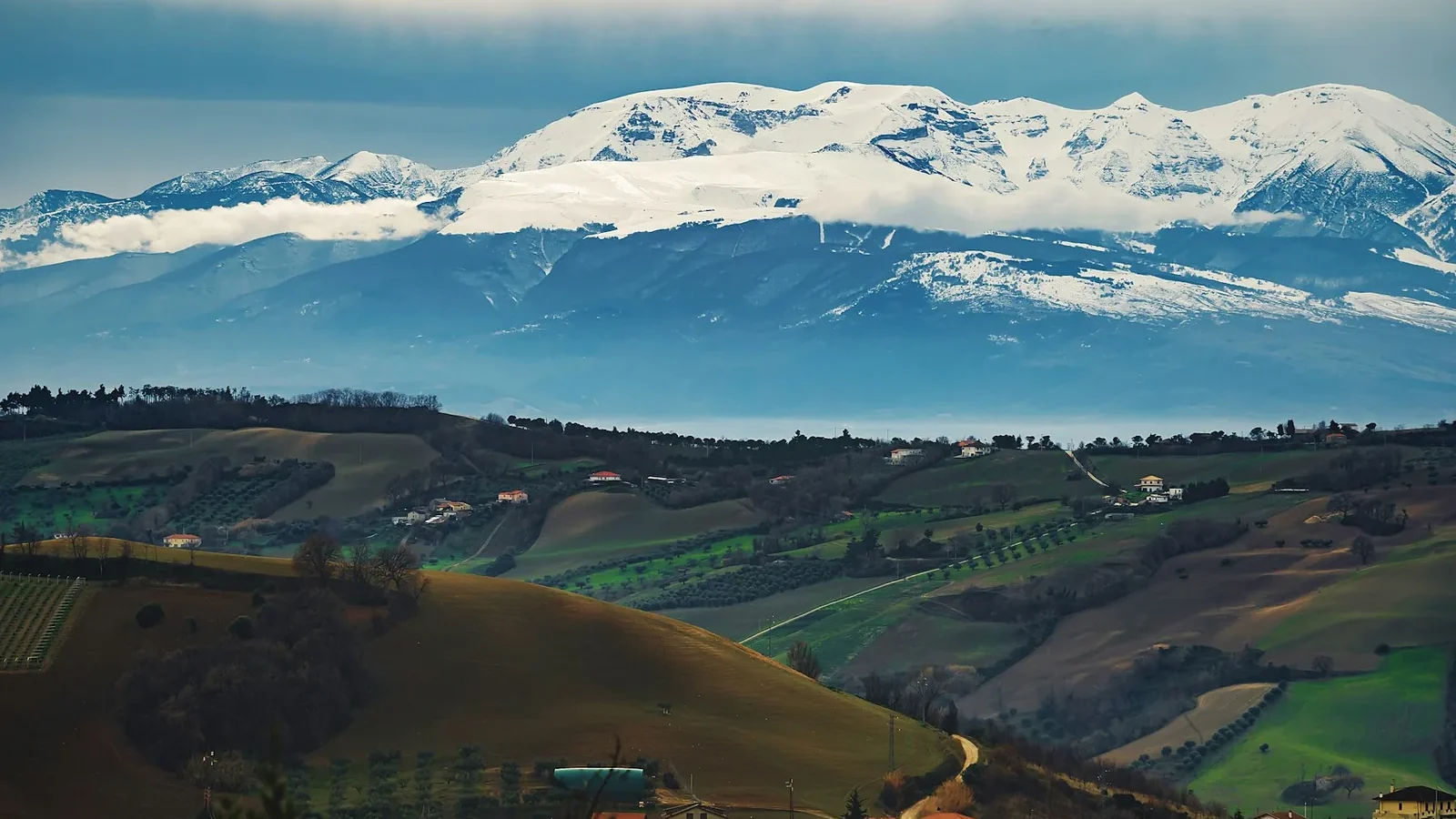
The region that produces both is unusually compressed. It runs from the highest ground in the Apennines to the Adriatic in the space of a short drive, and the vineyards sit in the strip between.
From summit to shore in about fifty kilometers
Britannica describes Abruzzo as mostly mountainous or hilly, with three northwest-southeast Apennine chains and the Gran Sasso d’Italia reaching 9,560 feet, from which sand and clay hills slope eastward toward the narrow Adriatic shoreline. That eastward slope is the vineyard.
Almost nothing is planted on the high ground itself, because roughly a third of the region lies inside national parks and the rest is too cold. The vines occupy the hills of Chieti, Pescara and Teramo, plus a few inland basins around L’Aquila.
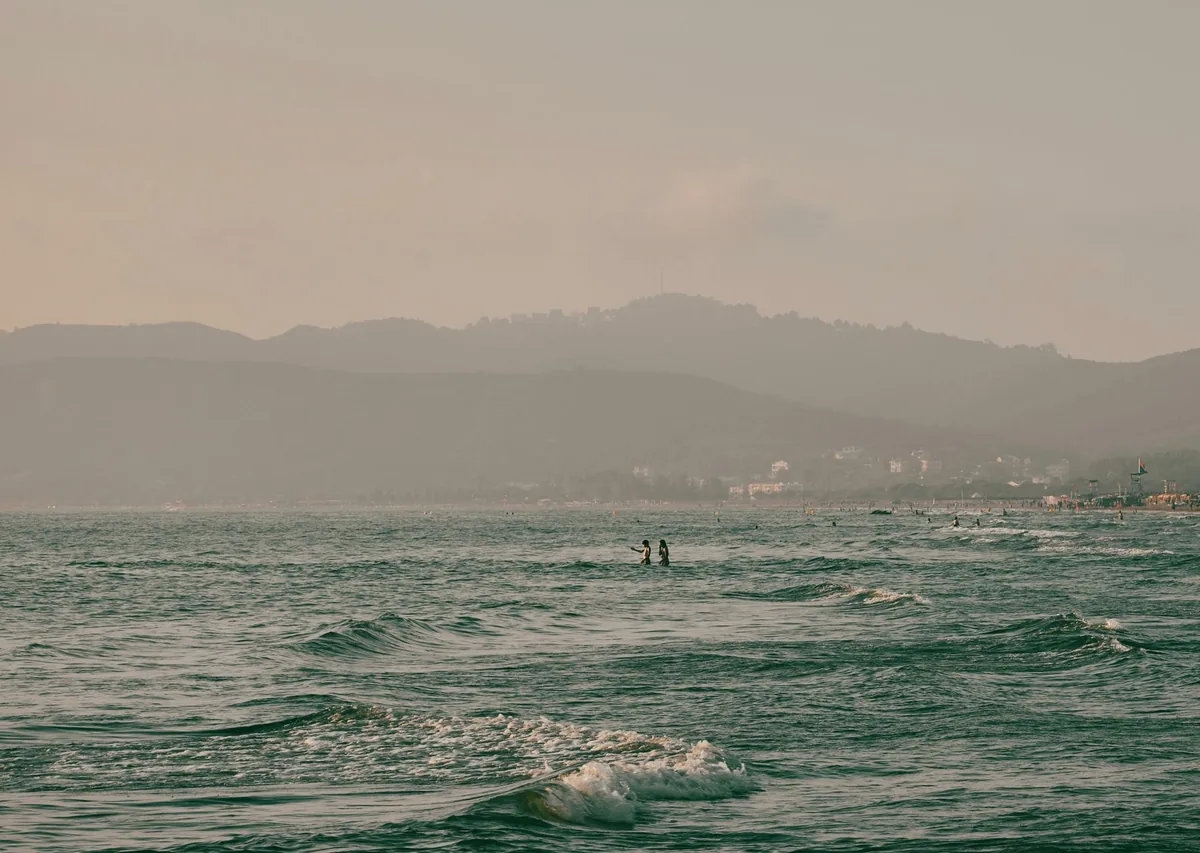
The two influences pull against each other all season. Sea air keeps the coastal hills mild and humid, while cold air draining off the mountains at night holds acidity in fruit that would otherwise flatten out in the heat.
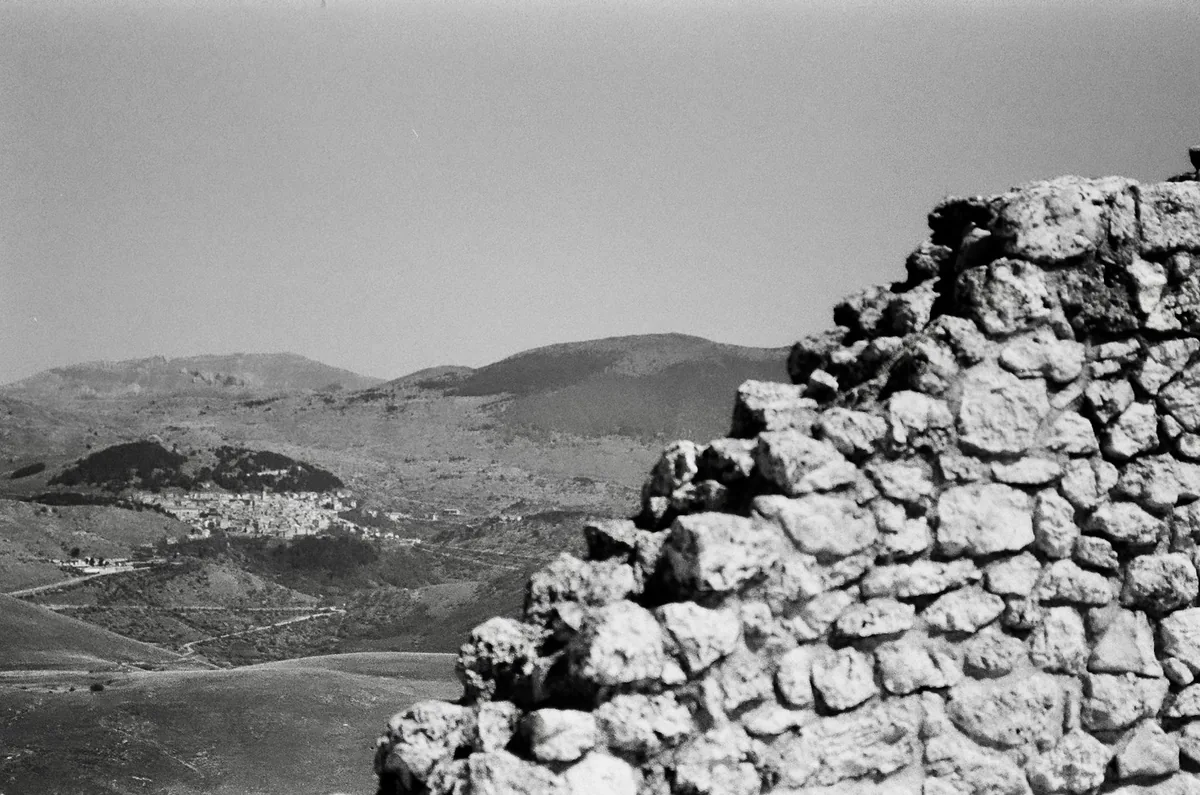
A September 2012 issue placed one estate at altitude rather than by the sea, in the village of Ofena near L’Aquila, where a baron founded the winery in 1925. Inland sites like that ripen later and give lighter wine than the coastal strip does.
One grape, two colors
Color in red wine comes from the skins, not the juice, and it has to be extracted. Leave crushed Montepulciano in contact with its skins for a week or two and pigment, tannin and structure all move into the wine.
Take the juice off after a few hours and you get color without much tannin. A January 2011 club issue described the method in the archive’s own words: rosato is made like a white wine, except that the juice is exposed to the grape skins just long enough to acquire its color.
For Cerasuolo the window runs from roughly one hour to twelve, and where a producer stops inside that range decides everything. The name comes from cerasa, the local word for cherry, and it describes the color rather than any sweetness.
Why Cerasuolo became its own denomination
For more than forty years the pink wine was sold as Montepulciano d’Abruzzo Cerasuolo, a subtype of the red. In 2010 it was separated out as Cerasuolo d’Abruzzo DOC, with its own rules and its own name on the label.
That mattered commercially as well as legally. A rose sold as a variant of a red gets shelved and priced as an afterthought, and Abruzzo’s is a wine with enough weight to stand at the table rather than beside a pool.
The archive noticed the altitude pattern behind it. A February 2018 issue observed that in the higher areas the vines produce a lighter version, Cerasuolo, a sturdy cherry-colored rose — cooler sites give fruit better suited to short maceration.
| Trait | Montepulciano d’Abruzzo | Cerasuolo d’Abruzzo | Colline Teramane |
|---|---|---|---|
| Tier | DOC, from 1968 | DOC, from 2010 | DOCG, from 2003 |
| Minimum Montepulciano | 85% | 85% | 90% |
| Skin contact | Days to weeks | About 1 to 12 hours | Days to weeks |
| Color | Deep purple-red | Cherry pink to pale red | Deep purple-red |
| Where | All four provinces | All four provinces | Teramo hills only |
Not the Montepulciano in Tuscany
This is the single most common confusion on an Italian shelf. Montepulciano d’Abruzzo is a grape variety grown on the Adriatic side of the peninsula, while Vino Nobile di Montepulciano is a place name in Tuscany, where the grape in the bottle is Sangiovese.
The two wines have almost nothing in common. Montepulciano is dark, soft and low in acidity; Sangiovese is pale, sour-edged and tannic, and it wants years that Montepulciano does not need.
Colline Teramane, in the hills of Teramo province, is the exception that asks for patience. Promoted to DOCG in 2003, it requires 90 percent Montepulciano and longer aging than the wider DOC.
Whites, pergolas and cooperatives
Trebbiano d’Abruzzo is the region’s white, and the name covers more than one grape. Much of what is bottled is Trebbiano Toscano, while the distinct and much rarer Trebbiano Abruzzese makes the versions that reward keeping.
The club’s own newsletters made that claim repeatedly, noting that at its best Trebbiano d’Abruzzo develops a Burgundy-like complexity after four or five years of aging. Pecorino and Passerina, both nearly lost by the 1970s and both replanted since, now sit alongside it.
Most of the region is farmed on the pergola abruzzese, a high horizontal canopy that shades the fruit and makes picking easier. It suits a warm, humid coastal climate, though it produces generously and has to be managed hard to keep yields honest.
Ownership is unusual too. An estimated 80 percent of Abruzzo’s wine comes from cooperatives, and a September 2019 issue described one as a grouping of growers associations across the province of Chieti, the historic cradle of Montepulciano d’Abruzzo and Trebbiano d’Abruzzo.
What an Abruzzo wine region guide means at the table
Montepulciano’s softness and low acidity make it a forgiving red. It handles grilled lamb, sausage, hard sheep’s cheese and the region’s chili-spiked arrosticini without needing anything acidic on the plate to meet it.
Cerasuolo is the more interesting food wine of the two. With genuine tannin and cherry weight it manages fried fish, tomato-based pasta, cured pork and vegetable dishes that would flatten a paler rose.
Serve Cerasuolo at cellar temperature rather than ice-cold, around 12 degrees Celsius, or the structure that makes it worth drinking disappears. The club’s Italian winery profiles record the Abruzzese estates it shipped each year.
Abruzzo FAQ
Is Cerasuolo d’Abruzzo a rose or a light red?
Legally it is a rose, and it is made by short skin contact rather than by blending. In practice it sits between the two categories, with more color, tannin and weight than most pink wine and none of a red’s long maceration.
Is Montepulciano d’Abruzzo related to Vino Nobile di Montepulciano?
Only by coincidence of name. Montepulciano is a grape grown mainly in Abruzzo, while Vino Nobile comes from the Tuscan hill town of Montepulciano and is made from Sangiovese.
Does Montepulciano d’Abruzzo age?
The everyday bottlings are made to drink young and generally do not improve much. Colline Teramane DOCG and single-vineyard wines from low-yielding sites are the ones built to hold, and they can run well past a decade.
What is the best-value white from the region?
Pecorino is the one most people notice, dry and firm with real acidity, and it costs far less than comparable whites from northern Italy. Trebbiano d’Abruzzo from a serious producer is the deeper wine, but harder to find.
Abruzzo is easier to read than most Italian regions once the two colors are understood as one decision made at the crusher. Mountains on one side, the Adriatic on the other, and a grape that answers to both depending on how long its juice stays with its skins. The Italian wine regions hub sets it in context, and Puglia continues the same Adriatic story further south.