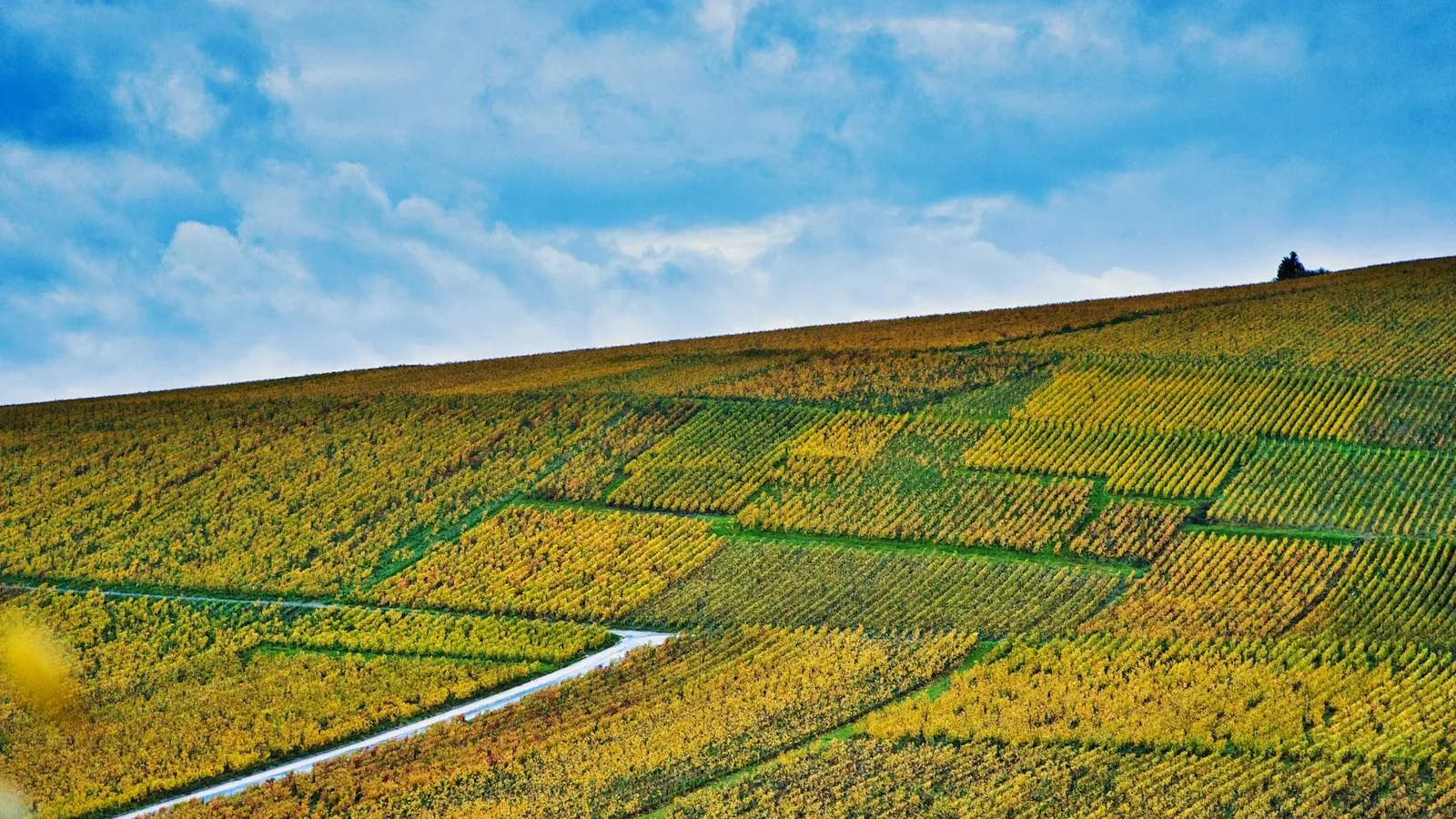
Campania grows vines on ground that is still moving. Two active volcanic systems sit within twenty miles of Naples, and the ash, pumice, tuff and sand they have thrown out over several thousand years make up most of the region’s vineyard soil. A Campania wine region guide that opens anywhere else has skipped the one thing that genuinely separates these wines from the rest of the Italian south.
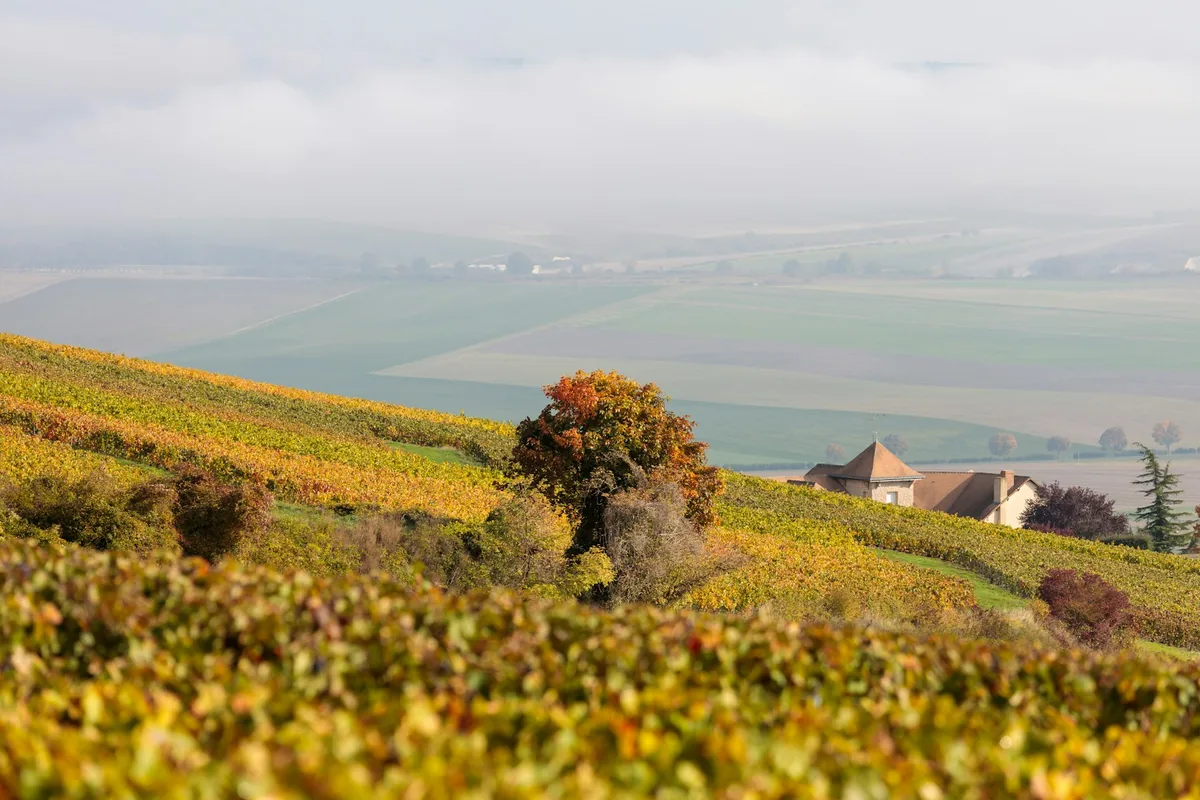
The second half of the story is altitude. Inland, the province of Avellino is cold enough in October that its red grape is often still hanging on the vine after harvest has finished almost everywhere else in Italy.
Reading a Campania wine region guide from the ground up
Campania holds four DOCGs and fifteen DOCs across roughly 25,600 hectares of registered vineyard, but only about a fifth of what it makes carries a DOP name at all. The rest leaves as IGP or as anonymous bulk, much of it drunk within the region. That ratio matters, because it means Campania’s reputation rests on a small and well-defined set of zones rather than on volume.
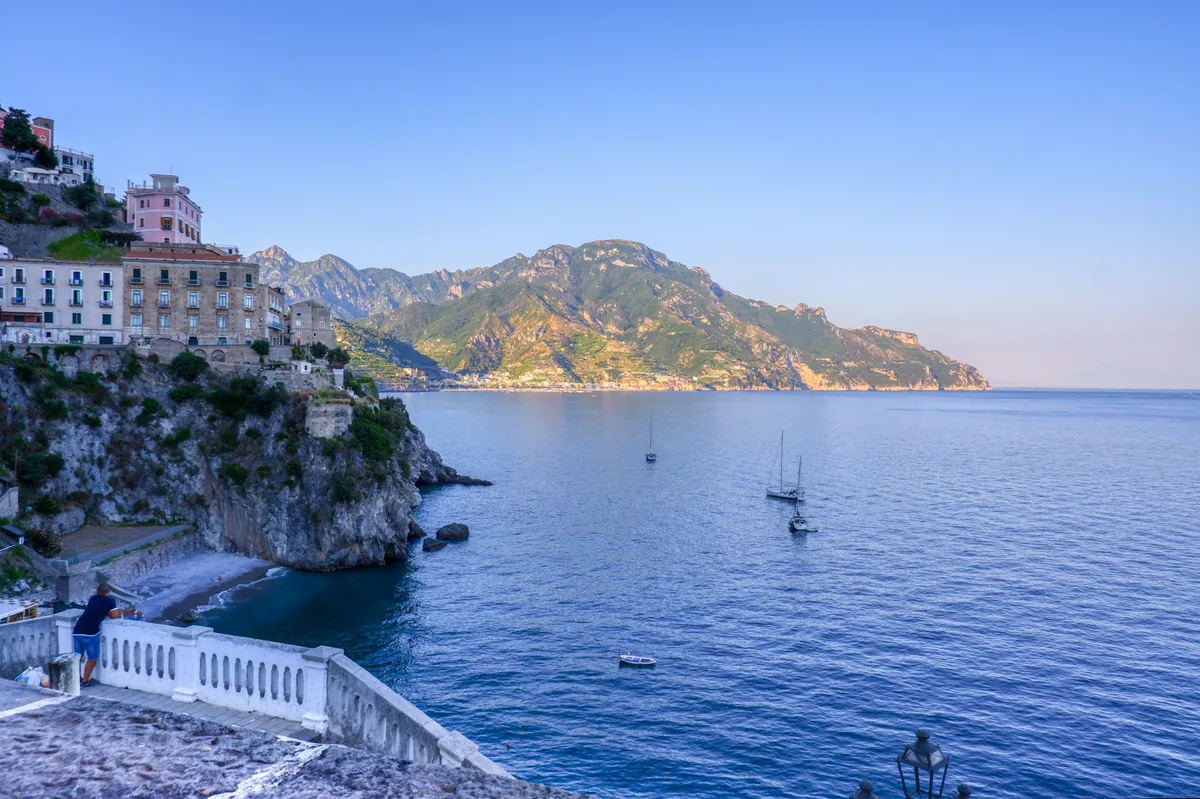
Those zones divide by geology more cleanly than by administration. Irpinia sits inland on weathered volcanic and limestone hills; the Bay of Naples sits on the deposits of Vesuvius and the Campi Flegrei caldera; the Amalfi and Cilento coasts run on terraces cut into steep rock above the water. Nothing about these three places is interchangeable, and the wines say so.
Irpinia, where the altitude lives
Irpinia is the province of Avellino, thirty miles inland from the coast and several hundred meters above it. It is the coolest serious wine country in southern Italy and it holds three of the region’s four DOCGs. A February 2014 profile of an organic Taurasi estate described vineyards planted at 1,300 feet on the volcanic slopes typical of the appellation, across five hectares of Aglianico.
That elevation is why Campania makes ageworthy white wine at a latitude that should not allow it. Nights fall away sharply, acidity survives the summer, and the harvest runs weeks later than it does on the plains. The club returned to Irpinia repeatedly in its Italian winery profiles across a decade of shipping.
Taurasi and what the waiting buys
Taurasi DOCG is at least 85 percent Aglianico and cannot be released before three years, one of which must be spent in wood. The Riserva requires four years, eighteen months of them in barrel. Those minimums exist because Aglianico arrives with hard tannin and high acid and is genuinely unpleasant young.
Its closest structural relative in Italy is Nebbiolo, which is why Taurasi keeps getting introduced by comparison rather than on its own terms. Readers arriving from the Piedmont wine region guide will recognize the shape immediately: a late-ripening grape, a long legal wait, and a wine that only makes sense on the other side of it.
Fiano and Greco, neighbors that behave differently
Fiano di Avellino and Greco di Tufo are grown within about twenty miles of each other and are not substitutes. Fiano is the broader of the two, waxy and faintly nutty, and it gains weight in bottle. Greco is narrower, firmer and more obviously acidic, with a grip that reads almost as texture.
Greco takes its name from the village of Tufo, which in turn is named for the volcanic ash rock beneath it. Both appellations require a minimum of 85 percent of their named grape, both are usually fermented in stainless steel without oak, and both keep far longer than southern Italian whites are given credit for.
Vesuvius, the Campi Flegrei and vines on their own roots
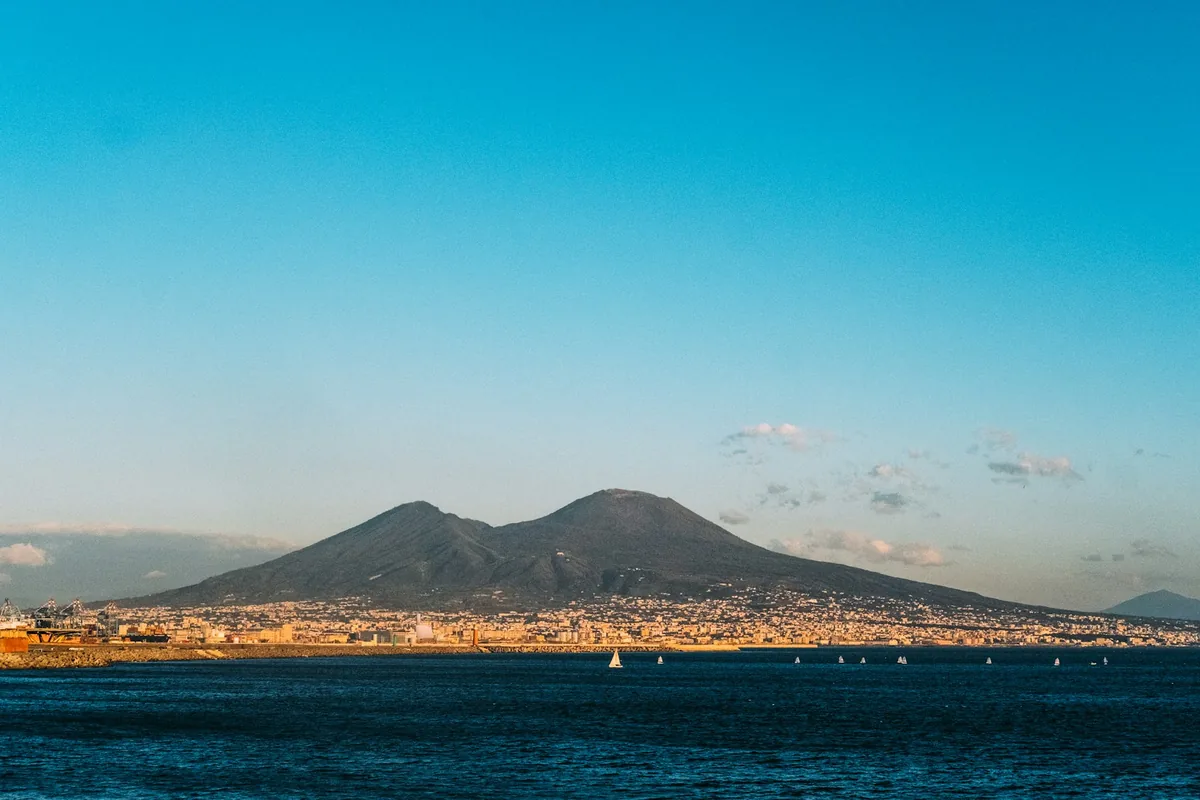
Vesuvio DOC covers the volcano’s lower slopes, most of it inside the national park. The whites are Coda di Volpe and Falanghina, the reds Aglianico and Piedirosso, and the name on most bottles is Lacryma Christi del Vesuvio. A July 2012 newsletter described the soil there as ground-up pumice that looks like black gravel.
West of the city the Campi Flegrei is a caldera rather than a cone, and its ground is sand. Phylloxera cannot move through sand, so vines in that pocket were never grafted onto American rootstock and still grow on their own roots. The same newsletter on the volcanic soils of Campania recorded the practical consequence: ungrafted vines reach full ripeness at lower sugar, so the wines finish nearer 12 percent alcohol than 14.
None of this is a preserved landscape. NASA’s Earth Observatory describes the Campi Flegrei caldera cluster as the largest volcanic feature on the Bay of Naples, records a single eruption around 32,800 years ago that laid down at least 100 cubic kilometers of rock, and notes that the ground near Pozzuoli still rises and falls, sometimes by meters within a decade. Vineyards sit on that.

The coast, the Cilento and the Sannio
Costa d’Amalfi DOC was established in 1995 to recognize what was already growing on the cliff terraces above the water. The club’s January 2010 profile of Campanian producers covered that coast alongside Irpinia and named Aglianico and Piedirosso as the reds that carry it.
South of Salerno the Cilento is greener and much quieter. A February 2019 newsletter featuring a Cilento estate near Paestum placed it inside the national park, on mineral-rich mountain soil with the sea close enough to influence the vines. Inland to the north, Sannio and Falanghina del Sannio in the province of Benevento supply most of the region’s Falanghina, and Aglianico del Taburno — the fourth DOCG — works the same hills.
| Trait | Taurasi | Fiano di Avellino | Greco di Tufo | Aglianico del Taburno |
|---|---|---|---|---|
| Color | Red | White | White | Red and rosato |
| Principal grape | Aglianico, 85% minimum | Fiano, 85% minimum | Greco, 85% minimum | Aglianico, 85% minimum |
| Province | Avellino | Avellino | Avellino | Benevento |
| Minimum aging | 3 years, 1 in wood | None for Bianco | None for Bianco | 2 years for Rosso |
| Riserva | 4 years, 18 months in barrel | 1 year | 1 year | 3 years |
| Sparkling permitted | No | No | Yes, metodo classico | No |
What the region eats
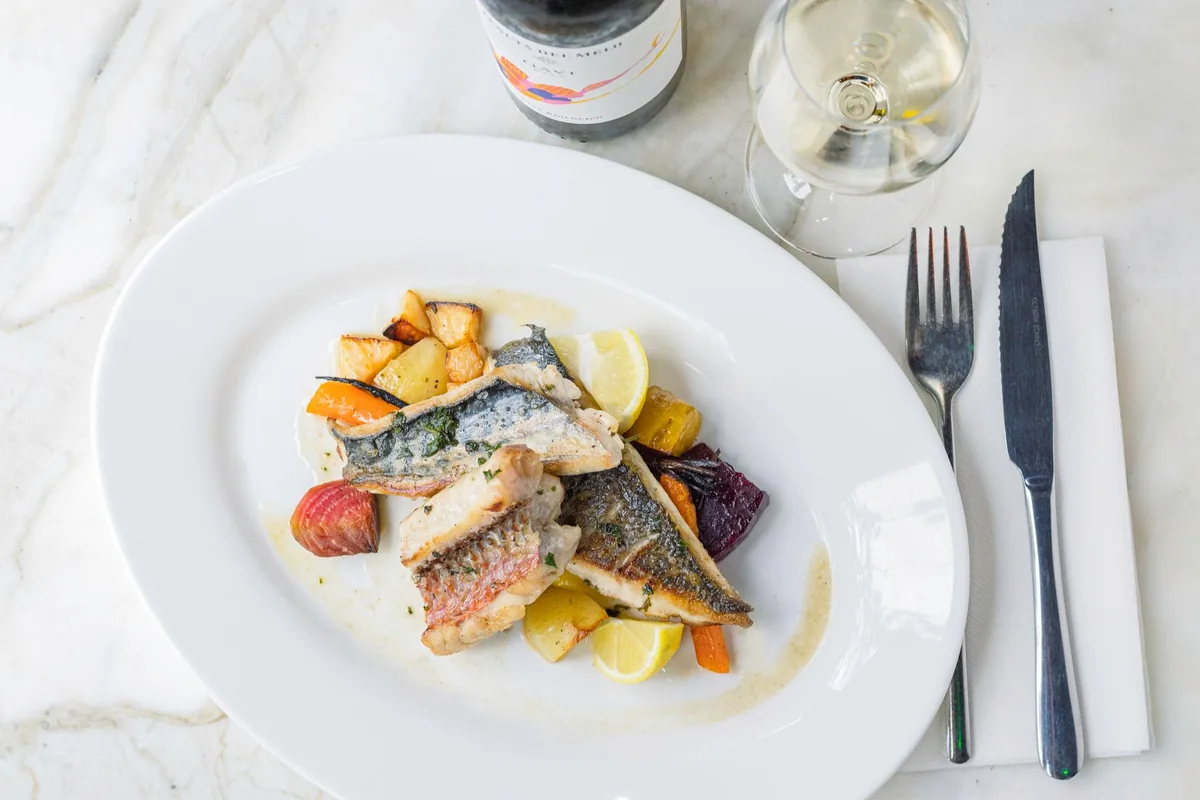
Campanian cooking runs on tomatoes, buffalo mozzarella, olive oil and fish, and its wines grew up next to that. Falanghina and Coda di Volpe from the volcano handle fried seafood and pizza without any effort at all. Greco has the grip for clams and salted anchovy; Fiano is the better answer to anything creamy or fried in batter.
Aglianico is the exception that wants a knife on the table. Taurasi with a decade behind it belongs with braised lamb, hard sheep’s cheese, or a ragù that has been on the stove since morning. Younger Aglianico labeled Irpinia DOC or Taburno does the same job at lower cost and lower stakes, much as Puglia’s Primitivo does further along the coast.
Campania FAQ
Is Taurasi the same grape as Aglianico del Vulture?
Yes — both are Aglianico, but they are grown in different regions on different volcanoes. Taurasi comes from Irpinia in Campania; Aglianico del Vulture comes from Basilicata, on the slopes of Monte Vulture. The variety is the constant and the site does the rest.
Why are some Campania vines ungrafted?
Phylloxera, the root louse that destroyed most of Europe’s vineyards in the nineteenth century, cannot survive in sand. Parts of the Campi Flegrei are sandy enough that the insect never established, so growers there never had to graft onto resistant American rootstock. Those vines are still on their own roots today.
Do Campania’s white wines need drinking young?
Less than most people assume. Fiano di Avellino and Greco di Tufo both hold for several years and often improve across the first three or four, picking up weight and losing their initial hardness. Falanghina from the coast is the one built for the current vintage.
Where should a newcomer start?
Start with a Fiano di Avellino and a Falanghina side by side, because the gap between inland altitude and coastal volcano is obvious in a single sitting. Then move to a Taurasi with some age on it. The Italian wine regions hub covers the neighboring regions that fill in the rest of the picture.