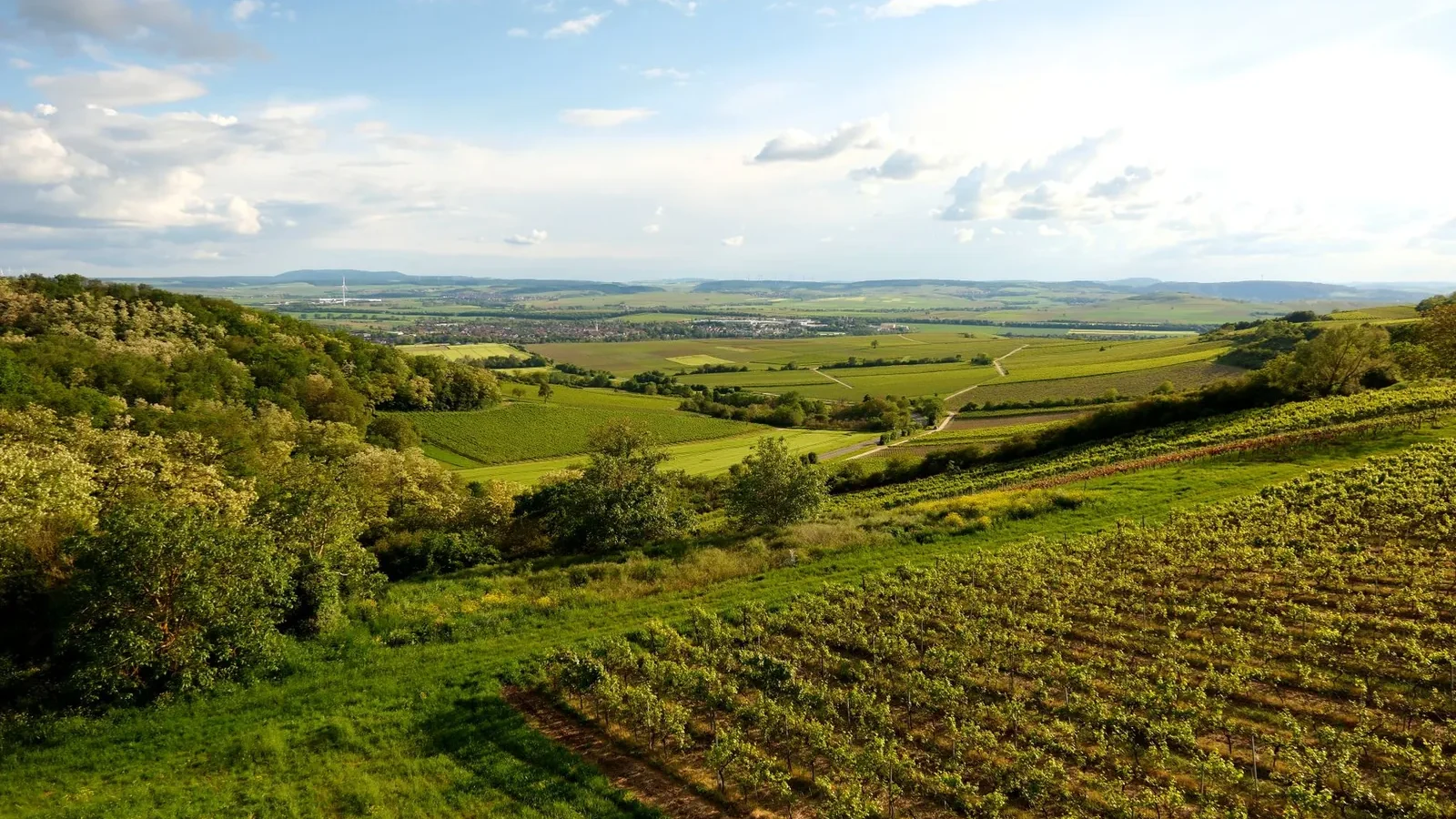
Anderson Valley runs about fifteen miles along the Navarro River in western Mendocino County, and through most of its length it is roughly a mile wide. This Anderson Valley wine region guide begins with a single measurement, because everything else in the appellation follows from it. The difference between a summer afternoon and the following dawn is routinely reported here at forty to fifty degrees Fahrenheit.
That gap is among the widest in any wine-growing region on earth, and it is not a curiosity. It explains why Pinot Noir can ripen slowly without losing its acid, why Alsatian white varieties found a home in a state that mostly ignored them, and why a Champagne house went shopping for land in a valley almost nobody had heard of.

A valley turned sideways to the ocean
Most California valleys run north to south, parallel to the shore, which leaves a ridge standing between the vines and the sea. Anderson Valley lies across that grain instead. Its northwestern end opens toward the Pacific about ten miles away, where the Navarro River has cut a gap through the coastal hills on its way out.
The appellation was approved in 1983 and takes in roughly 57,600 acres, of which only about 2,500 carry vines. The rest is redwood, fir, sheep pasture and apple orchard. The club’s December 2013 profile of Greenwood Ridge Vineyards names the little towns strung along the road through it — Yorkville, Boonville, Philo and Navarro — and describes tasting rooms that stayed relaxed because hardly anyone arrived by accident.
Access has always been the limiting condition. Highway 128 is the only practical way in from the south and it is narrow and slow. That kept land inexpensive, holdings small and the valley’s reputation late to arrive.

Where the fifty-degree swing comes from
Two mechanisms work in sequence, and guides that quote the number rarely separate them. Through the afternoon, heat rising off the inland ranges draws marine air up the river gap, so the coolest hours of a summer day arrive on a sea breeze. After dark the valley walls, steep and close together, drain cold air onto the floor while clear skies let the day’s heat radiate straight up.
The result is not a mild climate but a violent one, twice a day. The club’s February 2012 profile of Philo Ridge Vineyards put the range plainly, describing a valley cooled by afternoon breezes off the river where daytime temperatures reach the mid nineties and nights can drop into the fifties. Vines answer that pattern by accumulating sugar in daylight and holding on to acid overnight.
Rainfall is the other extreme figure, at something over forty inches a year and almost all of it between November and March. The growing season itself stays dry, which keeps disease pressure lower than the fog would suggest.

What an Anderson Valley wine region guide has to say about the deep end
Growers split the valley in two, and the split has nothing to do with any official boundary. The northwestern half, running from Philo down to Navarro, is called the deep end. It sits closest to the ocean, holds fog the longest and ripens last.
The southeastern end around Boonville is some twenty miles from the water and warm enough to pick earlier. Milla Handley’s notes in the club’s September 2014 profile of Handley Cellars describe a Pinot Noir blended across several vineyards with a large portion from the warmer Boonville end, and record a cool 2010 season whose harvest ran later than usual, particularly in the deep end.
Her notes on a Pinot Gris four years earlier, in the club’s November 2010 profile of the same winery, drew the line from the other direction. Boonville fruit tended toward tropical flavors while deep-end vineyards gave more delicate floral and mineral qualities. One variety, one valley, fifteen miles between them, two different wines.
| Trait | Deep end (Philo to Navarro) | Boonville end |
|---|---|---|
| Distance to the Pacific | About ten miles | About twenty miles |
| Fog | Arrives early, clears late | Arrives later, burns off sooner |
| Heat accumulation | Among the coolest in California | Edges into the next warmth band |
| Harvest timing | Latest in the valley | Earlier, sometimes by weeks |
| Character of the fruit | Floral, mineral, tightly wound | Rounder, riper, tropical in whites |
Three styles that follow from one number
Pinot Noir
Pinot Noir takes the large majority of the valley’s planted acres, and the reason is arithmetic rather than fashion. The variety ripens early and sheds acid fast in warmth, so it needs a site that can deliver sugar without heat. A long cool season with genuinely cold nights is exactly that.
The Alsatian whites
Gewürztraminer, Riesling, Pinot Gris and Pinot Blanc went in early here and still hold a small share of the vineyard. These are aromatic varieties whose perfume is flattened by heat, and cold nights preserve it. Dry and off-dry versions both work, because the acid line is there either way.
Traditional-method sparkling
Base wine for traditional-method sparkling wants what most still-wine growers dread: modest sugar, high acidity, low pH, picked early. In 1982 the head of Champagne Louis Roederer looked at Napa and Sonoma and chose Anderson Valley instead for the house’s California project. That single decision did more for the valley’s standing than any still wine made in it.

How much is actually grown here
Pinning down acreage for a small appellation is harder than it should be. Federal crush statistics are reported by pricing district rather than by appellation, so Anderson Valley vanishes into a Mendocino-wide figure. The nearest public accounting sits at county level, where California’s agricultural commissioners publish annual crop reports that the state Department of Food and Agriculture collects in one place, Mendocino among them.
That is a real limit on what anyone can honestly say about the valley. Published estimates put plantings near 2,500 acres across roughly a hundred vineyards, which is very small by California standards.
Choosing a bottle and pouring it
Pinot Noir from this valley leans toward red fruit, forest floor and a savory edge rather than sweetness, with acidity that survives to the table. It suits salmon, duck, mushrooms and roast chicken, and it does not need a heavy sauce to make sense. Gewürztraminer grown here belongs beside anything with ginger, chili or smoke in it.
Sparkling wine from the valley works as a genuine aperitif, dry enough to open a meal rather than close one. For county context, the Mendocino County wine region guide sets this valley against the warm inland floor around Ukiah. For a comparable fog-driven appellation further south, the Russian River Valley guide covers a corridor cooled by a daily blanket rather than a nightly plunge.
Anderson Valley wine FAQ
Why is this valley so much colder than the rest of Mendocino County?
Because the Navarro River cuts a gap through the coastal hills and the valley lies across the grain of the coast rather than along it, so marine air moves straight in. Inland Mendocino sits behind that same ridge in a rain shadow and runs genuinely hot through the summer.
What does the deep end mean on a label or in a tasting room?
It is the local name for the northwestern half of the valley, roughly Philo to Navarro, nearest the ocean. It is not a federal appellation and will not appear on a label, but growers and winemakers use it constantly. Deep-end fruit ripens later and keeps more acid.
Is it only Pinot Noir?
No, though Pinot Noir takes most of the acreage. Chardonnay, Gewürztraminer, Riesling, Pinot Gris and Pinot Blanc are all long established, and traditional-method sparkling wine is a serious category rather than a sideline.
Can these wines still be had from the club?
No. Celebrations Wine Club stopped shipping in December 2019 and the site is an archive now. The California winery profiles written between 2010 and 2019 include several Anderson Valley producers, and the California wine regions hub sets the valley beside the state’s other appellations.

Read a label from here as a position on a fifteen-mile line running inland from a gap in the coastal hills. The cold end ripens late and tastes taut, the warmer end picks earlier and tastes rounder, and both live by the plunge between afternoon and dawn.