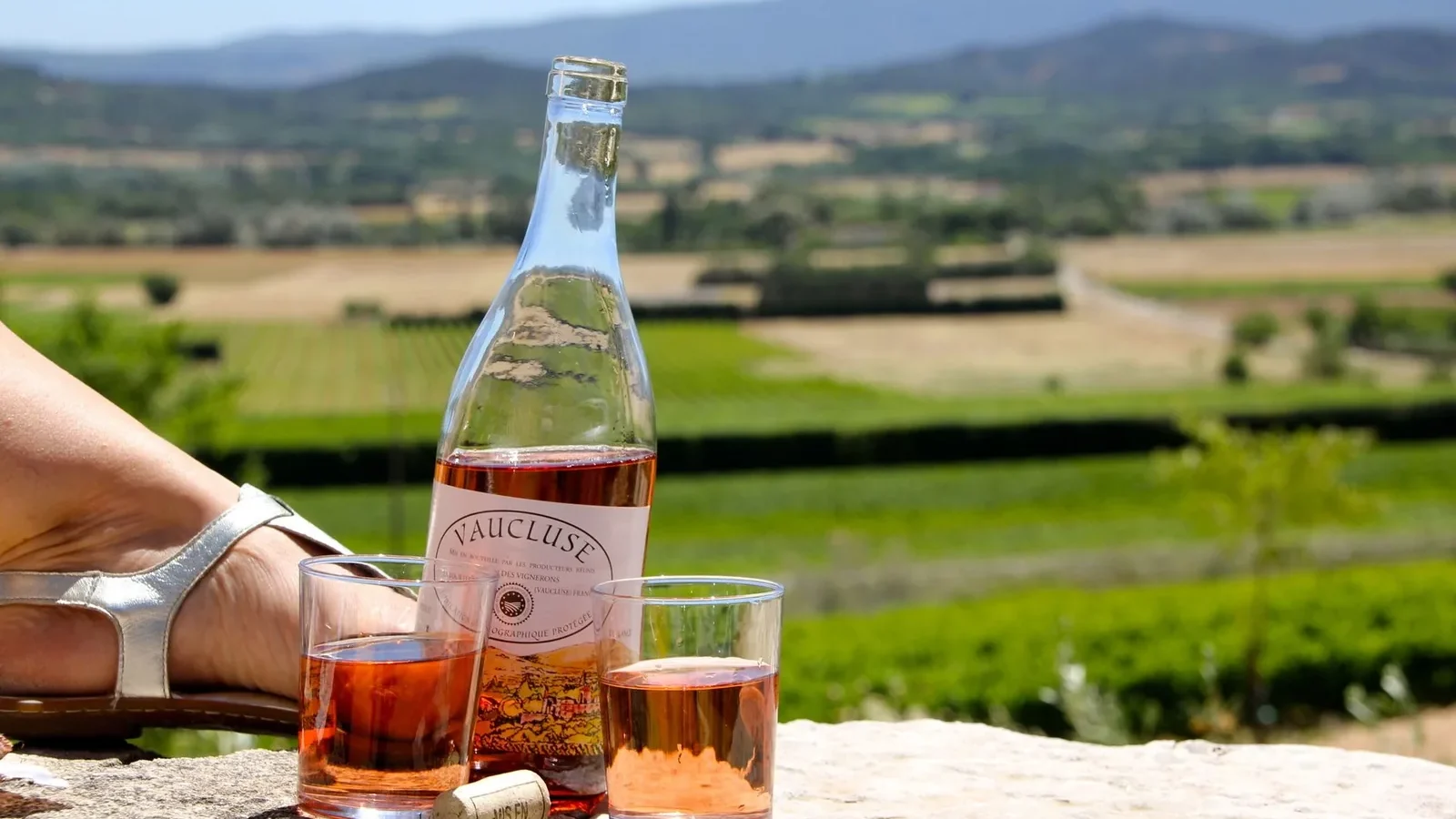
We all know that the temperature of wine can have a dramatic effect on its taste and aromas. Chilled white wine or rosé provide a very different taste experience than the same wines at room temperature. But it’s not likely that we’d ever serve them at the wrong temperature since we probably store them in the refrigerator.
Since we drink reds at room temperature, we probably keep them on counter tops or wine racks despite ambient temperatures,which can be very different, depending on the season. A red will deliver its best flavors and aromas at 60 to 65 degrees, so room temperature in the summertime is way too warm for red wine whether we employ air conditioning or not. But putting the bottle in the refrigerator for a half hour will work wonders.
Apart from cooler wine being more pleasurable in hot weather, cool temperatures can enhance certain red wines in several ways.Higher alcohol wines from 14.5 to 15 percent alcohol can taste flabby if they are short on acid and the clean taste that it provides. Especially higher alcohol California wines may have this problem, and reducing their temperature to 60 or 65 degrees amplifies the acid sensation in much the same way that chilling white wine does.

Another advantage of cooling a big red wine is that around 15 percent alcohol, you can usually taste the alcohol, especially if the wine is 70 degrees, because at that temperature, the alcohol is evaporating under your nose. But at 60 to 65 degrees, the alcohol is firmly in solution so that fruit flavors and aromas can emerge.
Lighter and lower-alcohol red wines will certainly be enhanced at cooler temperatures around 60 degrees because fruit flavors, aromas, and acidity are not only bolder at that temperature but will be more refreshing in warm weather much like a chilled white.
The only red wines that would not lend themselves to lower temperatures would be more tannic and age-worthy wines like Cabernet Sauvignon since lower temperatures exaggerate tannin sensations and bitterness.Such wines are better served at higher temperatures but still under 70 degrees.
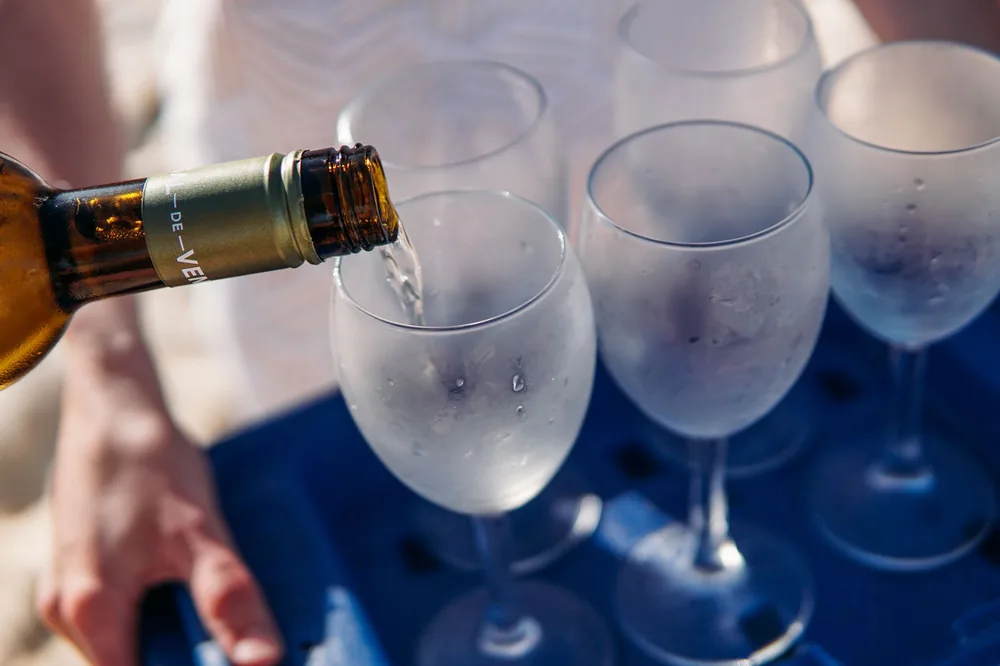
Especially in the summertime, restaurants might be serving red wines too warm, so even though you might get resistance from a server, ask for an ice bucket if the bottle is too warm. And remember that these same guidelines are appropriate in the winter although ideal serving temperatures for reds probably won’t require time in the refrigerator.
A Practical Temperature Ladder
Serving temperature is the cheapest improvement available to anyone drinking wine at home, and it costs nothing but a little planning. The useful range for red wine is narrow, roughly 55 to 65 degrees, and most households serve above it in summer and below it in a cold winter room. Twenty minutes in the refrigerator drops a bottle by about four degrees from a warm room.
Wine also warms in the glass, gaining several degrees within fifteen minutes of pouring. Serving slightly cooler than the target and letting the glass do the rest is more reliable than trying to hit the number exactly. That is why a bottle pulled straight from a cellar rarely tastes closed for long.
| Consideration | Light, low-tannin reds | Full-bodied, tannic reds |
|---|---|---|
| Target temperature | 55 to 60 degrees | 60 to 65 degrees |
| From a 72 degree room | Around 45 minutes in the refrigerator | Around 25 minutes in the refrigerator |
| Ice and water bath | About 10 minutes | About 6 minutes |
| What cooling emphasizes | Freshness, acidity, red fruit | Acidity, but also tannin and bitterness |
| Risk of overcooling | Low | Tannins turn hard and drying |
What Temperature Changes in the Glass
Aroma compounds are volatile, and volatility rises with temperature, so a warm wine releases more of everything at once, with ethanol leading the way. That is the mechanism behind the observation in this newsletter that alcohol becomes obtrusive above about 70 degrees. Cooling the wine does not remove alcohol; it slows its escape into the headspace of the glass.
Taste perception shifts too. Cooler temperatures sharpen the impression of acidity and accentuate tannin’s drying grip, while warmth emphasizes sweetness and body. A wine that seems flabby when warm and lively when cool has not changed its chemistry at all.
Keeping Wine at Temperature
An ice bucket filled with ice and water works far faster than ice alone, because water contacts the whole surface of the glass rather than a few points. A wet towel around the bottle in a breeze does a surprisingly good job through evaporation. A freezer works but is easy to forget, and a frozen bottle can push its cork out.
For storage rather than service, the priority is stability. A closet on an interior wall beats a kitchen counter or a rack above the refrigerator, where compressor heat and vibration both work against the wine. Anything above about 70 degrees for extended periods ages a wine prematurely.
Restaurant service in summer is the common failure point, since a red kept in a warm dining room arrives too warm to show well. Asking for an ice bucket is a legitimate request rather than an eccentric one. Five minutes usually solves it.
Measuring It Rather Than Guessing
An inexpensive instant-read thermometer settles most arguments about serving temperature in a second. Sleeve thermometers that wrap around the bottle work well for a bottle in service, and an infrared reader aimed at the glass surface is close enough for practical purposes. Guessing by hand is unreliable because skin temperature is so much higher than either target.
Once a few bottles have been measured, the habit becomes unnecessary. Most people find they have been serving whites too cold and reds too warm by roughly the same margin. Correcting both is a one-time adjustment to a routine.
Rose and Sparkling Sit in Between
Dry rose shows best a little warmer than a crisp white, around 50 degrees, where its red-fruit character has room to appear. Sparkling wine is served colder, both because cold liquid holds carbon dioxide better and because the bubbles carry aroma upward regardless. Serving either straight from the back of a cold refrigerator mutes them.
California Ripeness and Why It Matters Here
Warm-climate fruit ripens to higher sugar, which ferments to higher alcohol, and that is precisely the category of wine most improved by a few degrees of cooling. The Wine Institute’s California wine industry statistics give a sense of the scale and range of production behind those styles. The trade-off between ripeness and freshness is a decision made in the vineyard at picking time.
Which grapes and styles fall on either side of that line is set out in the California grapes and styles guide. The same logic extends to the table, where a cooler, fresher red handles summer food more gracefully, as the food and wine pairing guide works through.
Serving Temperature FAQ
Is room temperature ever correct for red wine?
The phrase dates from cool European houses and refers to something closer to 60 degrees than to a modern heated room. Taken literally today it produces wine served ten degrees too warm. Treat it as a historical curiosity rather than an instruction.
Does chilling ruin an expensive red?
Moderate cooling does not, though a very tannic wine served below about 55 degrees will taste hard and closed. If that happens, cupping the bowl in your hands for a minute reverses it. Overcooling is temporary in a way that overheating is not.
What is the fastest safe way to cool a bottle?
An ice and water bath, which will bring a bottle down by ten degrees or so in about ten minutes. Adding salt to the bath speeds it further. Further practical technique is collected in the wine skills and knowledge guide.