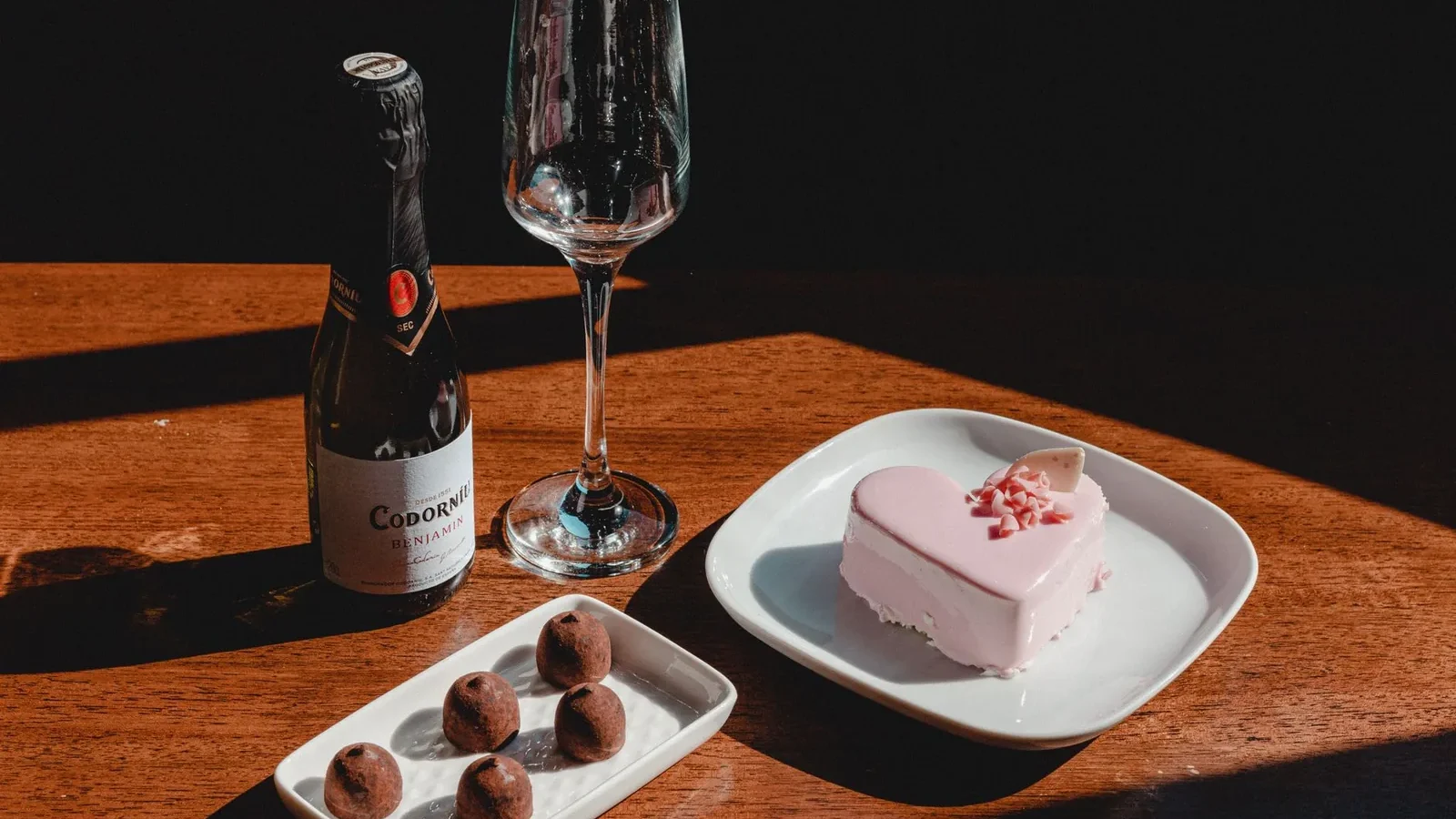
You ask yourself, “What’s for dessert?” Chocolate, of course, because it’s on your mind. Valentine’s Day is approaching, and you know that it will be part of the celebration. While no historical connection exists between chocolate and St. Valentine, Americans have forged a bond because they overwhelmingly prefer the flavor to any other sweet. But the combination also makes sense. Like chocolate, love is sweet, sometimes bitter-sweet, sometimes just bitter. If you love wine, you have yet another reason to eat chocolate if you need one. Chocolate and wine together create a fine ending to a fine meal but not just any chocolate or any wine.

So you’re going to have a dinner party and gather friends around the table. The dessert is chocolate, but which form it takes is very much age-related. If you’re 20-something, you’ll gravitate toward layers, maybe chocolate cake with chocolate frosting, topped with ice-cream, and then drizzled with more chocolate. The ice-cream is important. Almost every dessert that you eat is topped with ice-cream because when you were a teenager, it was a major food group all by itself and, as often as possible, comprised an entire meal. The memory lingers. But if you want to combine your enthusiasm for wine with your enthusiasm for chocolate, this kind of dessert would need to be toned down.

If you’re thirty something and have children of your own, ice-cream will have become pedestrian. Seeing enough of it drip down their chins, ruins the image. Your chocolate cake will be denser and topped with a just a dollop of Chantilly cream. A California late-harvest red will have enough sweetness to complement this chocolate dessert beautifully.

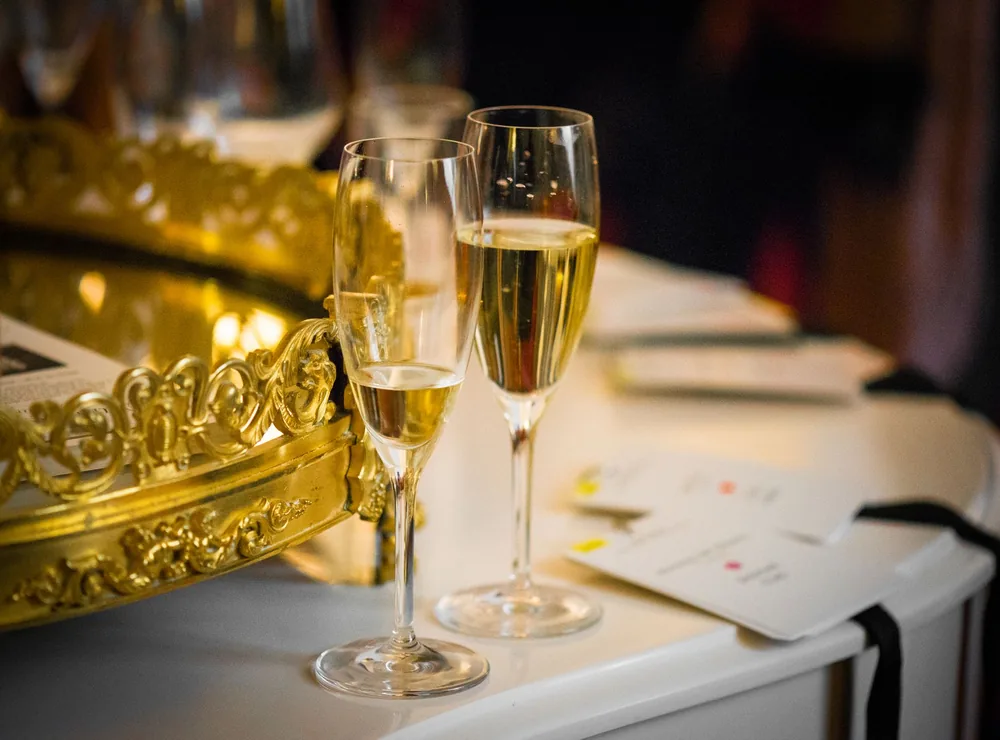
If you’re forty or fifty-something, the dessert situation becomes more complicated but the wine pairing easier. You know that you’re middle aged because your doctor has taken to warning you about the triple demons, cholesterol, blood sugar, and excess weight. You find out that chocolate takes on less caloric forms than cake, for instance a chocolate soufflé, a chocolate and pear tart, or maybe baked pears with chocolate sauce. A sparkling, lightly sweet Moscato d’Asti would complement these lighter chocolate versions and would be delicious with these desserts or any other fruit dessert, with or without chocolate.
Suddenly you’re sixty. Do you give up chocolate entirely along with night driving and bending over? Not at all. You’re finally old enough to savor it straight in its most intense form, and best of all, you can happily combine chocolate with many different wines, all of them deeply red.

Chocolate has undergone a quiet revolution and is no longer defined by Hershey or See. You can now find bars of chocolate in concentrations of 60 to 80 percent cacao from particular places like Cameroon, Madagascar, the Solomon Islands, and even from particular plantations. This is chocolate in its purest, richest, smoothest form, and it even has health benefits. It’s a complex food with over 300 compounds and chemicals in each bite, some of which are antioxidants that reduce cholesterol and blood pressure. This chocolate combines best with red wine, which has many of the same healthful attributes.
The alcohol content of the wine will be related to its ability to complement chocolate, although the wine needn’t be as high as in a late harvest wine. For instance, California Zinfandel and Italian Amarone are both usually at least 15% alcohol, but many other California reds reach the same alcohol level. Check the label when you make your choice. Along with chocolate, you could serve some cheeses and nuts to fill out the course. Dessert will never be easier, and no matter your age, if you love chocolate and wine separately, you’ll love finishing a meal with both.
Why chocolate is hard on wine
Three things happen at once when chocolate meets wine. Sugar in the chocolate makes a dry wine taste thinner and more acidic than it did a moment earlier, cocoa butter coats the palate and blunts aromatics, and the bitterness of cocoa solids stacks on top of any tannin in the glass. The combined effect is why a great dry red can seem hollow beside a dessert.
The old guidance follows from that. A wine served with something sweet should be at least as sweet as the dish, which is why fortified and late-harvest wines have traditionally accompanied chocolate. The alternative is to lower the sugar in the dessert until a drier wine can hold its ground.
Bitterness is the second lever. A very dark chocolate carries far more cocoa solids and far less sugar than a milk chocolate, so it clashes with firm tannin while pairing comfortably with a soft, ripe, generously fruited red.
| Chocolate | What it brings | What the wine needs |
|---|---|---|
| Milk chocolate | High sugar, dairy fat, mild cocoa | Clear sweetness and gentle tannin |
| Semisweet and bittersweet | Balanced sugar and cocoa | Ripe fruit, soft tannin, some sweetness |
| Very dark, high cocoa | Low sugar, strong bitterness | Full body, low tannin, warmth |
| White chocolate | Cocoa butter and sugar, no solids | Sweet wine with lively acidity |
| Chocolate with fruit | Added acidity and sweetness | Sparkling or lightly sweet wine |
What the percentage on the wrapper means
The figure on a bar states the proportion by weight that comes from the cacao bean, counting both the solids and the cocoa butter, with the remainder mostly sugar. Two bars at the same percentage can therefore taste quite different depending on how much of that total is butter. Bean origin, roast and conching time account for the rest of the difference.
American labeling for chocolate rests on federal standards of identity that set minimum cacao content for each named category, alongside the general rules for ingredient lists and nutrition panels. The Food and Drug Administration’s food program pages collect those labeling requirements. Reading the ingredient list is usually more informative than the number on the front.
Origin adds a further layer. Beans from different growing regions carry recognizably different characters, and producers increasingly name a country, a region or a single plantation on the wrapper the way a wine label names a vineyard. Two bars of identical strength from different origins can pair quite differently with the same glass.
Serving the course well
Chocolate served straight from the refrigerator tastes of very little, since the cocoa butter is still firm and releases aroma slowly. Twenty minutes at room temperature restores the texture and most of the flavor. Small pieces work better than large ones, because palate fatigue arrives quickly with anything this rich.
Pour sizes should shrink as sweetness rises, and a few ounces of a sweet wine is a full serving. Cheese, toasted nuts and dried fruit alongside give the table something to move between and stretch the course comfortably. Our guides to food and wine pairing and to wine for celebrations cover how to build a dessert course around what is already on hand.
Chocolate and wine FAQ
Can a dry red ever work with chocolate?
Yes, when the chocolate is dark and only lightly sweetened and the wine is ripe, soft and low in tannin. The pairing fails when the wine is austere or heavily tannic, since the bitterness in the cocoa and the astringency in the glass reinforce each other.
Does sparkling wine suit chocolate?
A dry sparkling wine usually does not, though a sweeter sparkling style handles it well, especially with fruit alongside the chocolate.
How much wine should a dessert course get?
Roughly half a normal pour per person. Sweet wines are rich enough that a small glass finishes the meal without overwhelming it, and a single bottle stretches comfortably across a table of eight.