For some time now, Americans have been taking a closer look at what they eat and drink, including wine. The organic farming movement has exposed the negative impact that conventional agriculture can have on food nutrition and the environment, and various national episodes of food and drink contamination have worried consumers. When Americans purchase wine, they are increasingly attentive to not only how grapes are farmed but now how wines are made. Government regulation mandates the disclosure of added sulfites on the label, a ubiquitous practice among winemakers for seemingly good reasons. But certain consumers prefer to avoid them, probably because they associate sulfites with “red wine headache.” In their continuing quest for quality and perhaps influenced by consumer demand, certain cutting-edge winemakers, especially those who farm organically and biodynamically, are now experimenting with wines made as naturally as possible, with minimal intervention, including diminished use of sulfites, specifically sulfur dioxide.
Sulfur dioxide has always been an important tool in winemaking because it acts as an antibiotic and antioxidant, protecting wine from bacteria and oxidation. It also helps to keep volatile acidity in solution so that it doesn’t blow off and leave the wine flabby. First and most important, winemakers douse sulfur dioxide in a diluted liquid solution on harvested grapes just before crushing to protect against oxidation. They use it to top up barrels when wine has evaporated because microbial spoilage can occur at this point. And they use it again during bottling to protect against oxidation when the wine is exposed to air. Finally, winemakers use sulfur dioxide to sanitize barrels, puncheons, fermentation tanks and other equipment because it’s the most benign disinfectant available.
Interestingly, the upper limit for SO2 in U.S. wines and in the E.U. is substantially different. For red wines, the U.S. allows 350 parts per million, and the E.U allows 160 parts but more for white wines and rose` at 210 parts per million. The increased amount of SO2 that the E.U. permits in whites and rose` is perhaps related to preserving acid, which E.U. consumers consider more desirable in their white and rose` wines than consumers do here. We like rounder, fuller bodied whites rather than crisp, acidic ones as do Europeans. Regardless of what is permitted, SO2 in concentrations above 50 parts per million begins to be detectable in the nose and taste of the wine, so most premium winemakers try to limit the amount to around 100 parts per million.
Because you and I inhabit a magic circle that is equally acquainted with Californian and Italian wines, we know things that others don’t. We know that California wine is much higher in alcohol than Italian wine and European wine in general, commonly as much or more than two percent, which is a lot. These days, average alcohol for Italian wines is 13% and often 12.5%, especially for whites. Average alcohol for Californian wines is 14.5% and often as high as 15.5% and more, especially for Zinfandel. Without taking a poll, we can assume that California winemakers are using more SO2 than Italian winemakers, first because regulation permits it and, second, because it preserves acid, which is diminished when California winemakers pick grapes at sugar levels that produce high alcohol wines. Countless times, people who think that they are sensitive to sulfites have told me that they get headaches from Californian wine but not Italian. While they may be more comfortable with Italian wines, the science doesn’t back up their assumption that sulfites are the cause of their discomfort. More likely, the histamines, especially in red wine, are responsible for the headache but also high levels of alcohol and residual sugar, which are more common in Californian wines than Italian.
Winemakers who are experimenting with lower sulfite levels have found that when they pick fruit at lower sugar levels with more acid, itself an antibiotic and anti microbial substance, they can use less SO2. But perhaps even more interesting than the possibility of reduced levels of SO2 is that the emerging style of these lower alcohol wines is fresher and lighter with more acute varietal taste, which riper grapes can obscure. A higher acid content also allows such wines to age for longer periods. The stylistic movement in this direction plays into a certain backlash against ripe, highly extracted, high-alcohol wines, which began several years ago with wine writers and at least some consumers, who fled to European wines, which had a more compatible balance. So SO2 is now another reason to check the alcohol level on a bottle of wine. Lower alcohol and higher acid now could indicate less SO2.
Free, Bound, and Molecular Sulfur Dioxide
The single number reported as total sulfur dioxide hides a more useful distinction. Part of the addition binds to compounds in the wine, chiefly acetaldehyde and certain sugars, and that bound fraction is chemically occupied and no longer protective. The rest stays free in solution, and only a small slice of that free portion, the molecular form, does the actual antimicrobial work.
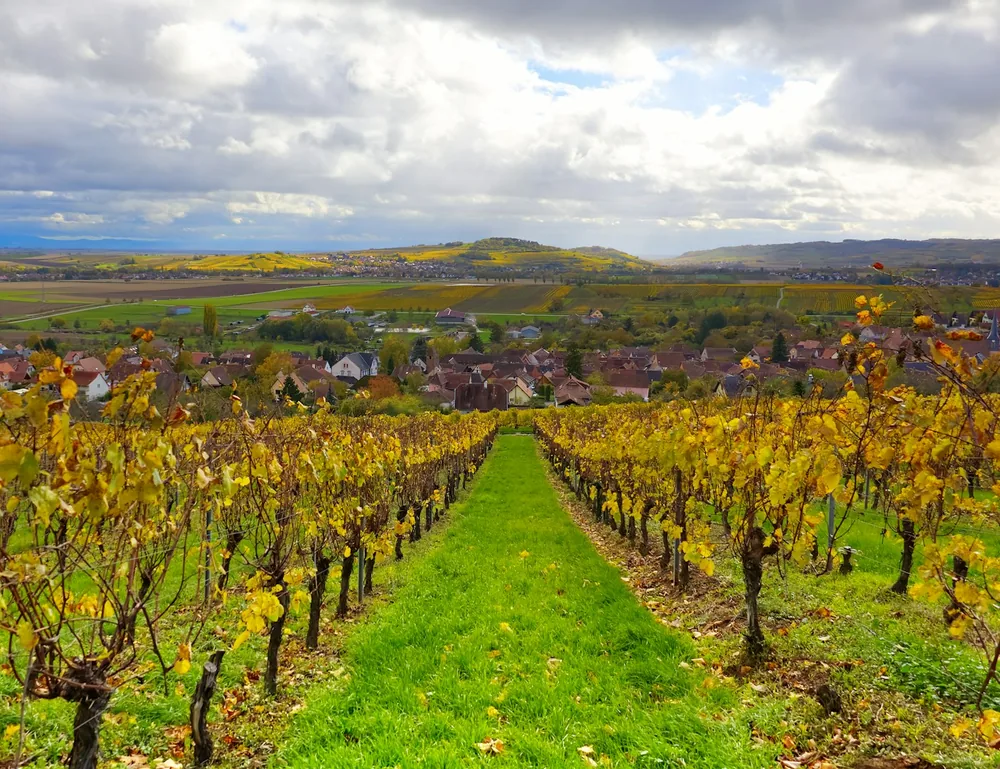
This explains why two wines with identical totals on paper can behave very differently in the bottle. A wine carrying a heavy bound load has less real protection than its total suggests, which is one reason winemakers measure free sulfur dioxide rather than total when deciding whether to add more.
Why Acidity Changes the Arithmetic
The proportion of free sulfur dioxide that exists in the active molecular form depends on pH. Lower-pH wine, which is to say higher-acid wine, converts a larger share of the free portion into that active form, so less total addition achieves the same protection.
| Trait | Higher-acid, lower-pH wine | Lower-acid, higher-pH wine |
|---|---|---|
| Active molecular fraction | Larger at the same free level | Smaller at the same free level |
| Addition needed for protection | Less | More |
| Microbial risk during aging | Lower | Higher |
| Usual harvest decision behind it | Picked earlier, at lower sugar | Picked later, at higher sugar |
That relationship is the mechanism behind the observation in the article above. Picking earlier is not merely a stylistic preference; it changes the chemistry in a way that lets a winemaker use a smaller hand with preservatives.

Headaches, Sulfites, and Alcohol
Genuine sulfite sensitivity exists and is well documented, but it presents as a respiratory reaction rather than a delayed headache, and it affects a small share of people. The compounds most often implicated in next-day discomfort are the alcohol itself and dehydration, with histamines and tyramine sometimes discussed as contributing factors.
Alcohol strength is the variable easiest to check, since it appears on every label. The National Institute on Alcohol Abuse and Alcoholism explains how a standard drink is defined, which makes clear how much a two-point difference in strength changes what a single glass delivers.
Dehydration compounds the effect, because alcohol suppresses the hormone that regulates fluid retention. Two glasses of a fifteen percent wine deliver appreciably more ethanol than two glasses at twelve and a half, and that gap accumulates across an evening.
FAQ: Sulfites in Wine
Are sulfite-free wines possible?
Not entirely. Fermentation itself produces small amounts of sulfur dioxide, so a wine can be made without additions but not made free of the compound altogether.
Why do labels declare sulfites at all?
The declaration exists to warn the minority with a diagnosed sensitivity, and it appears once a threshold concentration is exceeded. It is a safety notice, not a quality statement.
Do white wines really carry more than reds?
Often, yes, because they lack the protective tannins and pigments that reds carry and because sweeter wines need protection against refermentation. The wine skills and knowledge section covers this alongside the California grapes and styles guide and the Italian grapes and styles guide.