
Most everyone loves a party, but someone has to host it. Why not you? Yet unless we’re in the habit of giving parties, the idea can be a bit intimidating. Who shall we invite? Who’s likely to come, who not? What shall we serve? Are we up to making tasty foods that guests will enjoy? How much will it cost?
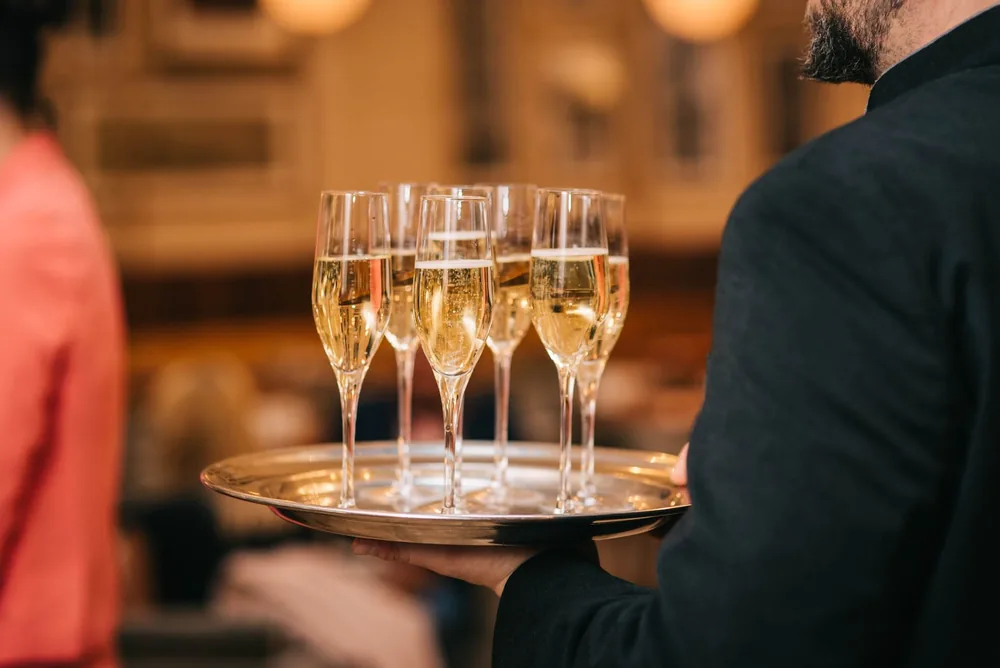
Remember that most of us don’t perform a picky analysis of food and guests the next day. So we needn’t worry that others will when we are the hosts. If you know for sure that your friends will be critical of your efforts, then you need new friends. But at the same time, you will want to honor everyone with tasty food and wine.
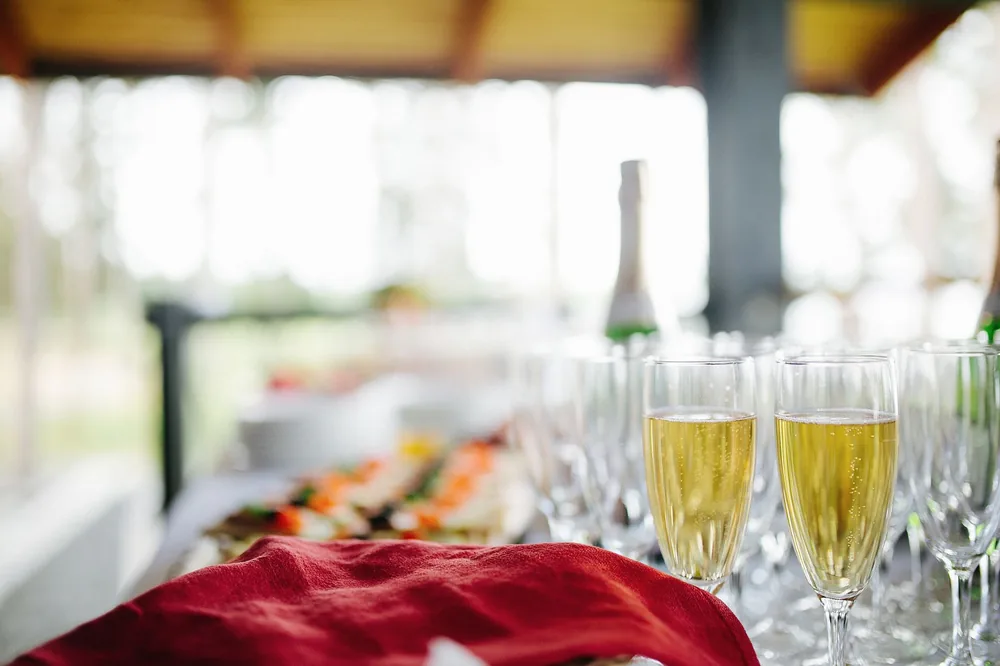
So let’s do it! The holidays are here, and you can easily feed a lot more people in your own home than it costs for two to dine in a good restaurant. If you give a party, I’m a firm believer that you’re entitled to have fun along with everyone else. So my mantra for preparing food, actually for any reason, is “keep it simple.” Most of us don’t have the time, skills, or inclination for complication. We’re not caterers after all. We’re simply humans who want to gather with our clans to celebrate our existence. And besides, culinary complication doesn’t produce more flavor or fun.

Party food can be as simple as platters of cheeses and cold cuts, bowls of olives, a basket of freshly baked bread, a bowl of tangerines, and given the season, holiday cookies and sparkling wine. Your local market will be your one-stop shop if your budget is limited. If it isn’t, the expense of all these foods can be amped up with their quality, and you can find the best at specialty shops.
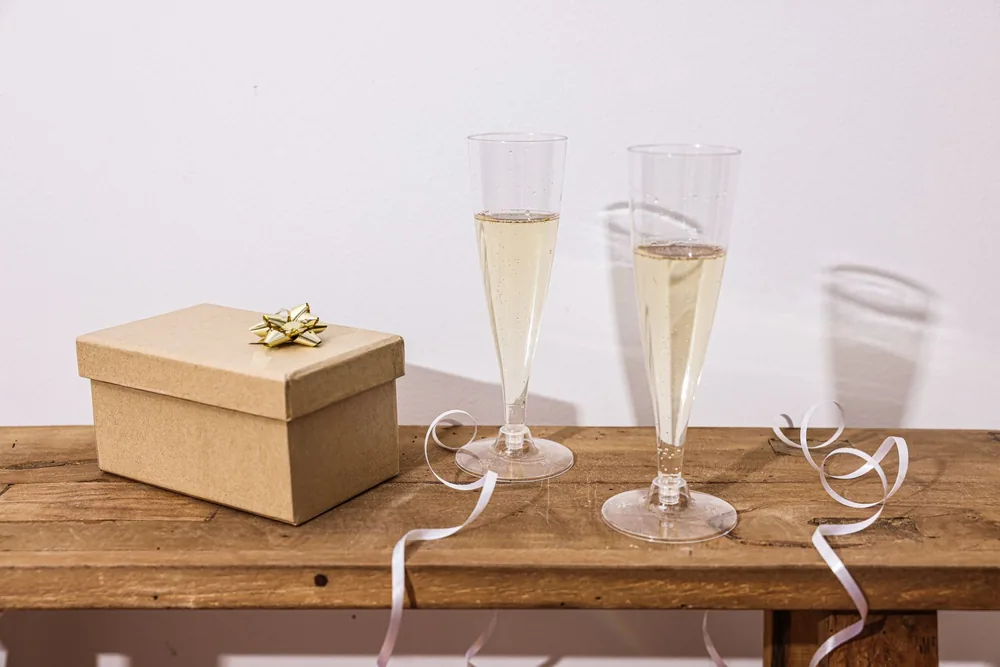
Regarding quantity, if you set the arrival hour at six, which is roughly the dinner hour, your guests will be famished, so you’ll need to provide more food. If you set party time at 8 o’clock, they probably will have eaten something before arriving and will be less hungry. Regarding wine, the guideline is that a 750 ml bottle of wine contains five glasses, and over a four hour period, you can expect most people to drink three glasses of wine. Some will drink more (we hope not a lot more), and some won’t drink at all. So provide at least mineral water and maybe sparkling cider. Finally, add flowers to the table, turn on the stereo, and wait for guests to arrive.

If you want a more elaborate menu, consider the one in this newsletter, which is still simple. And if you have the time and resources for an even more elaborate one, great! But it’s not necessary. The point of the season is to get together and love one another. We at Celebrations Wine club love you and wish you Happy Holidays!
The Arithmetic Behind the Guideline
The rule of thumb above rests on a standard measure. A five-ounce pour of table wine at roughly twelve percent alcohol is what United States guidance treats as one standard drink, a definition the National Institute on Alcohol Abuse and Alcoholism sets out in its explanation of what counts as a standard drink.
A 750 milliliter bottle holds a little over twenty-five ounces, which is where the figure of five glasses comes from. Restaurant pours are often larger and party pours almost always are, so planning on five is planning conservatively in the right direction.
From there the math is simple. Multiply guests by expected glasses, divide by five, and add a bottle or two, since running short is a real inconvenience while a spare bottle keeps indefinitely.
| Guests | Light drinking, about two glasses each | Typical, about three glasses each |
|---|---|---|
| 8 people | 4 bottles | 5 bottles |
| 12 people | 5 bottles | 8 bottles |
| 20 people | 8 bottles | 12 bottles |
| 30 people | 12 bottles | 18 bottles |
Those figures assume every guest drinks wine, which is never the case. Some will not drink at all, others will hold one glass all evening, and a few will drink more than the average, so the totals tend to even out around the middle column.
Timing Changes Everything About the Food
The observation about the hour is the most useful planning tool in this article. A party that starts at six is a dinner whether or not you call it one, and guests will arrive hungry and eat accordingly.
An eight o’clock start converts the same guest list into a much cheaper evening. People will have eaten, appetites are moderate, and platters that would have vanished in twenty minutes last for three hours.
The wine follows the same logic. Earlier gatherings want something that works with real food, while later ones can lean on lighter, brighter styles that hold up beside olives, cheese, and bread.
Keeping the Wine at the Right Temperature
Nothing undermines a party’s wine faster than temperature, and it is the easiest thing to fix. Whites left on a table in a warm room are unpleasant within half an hour, and reds served at modern room temperature taste heavy and alcoholic.
- Fill a tub with ice and water rather than ice alone, since water contacts the whole bottle and chills far faster.
- Give reds twenty minutes in the refrigerator before guests arrive, particularly lighter ones.
- Open sparkling wine as it is needed rather than in advance, and keep the bottles in ice between pours.
- Set out more glasses than guests so nobody has to decide whether to reuse one.
Serving temperature does more for a modest wine than decanting, glassware, or anything else available on the night. It is also free.
Glassware is worth a moment of planning as well. Renting is inexpensive and usually includes returning them unwashed, and a mismatched collection borrowed from three households works perfectly well for a room full of people who are talking rather than studying the wine.
Set the drinks somewhere away from the food if the room allows it. Two small gathering points move people around and keep a single table from becoming a bottleneck for the whole evening.
The Case for a Short Menu
A platter of cheeses, cured meats, olives, bread, and fruit is not a compromise. It is a complete traditional meal in most of southern Europe, it requires no cooking, and it holds at room temperature for hours without deteriorating.
It also pairs more easily than a composed dish, since salt and fat flatter almost any wine while complex sauces and sweet glazes make trouble. Our guide to food and wine pairing works through why salty, fatty foods are so forgiving.
What matters is quality rather than quantity of preparation. One very good cheese, one good loaf, and ripe fruit beat six mediocre dishes, and the host is left with time to sit down.
Hosting FAQ
How much water and non-alcoholic drink should be available?
Enough that nobody has to ask. Sparkling water and one interesting non-alcoholic option cover both the guests who do not drink and the ones pacing themselves.
Is it better to serve one wine or several?
One white and one red covers nearly every gathering, with sparkling wine if there is a toast. More variety mainly creates half-empty bottles and confusion about which glass belongs to whom.
What should be done with wine left over?
Recork it and refrigerate it, whatever the color, and use it within a couple of days. Leftover wine is also perfectly good for cooking, which is a better fate than the sink. Gatherings of every size are the subject of our guide to wine for celebrations.