
The increasing popularity of Italian Prosecco among Americans dazzles just like its bubbles. It is everywhere at various prices, mostly inexpensive. Between 2007 and 2009, case sales jumped 65.5% to 750,000 and leaped another 30% in 2010. Without resting, sales bounced another 50% in 2011. In 2012, Prosecco is expected to be the first sparkling wine in the history of bubbly to outsell Champagne. What’s going on here?
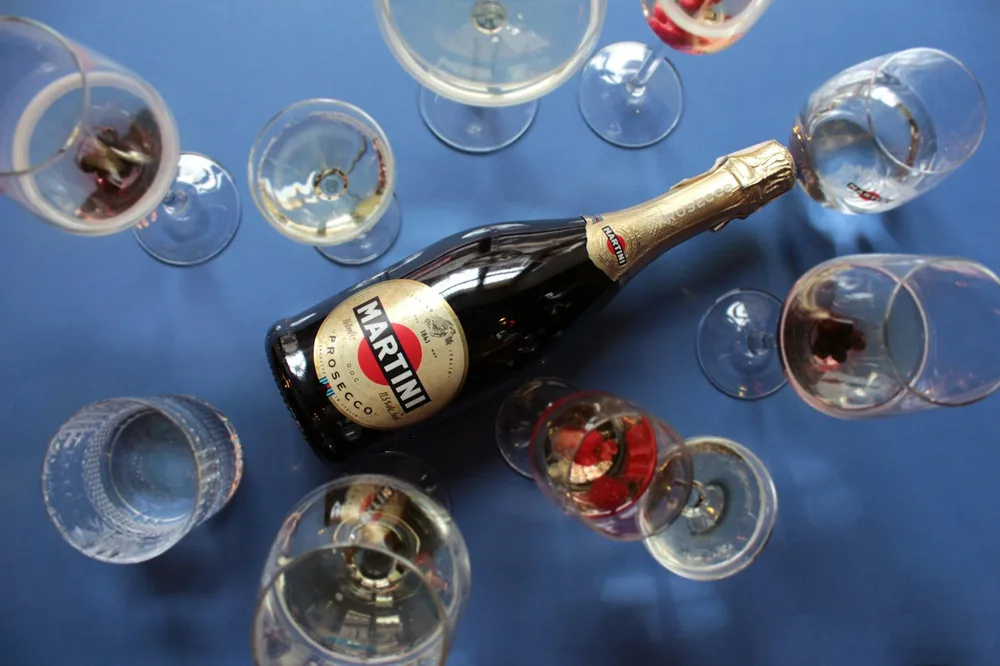
During the Millennial celebration, Americans learned to love sparkling wine, and even during the dark years that followed, they never forgot its joys. After the recession hit, price mattered. You can buy Mionetto Prosecco for as little as $10 whereas Veuve Clicquot starts at about $35. Premium French Champagne is a lot more, whereas premium Prosecco from its best older growing regions in Valdobbiadene and Cognegliano goes for as little as $18 a bottle, and the most expensive from Cartizze, a zone within Valdobbiadne, is less than $50.
But the preference is not just for price. Prosecco, made from the Glara grape, is fragrant, fresh, and lively and has fine and long-lasting bubbles and a low alcohol content around 11%. Made with the Charmat method that creates its effervescence, the wine undergoes a secondary fermentation in stainless steel tanks and is bottled under pressure. Prosecco is remarkably refreshing but at the same time elegant. Easy to love, it serves as an aperitif but pairs well with a variety of foods, especially appetizers, salads, and light main courses of fish or poultry.
Champagne is another matter entirely. Made from Chardonnay, Pinot Meunier, and/or Pinot Noir, Champagne is a complex wine that obtains its effervescence from a secondary fermentation in the bottle after yeast and sugar are introduced into the existing wine. Champagne is full bodied and full flavored with yeasty qualities and a higher alcohol content. It can age for years. But while Champagne is more labor intensive to make, it’s far easier to farm the grapes. The premium Prosecco vineyards of Valdobbiadne are so steep that workers have to tie themselves to vines to prevent themselves from slipping down slopes. Vineyards are mostly very small and remain in families for generations unlike the large vineyards of Champagne.
The elegance and complexity of fine Champagne is well established. But to experience the true beauty of Prosecco, you need to taste its finest expressions from the old vineyards of Conegliano and Valdobbiadene in the province of Treviso, wines that will range in price from $18 to under $50 a bottle, for instance the wines of Ruggeri & C. The NV Prosecco di Valdobbiadene “Gold Label” is just $18 a bottle. Also from Ruggeri & C., the 2010 “Giustino Bisol” Prosecco di Valdobbiadene Riserva at $36 a bottle has won the distinguished Tre Bicchieri (Three Glasses) award from wine guide Gambero Rosso for two years in a row. The Giustino Bisol approaches fine Champagne with its richer flavors and creamier, longer finish. These wines are a staple in my house. If you’re not already aware of Prosecco, the winter holidays provide a great opportunity to serve them to family and friends. Happy Holidays to each and all of you, from my house to yours!

The two ways a wine gets its bubbles
Every sparkling wine begins as a still base wine, and the difference between styles lies in where the second fermentation happens. In the tank method the base wine ferments again in a sealed pressure tank and is bottled under pressure, keeping the wine in contact with its yeast for a relatively short period. In the traditional method that second fermentation happens inside the individual bottle that eventually reaches the table.
The consequences run through everything. Tank fermentation preserves the aromatics of the grape itself, which is the point when the base wine is fragrant and floral, and it is faster and less labor-intensive. Bottle fermentation with extended time on the spent yeast develops the bready, nutty character that long-aged sparkling wines are known for, at the cost of years of cellar space and handling.
Cost follows directly from that difference in handling. A tank-fermented wine occupies shared equipment for weeks, while a bottle-fermented one ties up individual bottles, riddling racks and floor space for years before any of it can be sold. Neither approach is a shortcut; they are answers to different questions about what the finished wine should taste like.
Tank method and bottle method compared
The table sets out the mechanics rather than any judgment about quality, since each method exists to produce something the other cannot.
| Trait | Tank method | Traditional method |
|---|---|---|
| Second fermentation | In a sealed pressure tank | In the bottle sold to the drinker |
| Yeast contact | Usually short | Often months or years |
| Character emphasized | Fruit and floral aromatics of the grape | Autolytic character from the yeast |
| Labor per bottle | Lower | Considerably higher |
| Typical release | Young, meant to be drunk fresh | Released after extended aging |
The place, and why the hills are the hard part
The steepness described above is not a picturesque detail; it determines what the work costs. Vines on slopes too sharp for machinery must be tended and picked entirely by hand, and terraces have to be maintained against erosion year after year. Holdings are small, often fragmented across several parcels, and passed down within families rather than consolidated.
Fragmentation shapes the wines as much as the slope does. Where a family farms two hectares split across several parcels, the fruit is usually delivered to a cooperative or a larger house that assembles it, so a single label may draw on dozens of small growers. That structure explains why the region produces so much wine from vineyards that are individually tiny.
That landscape received formal recognition in 2019, when the hills between the two towns named above were inscribed on the World Heritage list. The UNESCO listing for the Conegliano and Valdobbiadene hills describes the terraced ciglioni, the mosaic of small plots and the long human effort that shaped them. Recognition of that kind is granted for cultural landscape rather than for any wine in particular.
Naming, and what changed after 2009
The name of the grape and the name of the place were separated by a reorganization of the denominations in 2009. The variety took the name Glera, freeing Prosecco to function as a place name protected within a defined production zone, with the historic hillside areas classified at the higher denomination level. That is why the wines from the older hillside zones carry longer and more specific names on the label.
Sweetness is the other label variable worth learning, and it is stated separately from the place name. Sparkling wines are finished anywhere from bone dry to noticeably sweet, and the terms are technical rather than descriptive, so two bottles from one zone can differ in sugar. Checking that term predicts the glass better than any other word on the label.
For a drinker the practical reading is straightforward. A label naming only the broad zone describes a wine made across a wide plain, while a label naming the hillside areas points to the steeper, older sites. Our guide to Italian grapes and styles sets out how that pattern repeats across Italian denominations.
FAQ: Prosecco and other sparkling wines
Why is Prosecco usually served younger than Champagne?
Because the tank method is designed to preserve primary fruit aromatics, and those fade with age. Wines built that way are at their most expressive within a couple of years rather than after a decade in a cellar.
Does lower pressure make a wine less sparkling?
It makes the mousse softer. Some tank-method wines are finished at lower pressure than fully sparkling wines, producing a gentler, frothier bubble that suits an aperitif.

What suits it at the table?
Its acidity and light body work with salty and fried appetizers, shellfish and simple poultry dishes rather than with heavy braises. Our notes on matching food and wine and on wine for celebrations cover both the aperitif hour and the meal that follows.