A certain number of women winemakers, especially from California, are responsible for the wines that I select each year. Since I evaluate the wines first, I don’t know who the actual winemaker is unless that person owns the winery, and her name is on the label. So for a long time, my sense has been that wine-making is no longer overly dominated by men like it was in the past. A couple of Professors from Santa Clara University in Silicon Valley, Lucia Albino Gilbert and husband John Carl Gilbert decided to evaluate the data and came up with some interesting conclusions. The perception that we have of gender parity among winemakers is wildly wrong and may be influenced by the acclaim that a large percentage of women winemakers have achieved relative to their numbers. Think Zelma Long, Helen Turley, Merry Edwards, Carol Shelton, Heidi Barret, Leslie Sisneros, Cathy Corison, among many others.
For some time, nearly half of the graduates of the best enology programs in California have been women. But winemakers are overwhelmingly male, representing a little over 90 percent of the total. If this situation is obscure to you and me, Professors Albino and Gilbert reasoned that women winemakers might be a more highly selected group than their male peers, and their accomplishments may lead us to believe that they represent far greater numbers in the field than actually exist. “Women who persist in male-dominated fields are reported to have high achievement motivation, ability, and self-efficacy, and often need to be more talented and hard-working than their male peers in order to be recognized as successful.”
In order to establish that women winemakers might be more accomplished, the study had to define winery quality. “We used data from Opus Vino,” they said in the synopsis of the study, “a major work authored by wine critics and writers, as evidence of winery quality.” Professors Albino and Gilbert explain that leading wine critics and wine writers worked as a team with the volume’s editor-in-chief, Jim Gordon, former managing editor of Wine Spectator and current editor of Wines & Vines Magazine. This team selected wineries for inclusion in the volume, based on “an accumulation of experiences with wineries in a particular wine region and tasting notes of wines from that region over a period of years.”
So are wineries with women winemakers more highly acclaimed than those with men? “According to our data, yes, they are more highly acclaimed.” To arrive at this answer, Albino and Gilbert counted the number of California wineries listed in Opus Vino together with the sex of the winemaker. “We then calculated the proportion of wineries in Opus Vino having women and men winemakers, proportional to their representation in the comprehensive database of 3200+ [California] winemakers.” The result was that “23% of California wineries with women winemakers were listed in Opus Vino as compared to 14.1% of wineries with male winemakers.”
In other words, the Zelma Longs, Helen Turleys, Heidi Barrets, and Cathy Corisons in the business, who get so much attention and acclaim, lead us to think that they represent a large group of women. Zelma Long, one of America’s best-known winemakers, commented, “I appreciate that Dr. Lucia Gilbert has provided professional quantification of those women’s talents that wine lovers have known intuitively. Clearly it will benefit our California wine industry to have women ever more present as winemakers and wine leaders in the coming years.” Cathy Corison, winemaker and owner of Corison Winery in Napa Valley, said, “It’s very gratifying to see the hard work and tenacity of so many talented women recognized. It’s been a long, bumpy road and a great ride.” Tell your daughters!
What the job actually involves
A winemaker’s year is only partly spent tasting. The work runs from vineyard sampling in late summer through harvest calls, fermentation management, pressing decisions, barrel selection, blending trials, laboratory analysis and the paperwork that federal and state agencies require of every bottling. During crush the days are long, physical and continuous for six to ten weeks.
Most of the year is management. A winemaker supervises a cellar crew, negotiates with growers, schedules a bottling line, and answers to an owner about costs and volumes. The romantic image of a solitary artist with a glass leaves out most of the calendar.
The path from classroom to cellar
The usual route runs through a degree in enology or viticulture, then one or more harvests as a seasonal cellar hand, then an assistant winemaker position before anyone hands over the keys. Many candidates work harvests in both hemispheres to compress experience, since a season in Chile, New Zealand or Australia falls opposite the Northern one. The path rewards people who can relocate on short notice and work punishing hours in their twenties and thirties.
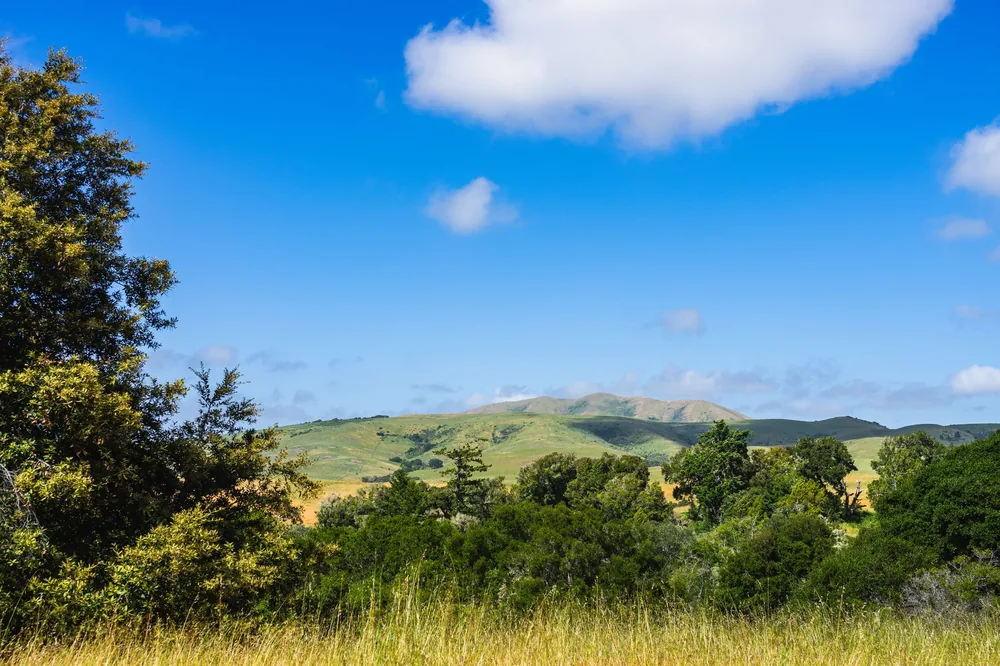
California’s public research and extension network supports that pipeline with viticulture and enology research, field days and technical publications aimed at working growers and producers, and the University of California’s agriculture and natural resources division is the body behind much of it. That infrastructure is one reason the state’s training programs feed cellars far beyond California. It also means the technical knowledge is public rather than proprietary.
| Stage | Main responsibility | Usual commitment |
|---|---|---|
| Harvest intern | Cellar work, sanitation, punch-downs, sampling | One season, often unpaid or minimally paid |
| Cellar hand | Pump-overs, pressing, barrel work, equipment | Year-round, physically demanding |
| Enologist or lab technician | Analysis, monitoring, trial blends | Year-round, technical training required |
| Assistant winemaker | Running fermentations, supervising crew | Several years before advancement |
| Winemaker | Style decisions, blending, budgets, compliance | Full responsibility for the finished wine |
Small producers complicate the title further. At a winery making a few thousand cases, the winemaker also drives the forklift, files the federal reports and pours in the tasting room, while at a large operation the same title may cover a team of enologists and a production manager. The word describes a role, not a fixed set of duties.
Why acclaim and representation come apart
The study described above compares two proportions rather than two counts, which is the part most readers skip. Counting how many acclaimed wineries have women winemakers tells you little on its own. Comparing the share of women-led wineries that earn recognition against the share of men-led wineries that do is what isolates the effect.
Selection pressure is the standard explanation for a gap of that shape. When entry into a field is harder for one group, the people who make it through are drawn from a narrower and more determined slice of the applicant pool, and their average results look stronger as a consequence. The finding says as much about the barriers as it does about the individuals.
Names on labels complicate the picture further, since most bottles never identify who made the wine. A drinker forms impressions from a handful of owner-winemakers whose names appear on the front and from press coverage that follows the same handful. Our sections on California wineries and California’s wine regions give a sense of how many producers operate without any public face at all.
Winemaking careers FAQ
Does the label usually name the winemaker?
Rarely. Unless the winemaker is also the owner, the name generally appears only in press materials or on a technical sheet.
Is a degree required?
Not legally, and some respected winemakers came up entirely through cellar work. Formal training has become the common route because the analytical side of the job has grown.

How long is a harvest season?
Six to ten weeks in most California regions, running from late August into November depending on the year and the varieties involved. Cool seasons push the whole schedule later, and sparkling wine producers start earlier than everyone else because they pick at lower ripeness.