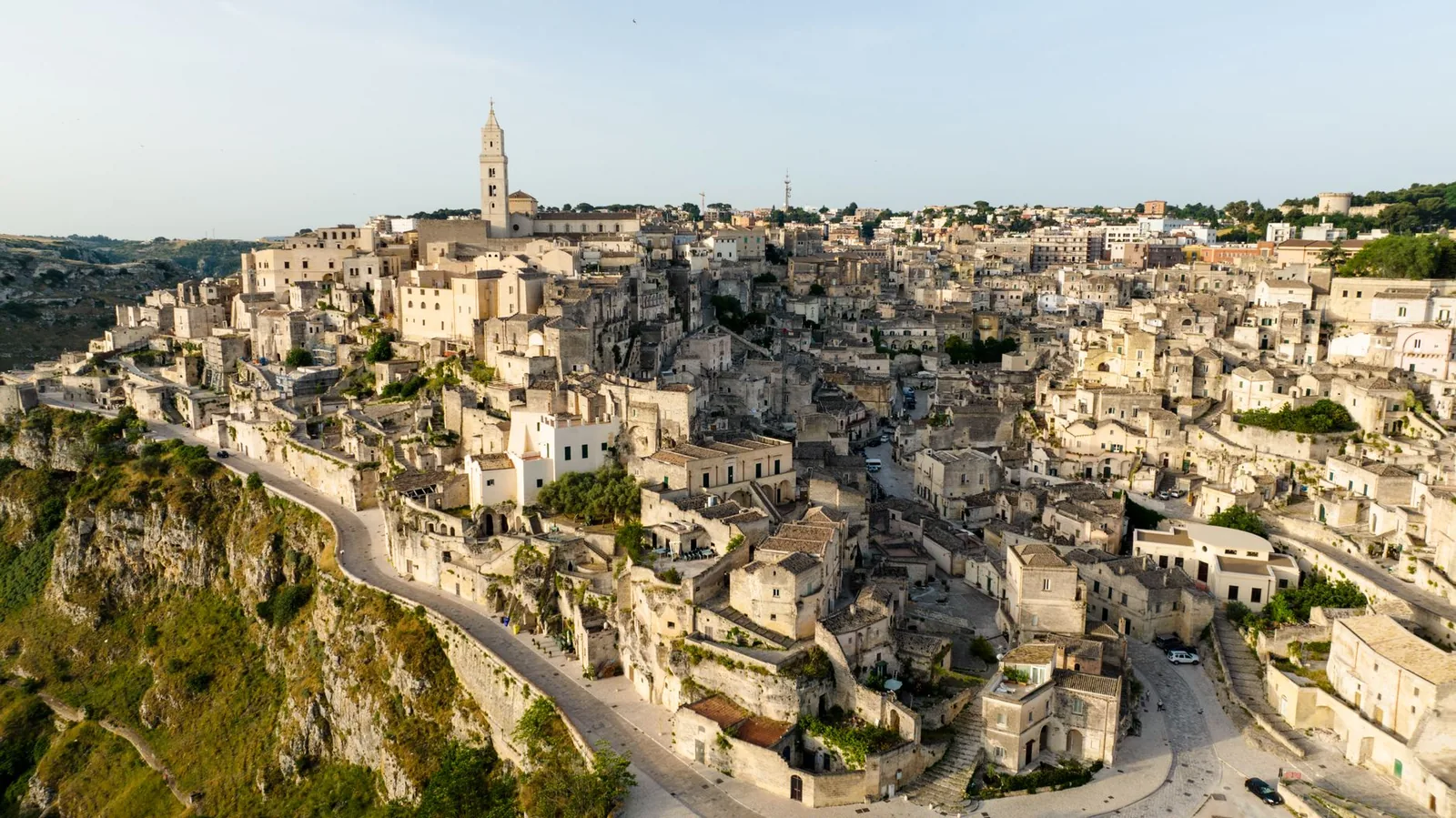
Basilicata is the instep of the Italian boot, landlocked but for two short stretches of coast, and it makes less wine than almost any other region in the country. This Basilicata wine region guide is therefore narrow on purpose, because the region itself is. One grape on one mountain accounts for nearly everything worth going out of your way for.
The numbers are small enough to state plainly: around 2,000 hectares of vineyard, roughly 85,000 hectoliters in a recent year, and 82 percent of it red. Aglianico is more than half of what is planted. Only Tuscany leans harder on red wine than Basilicata does.
Monte Vulture, and what “extinct” actually means
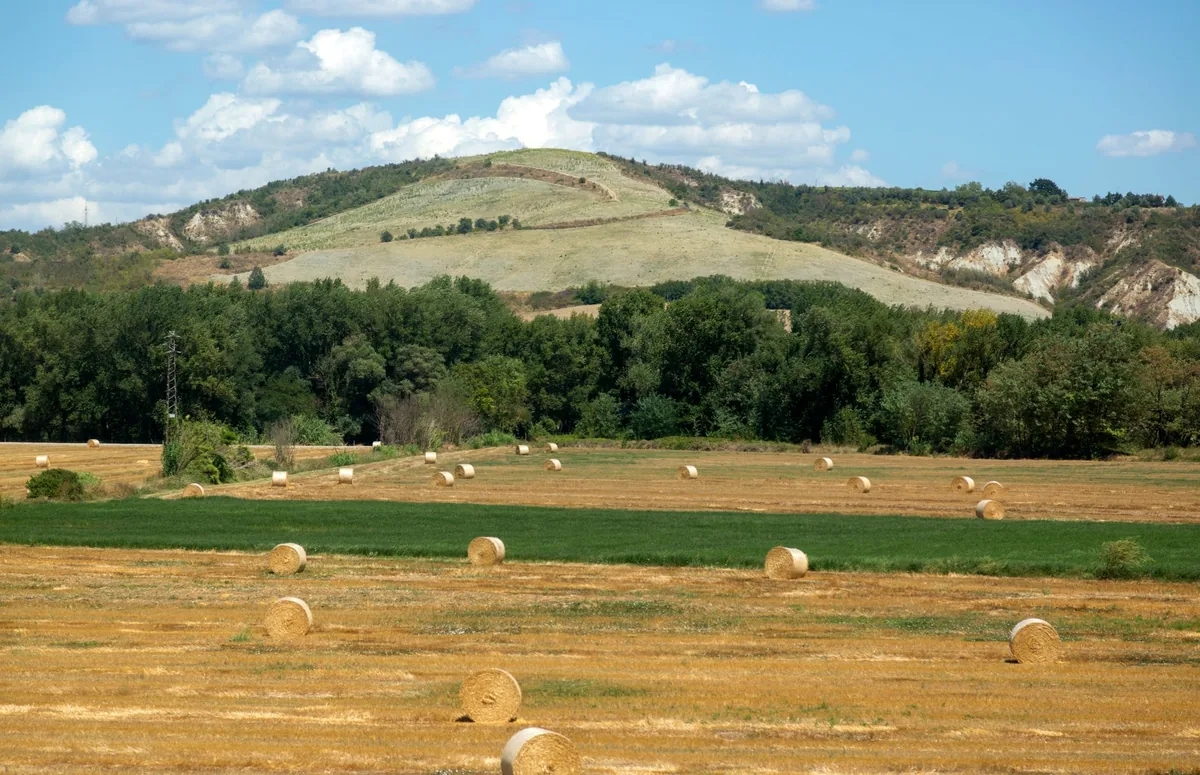
Monte Vulture rises to 1,326 meters on the northern edge of Basilicata, an isolated volcano sitting well away from the Apennine chain’s usual behavior. Its last eruptive activity is dated to roughly 140,000 years ago, and the twin crater lakes at Monticchio occupy what is left of the vents. The slopes below carry the vineyards.
Wine writing calls the mountain extinct as a matter of routine, though volcanologists are warier of the word than wine people are. The U.S. Geological Survey’s note on how active, dormant and extinct are actually classified explains why: volcanoes have gone quiet for tens of thousands of years and then woken up.
What the eruptions left behind is more useful than the label. Layers of ash and volcanic stone drain quickly and sit over bands of limestone and clay, which hold water when summer runs long. That combination is why the vines get through a dry August without shutting down.

Why the harvest runs so late
Vineyards on the Vulture sit broadly between 200 and 700 meters, high enough that nights stay genuinely cold through September. Aglianico ripens very late in any case, and at that altitude the picking often runs into the last days of October. In cool years it reaches the first week of November.
That long hang gives the tannins time to soften without the acidity burning off, because the cold nights keep resetting the vine. The wine that results is dense, high in acid and firmly tannic, which is why the comparison to Barolo gets made so often. It is a comparison about structure, not about aroma.
Aglianico is a Campanian grape as much as a Lucanian one, and the two expressions are worth tasting side by side. The Campania guide covers Taurasi, where the same variety ripens on different ground.
| Rule | Aglianico del Vulture DOC | Aglianico del Vulture Superiore DOCG |
|---|---|---|
| Established | DOC in 1971 | Split off as DOCG in 2010 |
| Grape | Aglianico | Aglianico, 100 percent |
| Minimum alcohol | Lower threshold, everyday range | 13.5 percent |
| Aging | Shorter, released younger | Three years total, twelve months in barrel and twelve in bottle |
| Riserva | Not the main tier | Five years total, twenty-four months in barrel and twelve in bottle |
| Best read as | The region’s working red | The bottle to cellar |
The rest of the map
Basilicata holds one DOCG and four DOCs, which is not many, and the three beyond the Vulture are genuinely obscure. Matera DOC covers the south-east near the famous cave city, Terre dell’Alta Val d’Agri sits in a high inland valley, and Grottino di Roccanova is smaller still. None of them will change your view of the region.
The villages on the Vulture are the ones to learn: Rionero, Barile, Ginestra, Ripacandida and Venosa, birthplace of the poet Horace. At Barile the old cellars are cut straight into soft volcanic rock, which holds a steady cool temperature without machinery. It is a reminder that this was a poor region working with what the ground gave it.
Aglianico also appears here as a dry sparkling wine and, less often, as a pale rosato. Both are made from the same late-picked fruit and both use the variety’s acidity rather than fighting it. Neither travels much, but they explain the grape from an angle the big reds never show.

How to choose a bottle from the Vulture
The first decision is which tier you want, and the table above is the whole of it. A DOC bottling is the region’s everyday wine and shows Aglianico’s shape without the weight of long barrel aging. A Superiore has already spent three years growing up before it reaches anyone.
The second is elevation, which back labels increasingly name. Fruit from the higher villages tends to arrive later and taste tauter, while lower sites give a rounder wine that opens sooner. Neither is a quality ranking, and both are recognizably the same grape.
The third is oak. Producers here split between large old casks, which leave the volcanic edge intact, and new French barriques, which round it off and add sweet spice. A wine described as aged in botti and one aged in barrique can taste like different varieties, so it is worth reading the fine print before assuming a house style.
What the Celebrations archive actually says
Honesty first: the club never shipped a Basilicata wine that the archive records, and no post here is about the region. Aglianico turns up twice, both times as a passing reference inside a profile of somewhere else.
The December 2010 Italian winery notes on Villa Raiano in Campania describe Aglianico as having been planted by the ancient Greeks first in Basilicata’s Vulture zone and then in Campania’s Taurasi zone. That single clause is the club’s only substantive mention of the Vulture, and it is offered as background to a Taurasi, not as a guide to Basilicata.
The other is stranger and more telling. A June 2013 California winery profile of Monte Volpe in Mendocino explains its Aglianico by naming Campania and Basilicata as the grape’s home, which is what a Californian grower reaches for when asked where the vine came from. Readers who want the California end of that story will find it in the Mendocino County guide.
Serving and pairing
Young Aglianico del Vulture wants air and time. Decant an hour ahead, serve at about 62°F, and expect the tannin to keep moving for the length of a meal. A Superiore at ten years old often shows better than the same wine at four.
At the table it belongs with lamb, braised beef, salumi, aged caciocavallo and anything cooked long and slowly. Peppers, both sweet and dried, run through the local cooking and do the wine no harm. If you want the same weight from further south, the Calabria guide and the Puglia guide are the neighboring cases.
Basilicata wine region guide FAQ
Is Basilicata really a one-wine region?
Close to it. Aglianico del Vulture accounts for the region’s reputation almost entirely, and the other three DOCs are small and rarely exported. Treating the narrowness as the story is more honest than padding the list.
How long does Aglianico del Vulture keep?
A Superiore from a good year is generally still improving at ten years and drinking well beyond that, on the strength of its acidity and tannin. Basic DOC bottlings are made to be opened younger, within three to six years.
What is the difference between Aglianico del Vulture and Taurasi?
Same grape, different ground and different rules. Taurasi comes from Campania’s Irpinia hills, while Vulture fruit grows on volcanic slopes at altitude and is usually picked later, which tends to show as a tighter, more mineral-edged wine.
Where does Basilicata sit among the Italian regions?
It is one of the smallest producers in the country and one of the most red-dominated. The rest of the map, region by region, is collected on the Italian wine regions hub, and the club’s own producer notes are filed under Italian wineries by year.