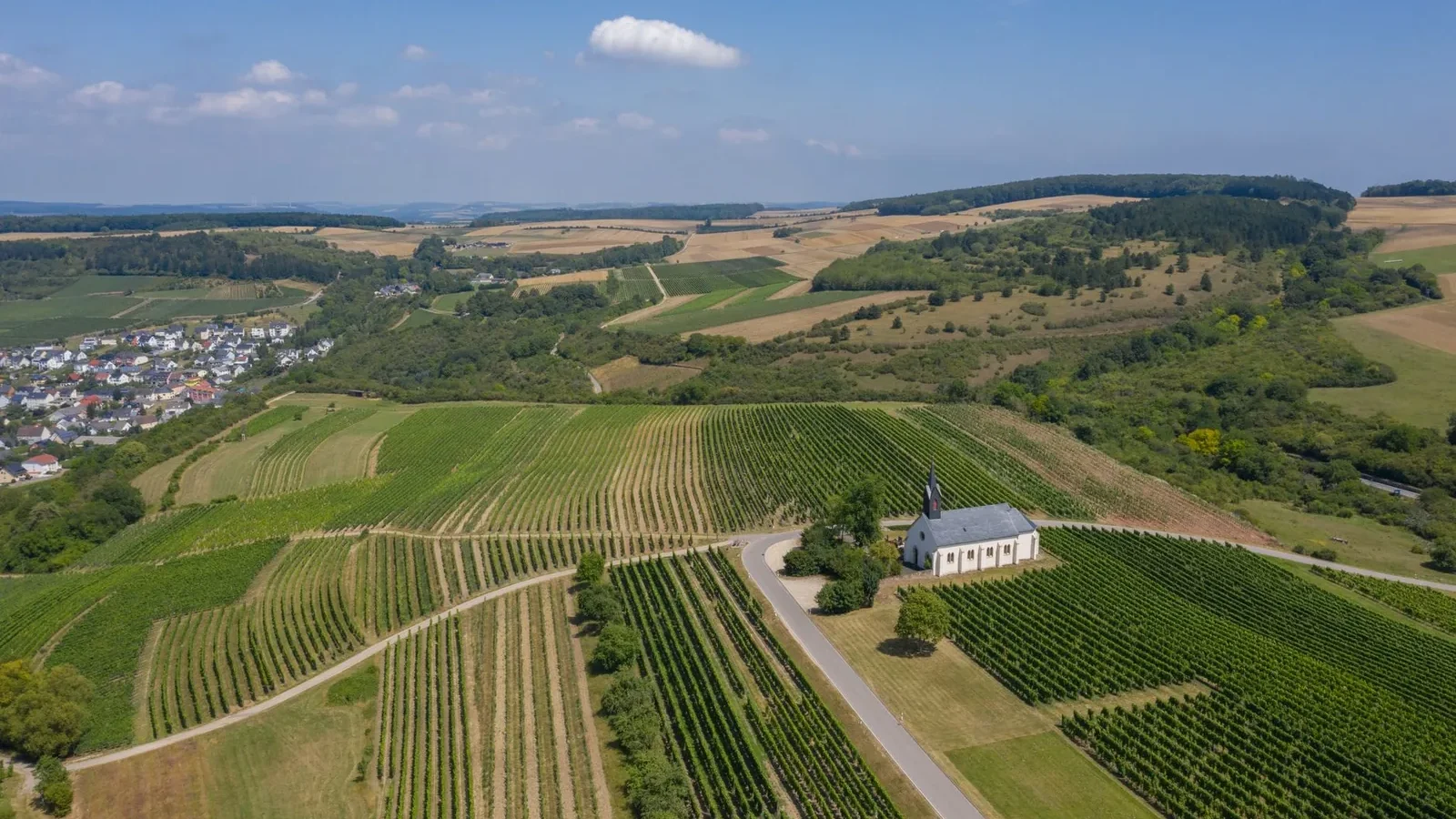
The newest critter to haunt California grape growers is the European grapevine moth, which is threatening growers to the point that the California Department of Food and Agriculture has quarantined 162 square miles of land, mostly in the heart of the Napa Valley but also in parts of Sonoma and Solano counties. The moth burrows into the grape and turns it to mush. It seems to be especially fond of Cabernet and Merlot, having destroyed nine acres in Napa’s Oakville district last September. In Europe, it prefers white grapes. The moth cocoons on the bark of the vine in the winter and emerges from dormancy in the spring at the same time that the vine does.
Native to Southern Italy, the moth has traveled throughout Europe, North and West Africa, the Middle East, and Eastern Russia. In 2008, it was found in Japan and Chile after growers purchased used harvest equipment. But this is its first appearance in North America.

In the 1990s, phylloxera tortured grape growers by destroying countless vineyard acres throughout California. This sap-sucking root louse fed on grape roots almost everywhere in the state, and vineyards had to be replanted on resistant rootstock at great cost to growers. Native to the eastern part of the U.S, phylloxera did far worse in Europe, destroying more than three-quarters of all European vineyards after it was introduced by English botanists, who collected specimens of American vines in the 1850s. Californians paid an enormous price when they ignored Europe’s experience and failed to plant vineyards on resistant rootstock.

Also native to the southeastern United States, the glassy-winged sharpshooter showed up in California in 1996. Less picky than phylloxera but potentially just as lethal, this leafhopper lays its eggs on the underside of leaves and doesn’t really care which leaves. Grapes, citrus, almond, stone fruit, and oleanders are just a few that will serve its purposes. But it is particularly dangerous to grape vines because it spreads a bacterium that causes deadly Pierce’s Disease. Successful work is currently underway at the University of California at Davis to breed resistance into grapevines. So far, no sightings have been reported in other countries.

Today, science is hugely helpful when these threats occur unlike the 1850s, when distraught French farmers buried a live toad under each ailing vine in phylloxera infested vineyards to draw out the “poison.” Decades later, employing the scientific method, the French eventually learned that they could graft cuttings onto resistant rootstock to eliminate the problem.

No one yet knows how the European moth was introduced to Napa, but county, state, and federal agriculture commissioners have wasted no time in implementing the quarantine. They will be regulating the harvest and handling of grapes and other related fruit, including persimmons, olives, pomegranates, and kiwi. In order to confine the infestation, crops will not be removed from the land. Growers, nurseries, landscapers, and agricultural workers are all contributing to the effort.

In the quarantined area, sticky strips draw moths, mainly so that monitors can evaluate pest numbers. To thwart reproduction, mating disruption dispensers have been installed to emit the female pheromone that attracts males, who will unsuccessfully search for a mate until they die. Growers may use organic pesticides and will bring in predatory wasps and bats. Time is of the essence as the moths emerge from their cocoons now that spring has arrived. But science, agricultural authorities, and grape growers are all cooperatively engaged to confine and control the menace.
How the moth program ended
Quarantines of this kind are designed to be temporary, and this one was. Trapping data guided a shrinking series of regulated zones across several seasons, and after successive years without detections the state and federal agencies declared the European grapevine moth eradicated from California in 2016. It remains one of the more complete outcomes among introduced vineyard pests in the state.
The tools described above did the work, with mating disruption as the centerpiece. Dispensers release the female pheromone throughout a block so thoroughly that males cannot locate a real female, which collapses reproduction without spraying anything at the insect itself. The approach only functions across a wide contiguous area, which is why cooperation between neighboring growers was essential rather than optional.
Eradication is a much higher bar than control, and it is rarely achieved. It requires that the pest be detected early, confined to a bounded area, and susceptible to a method that works across every property in that area, which is why most introduced pests end up managed indefinitely instead. The moth met all three conditions, and the response began while the infestation was still small.
Monitoring was the other half. Pheromone traps do not control a population but they measure it, and the timing of captures tells growers which generation is flying and when the vulnerable stage will appear. University of California’s integrated pest management guidelines for grapes collect that kind of monitoring and treatment guidance for the state’s vineyard pests.
Three introduced pests, three different problems
| Trait | European grapevine moth | Phylloxera | Glassy-winged sharpshooter |
|---|---|---|---|
| Part of the vine attacked | Flower clusters and fruit | Roots | Leaves and stems, as a feeding site |
| Main damage | Direct destruction of the crop, plus rot | Decline and death of the vine | Transmission of a bacterial disease |
| Principal control | Mating disruption and quarantine | Resistant rootstock | Vector management and resistance breeding |
| Timescale of the fix | Several seasons | A generation of replanting | Ongoing |
Why rootstock solved a problem pesticides could not
Phylloxera feeds on roots, which places it beyond the reach of anything applied to the canopy, and that inaccessibility is what made the nineteenth-century crisis so severe. The solution was botanical rather than chemical: American vine species had evolved alongside the insect and tolerated its feeding, so European varieties were grafted onto American roots. The fruiting variety above ground stays the same while the root system below it resists attack.
Grafting also gave growers a second lever they use for entirely different reasons. Rootstocks vary in vigor, drought tolerance and nematode resistance, so the choice shapes how a vineyard behaves in a dry year as much as it shapes pest resistance. A single variety can therefore be matched to very different sites by changing what it grows on.
The California replanting described above repeated an old lesson expensively. A widely used rootstock proved less resistant than assumed, and vineyards planted on it had to be pulled and replaced, which is why rootstock selection is now treated as one of the most consequential decisions in establishing a vineyard.
How pests travel, and what slows them down
Every one of these arrivals moved with human activity rather than under its own power. Plant material, used equipment, fruit and packing containers all carry organisms across distances no insect could manage alone.
- Nursery stock, which is why certified, indexed plant material matters so much.
- Used harvest and processing equipment moved between countries or regions.
- Fruit and packing material carried in personal luggage across borders.
- Bins, pallets and containers cycling between farms during harvest.
Quarantines interrupt exactly those pathways, which is why they regulate the movement of fruit and equipment rather than the movement of people. Our overview of California’s wine regions, the Napa Valley region guide and the Sonoma County region guide cover the areas that were regulated during this episode.
FAQ: vineyard pests and quarantines
What is mating disruption?
It is the release of a synthetic version of the female insect’s pheromone across an entire block, so that males cannot find females. Reproduction falls without any insecticide being applied to the vines.
Why do quarantines restrict equipment as well as fruit?
Because eggs, larvae and pupae travel in crevices on bins, harvesters and trailers. Machinery moved between regions has introduced pests to new continents more than once.
Are grafted vines a different variety?
No. The fruiting variety is the scion grafted onto a rootstock chosen for resistance and vigor, so the grapes are unchanged while the root system is not.