Napa Valley is roughly thirty miles long and, at its widest, about five miles across. Inside that small space the federal government recognizes sixteen nested appellations, with a seventeenth approved in 2024. Any Napa Valley wine region guide worth reading has to answer the question that follows: why does a valley you can drive end to end in under an hour need so many names for itself?
The answer is that Napa is not one climate but a stack of them, arranged vertically as much as horizontally. Cold marine air enters from San Pablo Bay at the southern end and weakens as it travels north. Elevation does the opposite, lifting vineyards clear of the fog and into steadier sun.
This guide works from the valley floor upward, because that is the axis that actually changes the wine. Variety, soil and elevation are the three levers, and here the third one does most of the work.
The shape of the place
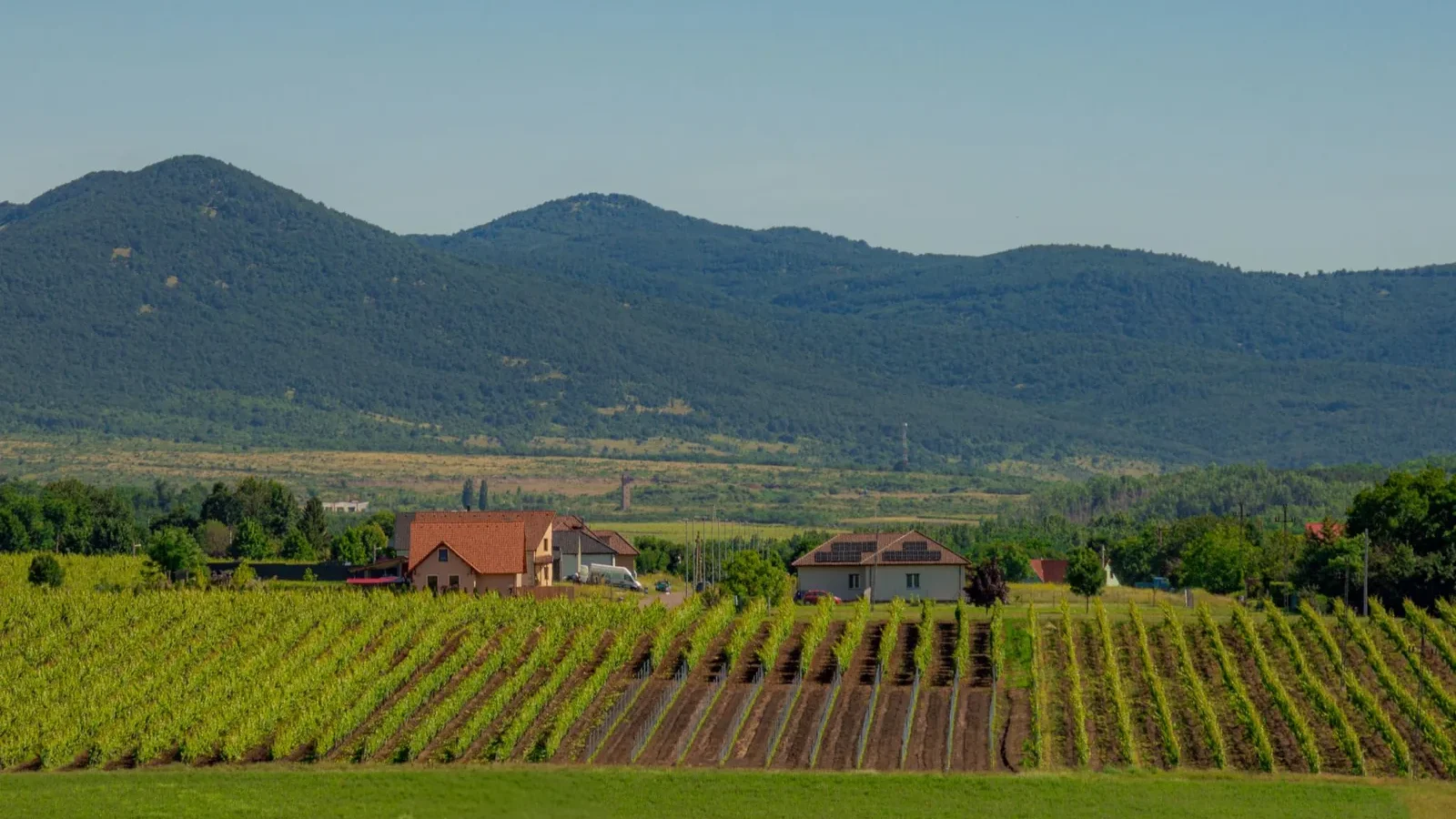
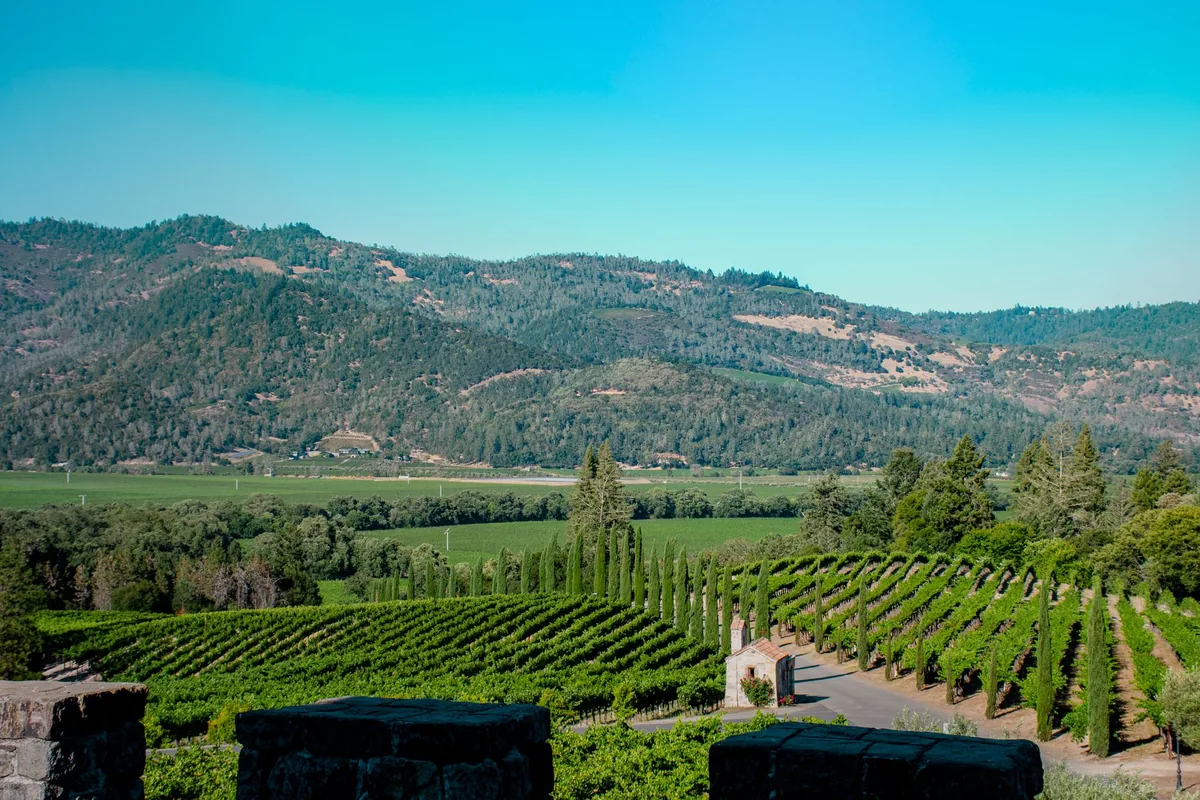
The valley runs northwest from San Pablo Bay toward Calistoga, hemmed by the Mayacamas Mountains on the west and the Vaca Range on the east. The floor climbs from sea level in the south to a few hundred feet at the northern end. Two ranges and one open southern mouth is the whole mechanism.
That open mouth admits marine air and fog on summer nights. It reaches Los Carneros and the southern floor first and most reliably, then thins as it moves inland. The northern end is meaningfully warmer than the southern end despite sitting barely twenty miles away.
A profile of a Calistoga tasting room at the valley’s northern tip noted that most visitors cluster around Rutherford and Yountville while new development pushed north, and it appears in the club’s June 2014 California winery of the month.
What an appellation actually certifies
An American Viticultural Area is, in the federal regulator’s own words, a delimited grape-growing region with specific geographic or climatic features that distinguish it from the surrounding regions and affect how grapes are grown. Those boundaries are not marketing lines. They are codified in federal regulation, as the Alcohol and Tobacco Tax and Trade Bureau explains in its guidance on American Viticultural Areas and 27 CFR part 9.
What an appellation does not certify is quality, yield, permitted grapes or winemaking method. A European appellation typically dictates all four. An American one draws a boundary and stops, which is why the useful question about any Napa sub-appellation is geographic rather than regulatory.
Napa Valley wine appellations from floor to ridge
The valley floor
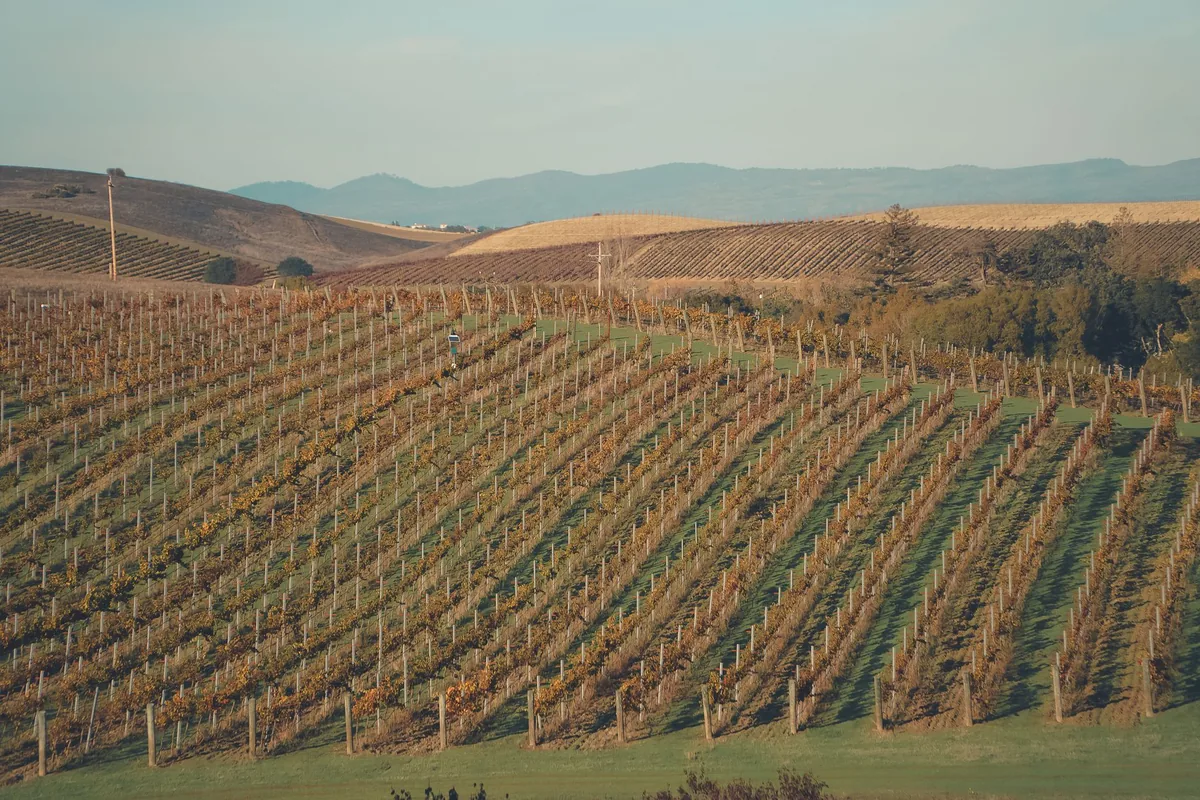
Floor sites around Oakville, Yountville and Rutherford sit on deep alluvial soil laid down by the Napa River and by creeks draining both ranges. Deep soil holds water, and water makes vigorous vines with large canopies and large berries. Growers there restrain vigor rather than chase ripeness.
The wines are the Napa archetype: full-bodied Cabernet Sauvignon with broad, supple tannin and dark fruit. Fog arrives most mornings and burns off by mid-morning, so the day is hot and the night is not. That swing is what preserves acidity in a genuinely warm place.
The benchlands
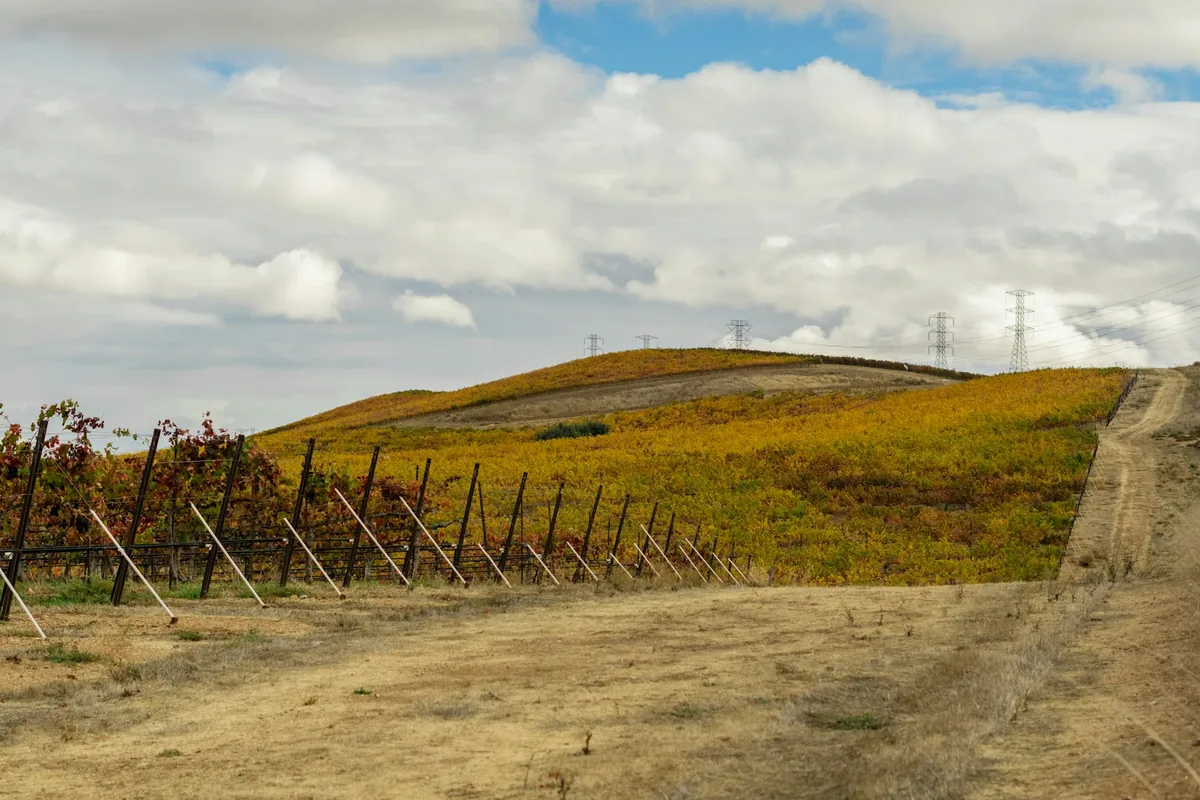
A bench is the apron of gravel and cobble a creek drops where it leaves the hills and meets the flat. Rutherford and Oakville both carry them along their western edges, and drainage there is far sharper than on the floor a mile away. Vines struggle slightly, ripen evenly, and set smaller berries.
Smaller berries mean more skin per unit of juice, and skin is where tannin and pigment live. Bench Cabernet tends to be firmer and more structured than floor Cabernet of the same vintage and the same clone. Nothing about the grape changed; the soil did.
The mountains
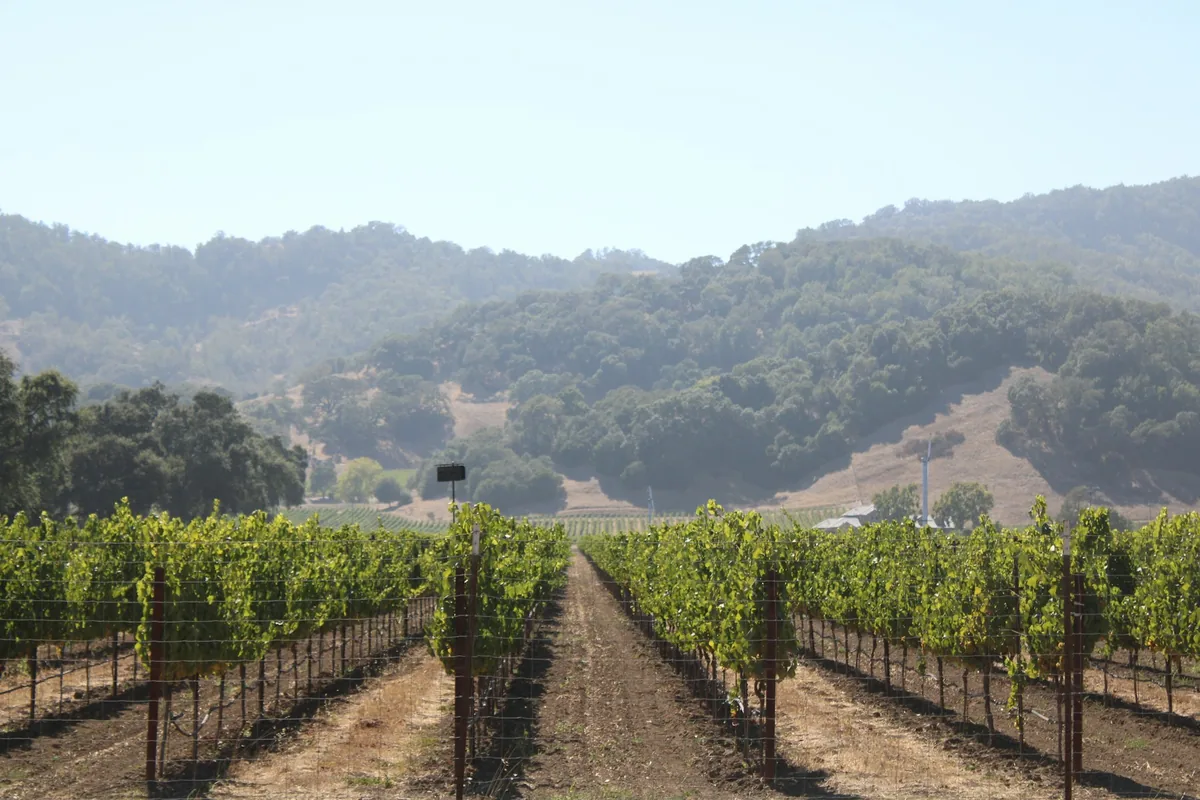
The mountain appellations — Howell Mountain, Spring Mountain, Diamond Mountain, Mount Veeder, Atlas Peak — sit above the fog line rather than under it. Sunlight is more intense at elevation, days are often cooler than on the floor, and nights are warmer because cold air drains downhill past them. The daily swing narrows and the season stretches.
Soils are thin, volcanic in the eastern hills and mixed volcanic and sedimentary in the west, so yields fall accordingly. The wines run darker, more tannic and slower to open, with a savory edge the floor rarely offers. Same variety, entirely different proposition.
| Trait | Valley floor | Benchland | Mountain |
|---|---|---|---|
| Soil | Deep alluvium and clay loam | Gravel and cobble fans | Thin volcanic or sedimentary |
| Water holding | High | Moderate to low | Low |
| Fog | Most mornings, burns off | Intermittent | Usually above it |
| Berry size | Larger | Smaller | Smallest |
| Tannin | Broad and supple | Firm and defined | Dense and slow |
| Drinking window | Early | Medium term | Long |
Napa Valley wine grapes beyond Cabernet
Cabernet Sauvignon is the majority planting and the source of the region’s reputation, but it is not the whole board. Merlot, Cabernet Franc, Petit Verdot and Malbec grow here as blending components and on their own, and their job is structural rather than decorative.
In Los Carneros, at the cold southern end straddling the Sonoma county line, Chardonnay and Pinot Noir take over, because fog lingers longest there and Cabernet would not ripen reliably. The club wrote about Carneros more than once, including a May 2017 newsletter placing a Napa producer in the Carneros AVA that also noted how much warmer Rutherford fruit runs by comparison.
Sauvignon Blanc is the significant white outside Carneros, and older Zinfandel and Syrah plantings persist in warmer pockets. The club’s archive of 166 California winery profiles ran from 2010 to 2019 and includes several Napa houses, among them a November 2013 profile of a Napa winery and restaurant.
Napa Valley wine terroir set against its neighbors
Napa is cooled by a bay at one end and by elevation above the fog. That is not how every California region works, and the contrast is the fastest route to understanding what Napa is. Neighboring Sonoma County is cooled through physical gaps in the coast range, so its cold zones are scattered across the county rather than stacked at one end.
Further south the mechanism changes again. Paso Robles runs on an enormous day-to-night temperature swing over calcareous soil, and Santa Barbara County is cooled by valleys that run east to west instead of north to south. Three answers to one problem, mapped together on the club’s California wine regions hub.
Using this Napa Valley wine region guide to choose a bottle
Start with the appellation on the label rather than the producer. A wine labeled simply Napa Valley may be blended across the whole valley, while a sub-appellation is a narrower claim about a narrower place.
Then match the site to the occasion:
- Valley floor — approachable young, good with roast beef or grilled lamb.
- Benchland — firmer and worth a few years, suited to braises and aged cheese.
- Mountain — tannic and slow, so give it cellar time or a long decant.
- Los Carneros — Chardonnay and Pinot Noir, so think shellfish, poultry and mushroom.
Vintage weighs less here than in marginal climates, because fruit ripens in most years. Site carries more of the difference, which is why the appellation map repays learning.
Napa Valley FAQ
How many appellations are inside Napa Valley?
Sixteen nested appellations were established between 1983 and 2016, and Crystal Springs of Napa Valley was approved in 2024 to make seventeen. Napa Valley itself became an American Viticultural Area in 1981, the second established in the country.
Why is mountain Cabernet more tannic than valley floor Cabernet?
Thin soil with low water-holding capacity produces smaller berries, and smaller berries carry more skin relative to juice. Skin is where tannin and color sit, so extract is higher before a winemaker makes a single decision.
Does Napa grow anything other than Bordeaux varieties?
Yes. Chardonnay and Pinot Noir dominate the cold southern end, Sauvignon Blanc is planted widely, and older Zinfandel and Syrah survive in warmer corners and on some hillsides.
Learn the three tiers and most of Napa stops being a list of names to memorize. Floor, bench and ridge each do something specific to the same grape, and the label tells you which one you are holding before you pull the cork.