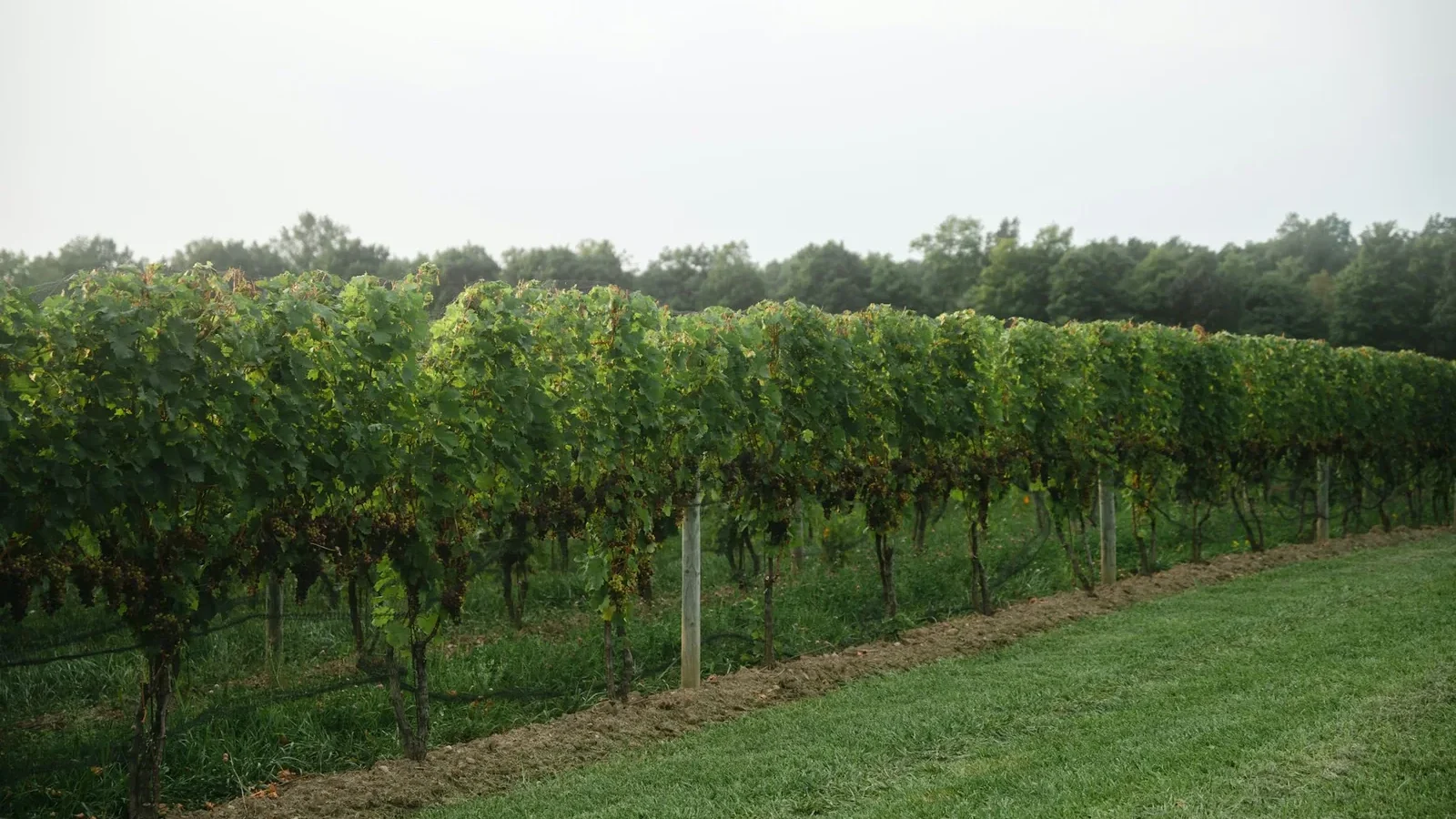
On paper Lodi should be too hot for fine wine. It sits inland in the northern San Joaquin Valley, between Sacramento and Stockton, in a place where growing-season afternoons regularly reach the upper nineties. Any useful Lodi wine region guide has to start by explaining why the paper is wrong.
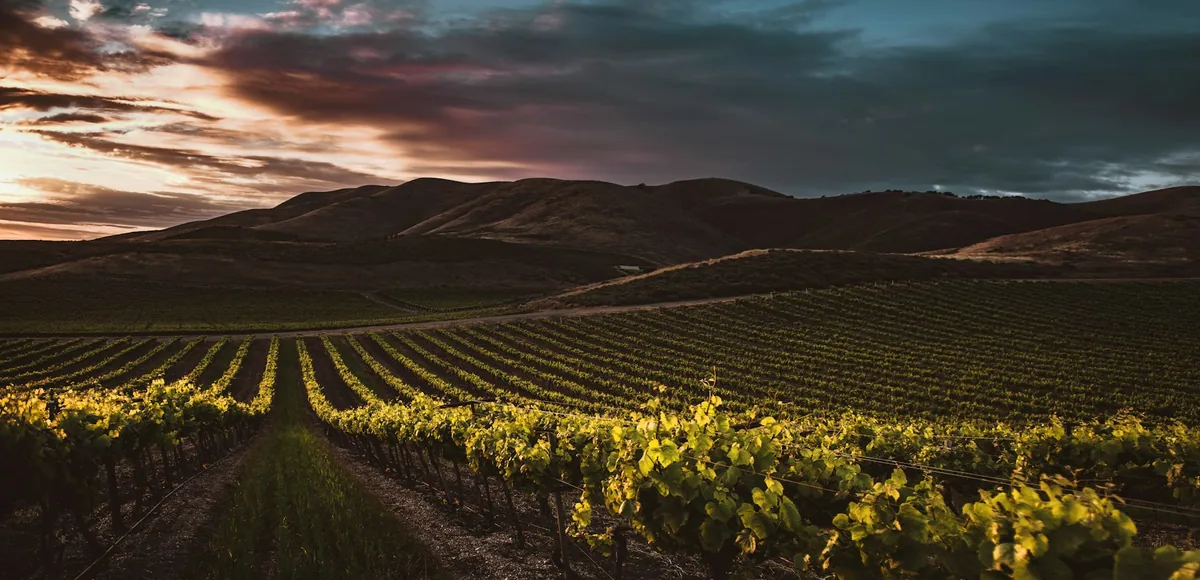
The answer is a gap in the mountains. California’s Coast Range runs almost unbroken from Santa Barbara to Mendocino, and the one place it opens at sea level is the Sacramento-San Joaquin Delta, directly west of Lodi. That opening does the work that fog does elsewhere.
How the Delta actually cools a hot valley
Heat over the inland valley rises through the afternoon and leaves lower pressure behind it. Cool marine air from San Francisco Bay is pulled inland to replace it, and the Delta channel is the only route it can take. The result arrives most afternoons in the growing season as a steady wind that drops temperatures well before sunset.
What matters for the fruit is not the daytime high but the size of the drop. A vine that bakes at ninety-eight degrees and then cools sharply overnight ripens sugar without burning off acid at the same rate. Lodi’s growing degree day accumulation sits meaningfully below Sacramento’s and Stockton’s, despite the towns being minutes apart.
Rainfall runs somewhere between eighteen and twenty-four inches a year, rising as you move east toward the Sierra foothills. The growing season is long, near enough to two hundred and eighty days. Long season plus reliable afternoon relief is a combination that suits late-ripening red grapes very well.
What the Lodi wine region guide numbers show
Lodi was approved as an appellation in 1986 and covers roughly 550,000 acres, with something over 100,000 of them planted. Seven sub-appellations were added in 2006: Alta Mesa, Borden Ranch, Clements Hills, Cosumnes River, Jahant, Mokelumne River and Sloughhouse. Mokelumne River, around the town itself, holds most of the old plantings.
The scale is easy to underestimate. The California Grape Crush Report publishes tonnage, sugar and weighted average prices by grape pricing district, and Lodi’s district covers San Joaquin County north of Highway 4 together with Sacramento County south of Highway 50 and east of Interstate 5. In recent crush years that district has taken in more Cabernet Sauvignon than any other district in the state.
That figure surprises almost everyone, because Lodi’s public identity is Zinfandel. Both things are true at once, and the gap between them explains a lot about how the region is written about.
Sand, and the vines that survived on it
The old-vine story in Lodi is really a soil story. The Mokelumne River area is built on deep sandy loam, and phylloxera, the root louse that destroyed most of the world’s vineyards from the late nineteenth century onward, cannot move easily through sand. Vines planted here in the 1880s and 1890s were never uprooted because they were never killed.
The club’s August 2013 profile of Bargetto Winery records that family sourcing Zinfandel from Lodi for fifteen years, and notes the reason directly: the sandy soils there prevented the phylloxera infestation that forced replanting elsewhere. It is the plainest statement of the mechanism in the archive.
Why own-rooted matters
Almost every vine planted in California since phylloxera is grafted onto an American rootstock chosen for resistance. Lodi’s survivors are own-rooted, meaning the fruiting variety grows on its own root system, exactly as it was planted. Head-trained and untrellised, they carry small crops and drop yields further with age.
Matt Cline, profiled by the club in September 2010 as Three Wine Company, spent his career chasing exactly this material. The archive records his view that the area around Oakley and neighboring Lodi held more old vineyards than anywhere else in California. Heritage plantings there include Carignane, Mataro and field blends that no one would plant deliberately today.
| Trait | Mokelumne River | Borden Ranch and Clements Hills |
|---|---|---|
| Ground | Deep sandy loam on a flat valley floor | Rolling terraces with clay and cobble |
| Elevation | Near sea level | Rising toward the Sierra foothills |
| Old vines | Most of the region’s pre-1900 blocks | Largely planted since the 1990s |
| Vine training | Head-trained, own-rooted, untrellised | Trellised and grafted |
| Typical grapes | Zinfandel, Carignane, Cinsault, Flame Tokay history | Cabernet Sauvignon, Syrah, Petite Sirah, Albarino |
Beyond Zinfandel
Lodi now grows well over a hundred varieties, and the interesting ones are not the obvious ones. Spanish and Portuguese grapes do particularly well in the heat, and Iberian white varieties hold acidity here better than the climate suggests they should.
The club’s October 2011 profile of Fenestra Winery describes Lanny Replogle working with Portuguese and Spanish varieties from Silvaspoons Vineyards in Lodi, having started with fruit for a Port-style wine. A second archive account, the August 2011 Quinta Cruz profile, records a winemaker sourcing Verdelho from Lodi and reporting that it arrives balanced without intervention despite the hot climate.
A dissenting view from the archive
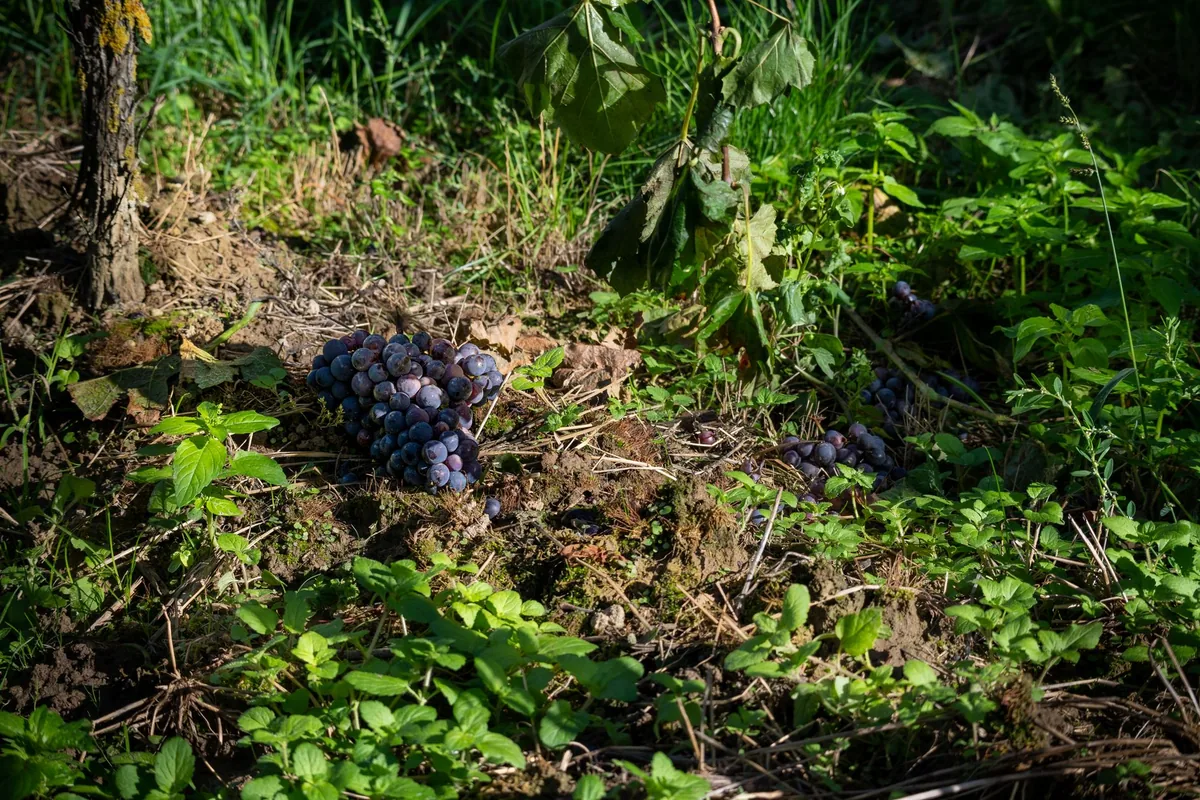
Not everyone the club interviewed admired Lodi. Greg Graziano, a Mendocino winemaker, told the club in June 2013, in the Monte Volpe profile, that a lot of people really like Lodi and he is not one of them, because of the terroir. He characterized the wines as jammy and high in pH, with lower acidity than his own.
That is one working winemaker’s opinion, recorded in 2013, and it is worth reading alongside the enthusiastic material. It also names the real risk of the place accurately. Where growers chase ripeness rather than manage it, Lodi fruit does go soft and confected, and the Delta breeze cannot rescue a picking decision made too late.
Choosing a bottle and pouring it
Sub-appellation on the label is the most useful signal. Mokelumne River points toward the old own-rooted blocks, and the words “old vine” mean more there than they do as a general phrase. Anything from the eastern terraces will usually be a younger, more structured, more conventionally made red.
Zinfandel at this ripeness wants fat and smoke on the plate: pork shoulder, ribs, sausage, aged cheddar, anything grilled over wood. The Iberian whites belong with shellfish and fried food. For the granite-grown alternative just uphill, the Amador County wine region guide and the wider Sierra Foothills wine region guide cover the same grape on entirely different ground.
Lodi wine FAQ
Is Lodi part of the Central Valley?
Geographically yes, at the northern end of the San Joaquin Valley. Climatically it behaves differently from the valley south of it, because the Delta gap delivers marine air that never reaches Fresno or Bakersfield.
What does “old vine” mean in Lodi?
There is no legal definition anywhere in the United States, so treat the phrase as a claim rather than a standard. In Mokelumne River it often refers to own-rooted, head-trained blocks planted before 1900, which is as literal as the term gets in California.
Are Lodi wines always high in alcohol?
Many are, and the archive contains a winemaker’s complaint about exactly that. Producers picking earlier make fresher wines, so the variation within the appellation is wider than its reputation suggests.
Can I still order these wines from the club?
No. Celebrations Wine Club stopped shipping in December 2019 and the site is an archive now. The winery profiles from 2010 to 2019, the California wine regions hub and the Mendocino County wine region guide are all still readable.
Lodi is best understood as a hot place with a reliable escape valve and a rare inheritance of surviving vines. Read the sub-appellation, take the ripeness seriously, and the region stops being a generic warm-climate name and becomes a specific one.